
Watering
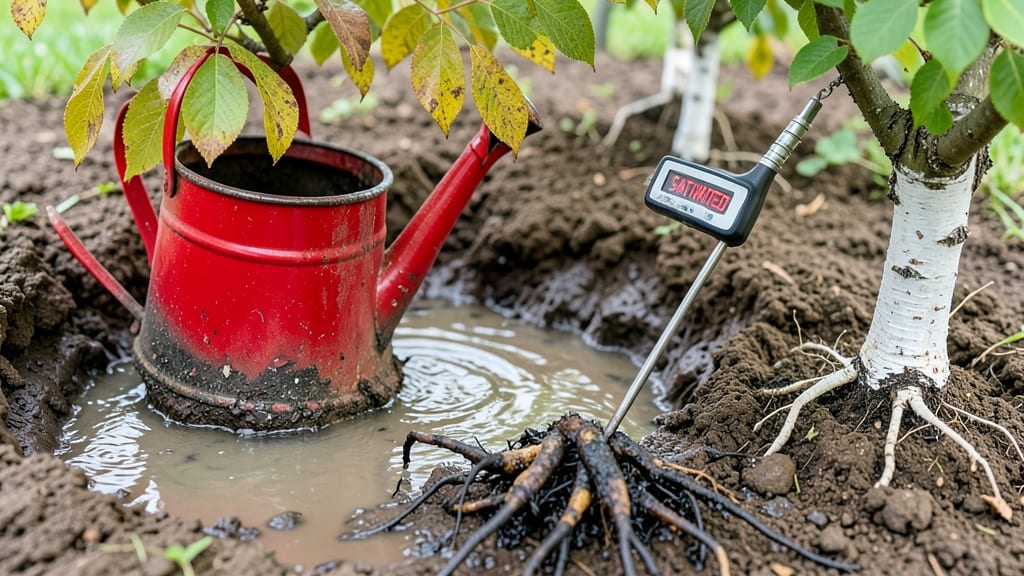
Your cherry tree’s drooping branches and yellowing leaves aren’t just a bad season—they’re a cry for help from roots drowning in too much water. 🌱 I’ve nursed back more waterlogged cherry trees than I’d like to admit, and the first step is always stopping the flood before it’s too late.
The good news? Even severely stressed trees can bounce back with the right care, especially if you act fast and focus on drainage.
Start by checking the soil: if it smells sour or feels soggy two inches down, you’re dealing with root rot. Sweet cherries (like Bing) and tart varieties (like Montmorency) both hate waterlogged roots, but sweet cherries need slightly better drainage.
Cut back watering immediately and let the top 6 inches of soil dry out completely before watering again—this alone can stop the decline.
Long-term fixes make all the difference. Amend the soil with compost or perlite to improve aeration, and consider a soil moisture sensor to avoid overwatering again. A 2–3 inch layer of mulch helps regulate moisture while keeping roots cool, and raised beds or mounds can prevent future water pooling.
Within weeks, you’ll see new green growth as the roots recover.
For tart cherries, which tolerate wetter conditions slightly better, focus on deep but infrequent watering—they prefer moisture at their roots but hate soggy feet. Either way, your tree’s harvest isn’t lost; with these adjustments, you’ll be back to enjoying plump, juicy cherries in no time.
Here’s how to turn things around before it’s too late.
📚 In This Guide
- What you need
- Instructions
- Tips and common mistakes
- Wrapping up and next steps
What you need
- ● Garden fork or trowel – A sturdy, long-handled fork (12–18 inches) to aerate soil without damaging roots.
- ● Well-draining soil mix – 2–3 bags (50 lbs each) of a blend like 50% peat moss or coconut coir + 50% perlite or coarse sand.
- ● Organic mulch – 2–3 cubic feet of wood chips, straw, or shredded bark (avoid fresh mulch near the trunk).
- ● Drainage fabric – 5–10 feet of landscape fabric to prevent soil compaction around the base.
- ● Watering can or hose with a gentle spray nozzle – For controlled hydration post-revival.
- ● Pruning shears (sterilized) – To trim any dead or water-damaged branches.
- ● Root stimulator or mycorrhizal fungi – 1–2 bottles (e.g., RootOne or MycoApply) to boost root recovery.
- ● Soil moisture meter – To monitor drainage progress (e.g., Xiaomi Mi Flower Care).
- ● Compost or worm castings – 1–2 gallons to enrich soil after aeration.
- ● Drip irrigation kit – For long-term water management (e.g., Rain Bird starter set).
- ● Fungicide spray – If you notice signs of root rot (e.g., Neem oil or copper fungicide).
- ● Knee pads or gloves – For comfort during soil work.
How to revive an overwatered cherry tree and restore root health
Your cherry tree isn’t lost yet—overwatering is fixable with the right approach. Here’s how to drain excess moisture, aerate compacted roots, and get your tree back on track.
💧 Step 1: Stop Watering and Assess Soil Moisture
Turn off all irrigation immediately—no more water until you’ve corrected the problem. Let the soil dry out naturally for 3-5 days before taking further action. This prevents root rot from spreading deeper into the root zone.
Dig a small hole (4-6 inches deep) near the tree’s drip line with a trowel. Stick your finger 2-3 inches into the soil. If it feels damp or cool, the roots are still waterlogged. If it’s dry and crumbly, you’ve made progress.
✂️ Step 2: Aerate Compacted Soil and Improve Drainage
Use a hand fork or garden fork to loosen the soil around the tree’s root zone. Work in 12-inch deep sections, about 18 inches apart, radiating outward from the trunk. This breaks up compacted layers that trap excess moisture.
Mix in 2-3 inches of coarse sand or perlite (if available) into the loosened soil. This creates air pockets that help water drain away from roots. Avoid adding organic matter like compost yet—it can hold too much moisture at this stage.
🪴 Step 3: Prune Damaged Roots and Adjust Watering
Gently dig around the tree’s root ball to inspect for black, mushy roots—these are dead from overwatering. Snip them off with sterilized pruners. Healthy roots should be white or light tan and firm to touch.
Once pruned, water deeply but sparingly—just enough to dampen the soil 6 inches down. Wait until the top 4 inches of soil feel dry before watering again. A drip irrigation system on a timer (set for 2-3 times per week) works better than overhead sprinklers.
☀️ Step 4: Mulch Properly and Monitor Recovery
Spread 2-3 inches of wood chips or straw mulch around the tree, keeping it 6 inches away from the trunk. Mulch helps regulate soil temperature and prevents future waterlogging by reducing evaporation.
Watch for new growth—leaf buds forming in spring or sprouts emerging from the base—as signs the roots are healing. If the tree shows yellowing leaves or wilting after 2 weeks, it may need fungicide treatment for root rot.
Tips & tricks for reviving an overwatered cherry tree
Took me years to learn these tricks after nearly losing my own cherry tree—here's how to avoid the mistakes I made.
Soil Test Timing: After the initial 3-5 days of drying, check soil moisture every 2-3 days. The goal is to reach a point where the top 4 inches feel dry but not bone-dry—like a slightly damp sponge. I learned this the hard way after overcorrecting and stressing the roots further. Use a moisture meter if you're unsure; it's worth the investment for delicate trees like cherries.
Root Pruning Technique: When inspecting roots in Step 3, focus on the outer 6-12 inches of the root ball first. These are the most vulnerable to waterlogging. Sterilize your pruners with rubbing alcohol between cuts to prevent spreading any potential fungal infections. I've found that cutting at a 45-degree angle just above a healthy root node gives the best regrowth results.
Drainage Boost: If you don't have coarse sand or perlite, crushed gravel works just as well for improving drainage. The key is creating those air pockets—think of it like adding drainage holes to a pot. Spread a 1-inch layer first, then mix it into the top 6 inches of soil rather than just adding it on top. This creates a more gradual drainage system throughout the root zone.
Mulch Placement: The 6-inch clearance from the trunk is critical—mulch piled against the bark can trap moisture and cause rot. I've seen this happen even with well-intentioned gardeners. Use a rake to create a slight depression around the trunk to guide water away, then mound the mulch outward from there. This creates a natural water runoff system.
Pro Tips for Cherry Tree Too Much Water
- Took me years to learn these tricks after nearly losing my own cherry tree—here's how to avoid the mistakes I made.
- Soil Test Timing: After the initial 3-5 days of drying, check soil moisture every 2-3 days. The goal is to reach a po...
- Root Pruning Technique: When inspecting roots in Step 3, focus on the outer 6-12 inches of the root ball first. These...
Frequently asked questions
Got questions about overwatering your cherry tree? You’re not alone!
Here are answers to the most common concerns—so you can rescue your tree and keep those sweet harvests coming.
How do I know if my cherry tree has too much water?
Watch for yellowing leaves, mushy or blackened bark, or roots sitting in soggy soil when you dig a few inches down. If the ground smells rotten or feels waterlogged, your tree’s roots are drowning. Act fast—overwatering can kill roots in as little as 24–48 hours.
How long does it take for a cherry tree to recover from overwatering?
Recovery time depends on how severe the damage is. Mild cases (wilting but no root rot) may bounce back in 1–2 weeks with adjusted watering. Severe root rot? It could take months or require professional help. Prune dead branches and improve drainage immediately to speed up healing.
What’s the best way to fix overwatered cherry tree roots?
Start by reducing water—let the top 6 inches of soil dry out between waterings. Improve drainage by adding organic matter (compost or perlite) to heavy clay soil. If roots are rotting, trim affected areas with sterilized pruners and avoid watering until the soil is crumbly.
Can I use mulch to help my overwatered cherry tree?
Yes!
Apply a 2–3 inch layer of mulch (wood chips or straw) around the base, but keep it 6 inches away from the trunk to prevent rot. Mulch helps regulate soil moisture and encourages healthy root growth—just avoid piling it too thickly, or it’ll trap moisture and worsen the problem.
Will my cherry tree survive if the roots are completely rotted?
If most roots are mushy or black, the tree may not recover. However, if some healthy roots remain, you can prune back severely and repot in fresh, well-draining soil. For large trees, consult an arborist—they can assess whether replanting or replacing the tree is the best option.
Pro Tip:
Install a moisture meter ($10–$20) near your tree to monitor soil moisture levels accurately. This prevents guesswork and keeps your cherry tree thriving!
Wrapping up and next steps
Reviving a cherry tree from overwatering is totally doable with the right care and patience! 🌱 By adjusting your watering habits, improving drainage, and nurturing the roots, you can help your tree bounce back and thrive.
Remember, consistency is key—monitor soil moisture and give your tree the love it needs to recover.
Ready to take action? Start by auditing your watering routine and implementing the tips shared here. Your cherry tree’s future harvest depends on it—so roll up your sleeves and get growing! 🍒✨