
Pruning
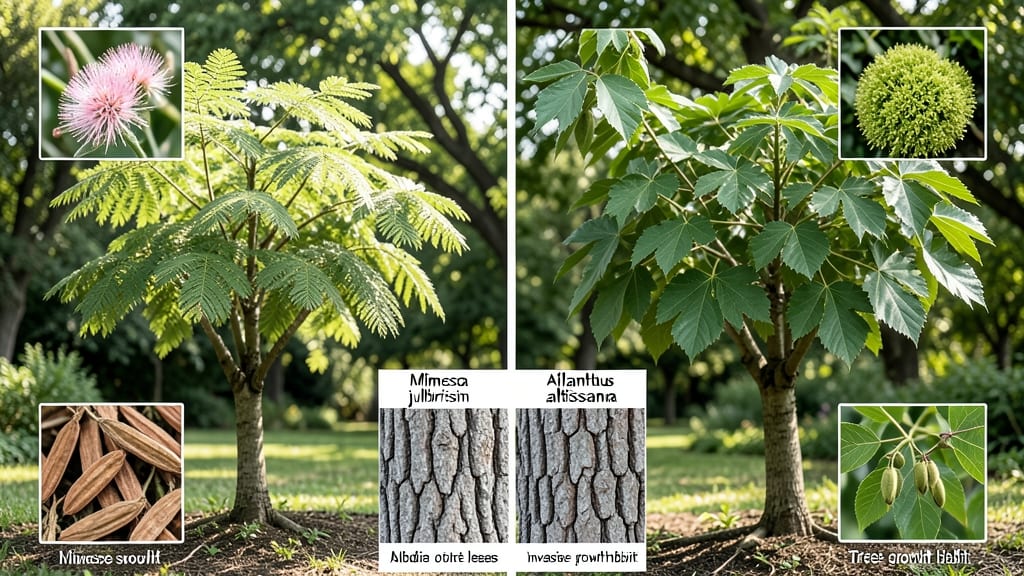
Choosing between a mimosa tree and tree of heaven means picking between a fragrant showstopper and a fast-growing weed. 🌿 Both grow at breakneck speed—3-5 feet per year—but one brings beauty while the other brings headaches.
Mimosa trees dazzle with pink fern-like blooms, while tree of heaven spreads aggressively with noxious roots. Mimosa thrives in full sun and well-drained soil, handling heat and drought once established. Tree of heaven, meanwhile, tolerates poor soil and shade, making it the tougher survivor but also the harder to control.
Neither needs heavy fertilization, but mimosa responds well to occasional compost while tree of heaven thrives on neglect. The trade-off? Mimosa’s delicate blooms and light foliage contrast with tree of heaven’s rough bark and foul-smelling leaves when crushed. One attracts pollinators; the other repels neighbors with its invasive spread.
Prune mimosa lightly after flowering, but tree of heaven demands aggressive cutting to contain its wild growth. For showy landscapes, mimosa wins. For tough, low-maintenance survival, tree of heaven takes the crown—though at what cost to your yard’s peace.
The first product explained
Meet your new fast-growing champion: the Mimosa Tree (Albizia julibrissin)! If you're looking for a stunning, low-maintenance tree that adds instant curb appeal, this beauty is a standout. Known for its fern-like foliage and delicate, pink pom-pom flowers, the Mimosa Tree is a favorite among homeowners and landscapers alike. But what makes it tick? Let’s break it down.
🌿 Key Specs & Features
Here’s what sets the Mimosa Tree apart:
- Growth Rate: Blazing fast! Expect 3-6 feet per year under ideal conditions.
- Mature Height: 20-30 feet (with a spread of 20-25 feet). Perfect for medium to large yards.
- Sunlight Needs: Full sun to partial shade—adapts like a pro.
- Soil Type: Tolerates a wide range, from sandy to clay, but drains well is key.
- Flowering Season: Spring and early summer, with those iconic pink blossoms that attract pollinators.
- Foliage: Fern-like, compound leaves that turn golden-yellow in fall (a seasonal showstopper!).
- Hardiness Zones: Thrives in zones 6-9, making it versatile for many climates.
🎯 Who’s It For?
This tree is a dream for:
- Homeowners wanting quick shade and beauty without the hassle.
- Landscapers designing privacy screens or focal points.
- Eco-conscious gardeners—its flowers support bees and butterflies!
- Urban planners or small-space gardeners (dwarf varieties exist!).
💰 Price Point & Value
Pricing varies by size and supplier, but here’s a general ballpark:
| Size | Price Range (USD) | Best For |
|---|---|---|
| 1-3 gallon (small) | $30–$60 | New plantings, containers |
| 7-15 gallon (medium) | $80–$150 | Quick landscape impact |
| 25+ gallon (large) | $200–$400+ | Established yards, privacy hedges |
Pro Tip: 💡 Buy in early spring for the best selection and lower prices! Plus, young trees establish roots faster with cooler temps.
Ready to transform your space with a Mimosa Tree? Just remember—its fast growth means regular pruning (we’ll cover that in our comparison with the Tree of Heaven!).
The second product explained
Meet the Tree of Heaven (Ailanthus altissima), a fast-growing, hardy tree that’s often the underdog in the shade tree showdown! 🌳 While it may not have the same ornamental appeal as the delicate Mimosa pudica, this tree packs a punch with its resilience and adaptability—making it a favorite for urban landscapes, erosion control, and even as a living fence.
Let’s break down what makes this tree a standout choice for those who prioritize speed, strength, and low-maintenance growth.
🌱 Key Specs & Features
If you’re looking for a tree that grows fast and thrives in tough conditions, the Tree of Heaven delivers:
- Growth Rate: Rapid—expect 3–5 feet of growth per year under ideal conditions! 🚀
- Mature Height: 40–60 feet (though it can reach up to 80 feet in the wild).
- Canopy Spread: 30–50 feet wide, creating a broad, dense shade.
- Lifespan: 50–100 years (with proper care).
- Soil Tolerance: Thrives in poor, rocky, or compacted soil—perfect for urban or neglected areas.
- Drought Resistance: Once established, it handles dry spells like a champ.
- Wildlife Value: Attracts birds and butterflies (though it’s notorious for its strong, unpleasant odor when crushed or cut—more on that below!).
- Invasiveness: High alert! This tree spreads aggressively via underground roots and seed pods, making it a no-go for eco-sensitive areas.
🎯 Who’s It For?
The Tree of Heaven is your go-to if you’re:
- 🏙️ A city dweller with limited space or poor soil—it grows where others won’t.
- 🚧 Looking for quick shade or erosion control (e.g., along highways or slopes).
- 🪓 A DIY pruner who wants a tree that forgives neglect (though it rewards regular trimming!).
- 💰 On a budget—it’s one of the most affordable fast-growing trees.
But skip it if:
- 🌿 You’re in a native plant-friendly zone (it’s invasive in many regions).
- 👃 You hate smelly trees—its leaves and bark release a skunk-like odor when damaged.
- 🌳 You want ornamental value (it’s not a showstopper like the Mimosa).
💰 Price Point & Availability
The Tree of Heaven is a budget-friendly giant, typically priced between $25–$75 for a 5–15 gallon container at nurseries. Here’s a quick breakdown:
| Size | Price Range | Best For |
|---|---|---|
| Bare-root (1–2 ft) | $20–$40 | Large-scale plantings or erosion control |
| 5-gallon container (3–5 ft) | $35–$60 | Backyard planting or small lots |
| 15-gallon container (6–8 ft) | $60–$90 | Instant privacy or shade |
Pro Tip: 💡 Check local regulations—some areas ban or restrict Tree of Heaven due to its invasiveness. Always opt for certified invasive-free stock if available!
Head-to-head comparison
Deciding between a mimosa tree and a tree of heaven? Both are fast-growing giants, but they have distinct traits that might make one a better fit for your yard, landscape, or even urban planting.
Below, we break down their key differences in a side-by-side comparison to help you make an informed choice. 🌳✨
🌿 Growth Rate & Size
If speed is your priority, both trees are champions—but in slightly different ways.
- Mimosa Tree (Albizia julibrissin):
- Grows moderately fast (1–2 feet per year under ideal conditions).
- Matures at 20–30 feet tall with a spread of 15–25 feet.
- Known for its delicate, fern-like foliage and pink, puffball flowers that bloom in summer.
- Pro Tip: Prune young mimosa trees to encourage a bushier shape—this tree can get leggy if left unchecked! 💡
- Tree of Heaven (Ailanthus altissima):
- Grows extremely fast (3–5 feet per year—one of the fastest in its class!).
- Can reach 50–75 feet tall with a spread of 30–50 feet (though often pruned smaller in urban areas).
- Features compound leaves that resemble those of the horse chestnut and insignificant green flowers.
- Pro Tip: Its rapid growth makes it ideal for quickly filling large spaces, but be prepared for aggressive root systems! ⚠️
🌱 Hardiness & Climate Suitability
Not all trees thrive in every climate. Here’s where each excels:
| Factor | Mimosa Tree | Tree of Heaven |
|---|---|---|
| USDA Hardiness Zones | 7–10 (tender in cold climates; may die back in frost) | 4–9 (tolerates colder temps better; more resilient in harsh winters) |
| Drought Tolerance | Moderate—prefers well-drained soil but struggles in prolonged dry spells. | Highly drought-tolerant once established; thrives in poor soil. |
| Salt Tolerance | Sensitive; avoid coastal or salty soils. | Moderate tolerance; better suited for urban or polluted areas. |
| Wind Resistance | Weak—can be prone to storm damage due to shallow roots. | Moderate; deeper roots help stabilize it better than mimosa. |
Pro Tip: If you live in a warmer, coastal, or drought-prone area, the mimosa may be your best bet. For colder, harsher, or urban environments, the tree of heaven often wins. 🌡️
🌿 Maintenance & Pruning Needs
Both trees require upkeep, but their care routines differ significantly.
- Mimosa Tree:
- Needs regular pruning to remove dead or weak branches (especially after flowering).
- Prune in late winter or early spring to shape and encourage new growth.
- Watch for powdery mildew or leaf spot diseases—keep the area around the base clean and well-aerated.
- Pro Tip: Thinning out dense foliage improves airflow and reduces pest issues. ✂️
- Tree of Heaven:
- Requires minimal pruning but can become overgrown if left unchecked.
- Best pruned in late winter to remove deadwood or shape the canopy.
- More pest-resistant than mimosa but can attract spotted lanternflies in some regions.
- Pro Tip: If planting near sidewalks or driveways, prune lower branches early to prevent root intrusion! 🚧
💰 Cost & Availability
Budget-friendly? Both trees are affordable, but one might be easier to find.
| Factor | Mimosa Tree | Tree of Heaven |
|---|---|---|
| Average Price (Container-Grown) | $40–$100 (small saplings); $150–$300 (mature trees). | $30–$80 (small saplings); $100–$250 (mature trees). |
| Availability | Common in nurseries specializing in ornamental trees; less likely in big-box stores. | Very common—often sold as a "fast-growing shade tree" in hardware stores and online. |
| Long-Term Costs | May require fertilizer for optimal growth; pruning costs moderate. | Low-maintenance; fewer long-term costs due to hardiness. |
Pro Tip: If you’re on a tight budget, the tree of heaven is often the winner—but if you want a showy, fragrant tree, the mimosa’s price tag may be worth it! 💸
⚠️ Potential Drawbacks
No tree is perfect. Here’s what to watch out for:
- Mimosa Tree:
- Invasive tendencies in some regions (e.g., Florida, California).
- Can self-seed aggressively, leading to unwanted saplings.
- Weak wood—branches may break in storms or heavy snow.
- Allergic reactions: Some people experience skin irritation from sap or pollen.
- Tree of Heaven:
- Highly invasive—considered a noxious weed in many states (e.g., Pennsylvania, New York).
- Produces a chemical (ailanthone) that suppresses other plants.
- Attracts spotted lanternflies, which can damage gardens.
- Can develop cankers or fungal issues if overwatered.
Which one should you choose?
So, which fast-growing giant wins in the mimosa tree vs. Tree of Heaven showdown? The answer depends entirely on your priorities—whether you're dreaming of a fragrant, low-maintenance yard or a hardy, invasive-free powerhouse. Here’s your tailored verdict to help you decide:
🌿 Choose the Mimosa Tree If...
- You crave beauty and fragrance: Mimosa trees are the undisputed queens of romantic charm with their delicate pink blooms and sweet scent. Perfect for weddings, patios, or anyone who loves a whiff of nostalgia. 💐
- Your soil is well-draining: Mimosa trees thrive in sandy or loamy soil, making them ideal for areas with poor drainage (just avoid waterlogged spots).
- You’re okay with seasonal trade-offs: Their stunning spring blooms fade by summer, but their lush foliage keeps the show going until fall.
- You want a tree with character: Mimosa’s unique, fern-like leaves and thorny branches add texture and intrigue to any landscape.
🌳 Choose the Tree of Heaven If...
- You need resilience and speed: This tree is a growth machine, perfect for quickly filling bare spots, providing shade, or restoring eroded soil. 🚀
- Your climate is harsh or urban: It tolerates pollution, drought, and poor soil like a champ—ideal for city lots or polluted areas.
- You prioritize low maintenance: No fancy pruning required! It’s happy to grow wild or be shaped into a neat hedge.
- You’re okay with trade-offs: Skip the flowers and fragrance—this tree delivers on function over form.
⚠️ When to Avoid Both:
If you’re dealing with limited space or a strict "no invasives" policy, think twice. Mimosa trees can spread via seeds (though less aggressively than Tree of Heaven), and the latter is a notorious ecological menace in many regions. Always check local regulations before planting!
🌟 Pro Tip for Undecided Gardeners:
Why not both? Plant the Tree of Heaven as a fast-growing backdrop and the mimosa tree as a fragrant focal point. Just keep them 10+ feet apart to prevent root competition. 🌱✨
Still unsure? Ask yourself: "Do I want a tree that wows me daily or one that works hard behind the scenes?" Your answer will guide you to the perfect pick! 🌿🌳