
Pruning
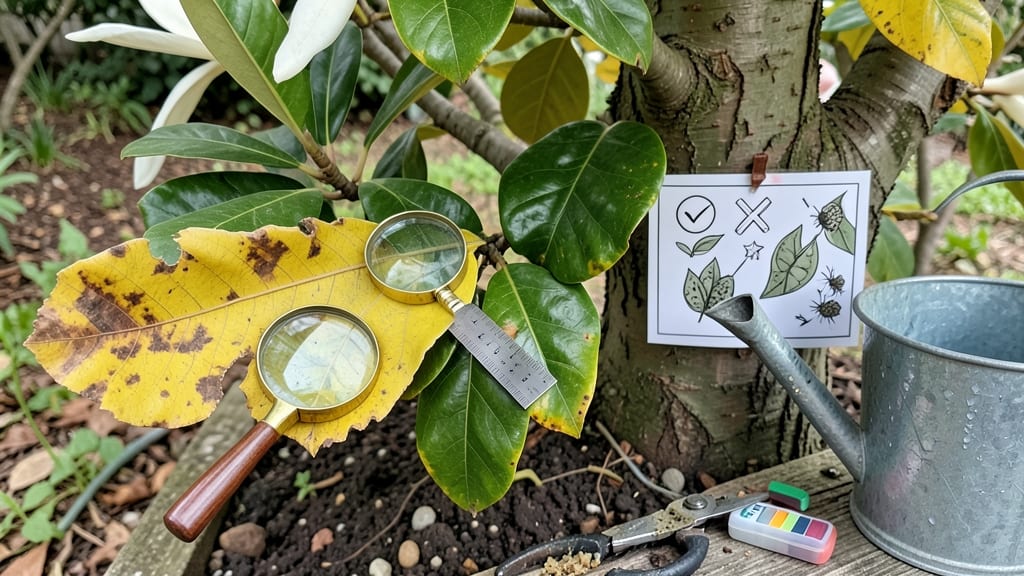
Your magnolia tree’s leaves shouldn’t look like that—these leaf problems are a red flag that something’s wrong. 🌿 I’ve seen this happen after years of ignoring subtle changes, and the key is catching it early before the whole tree suffers.
Most problems start with environmental stress or pests, but the solutions are simpler than you’d think.
Yellow leaves often mean overwatering or nutrient deficiency, while spots and curling point to fungal issues like powdery mildew or pests like lace bugs. The good news? Pruning dead branches, adjusting watering habits, and applying the right fungicide can turn things around in just a few weeks.
I’ve revived trees that looked hopeless with these steps.
You’ll learn to identify each problem by its symptoms—whether it’s brown edges, black spots, or sticky residue—and how to treat it without harsh chemicals. The goal is to keep your magnolia thriving, not just surviving, so it keeps gracing your yard with those stunning blooms for decades.
For stubborn cases, I’ll tell you when to call an arborist, but most fixes are within reach. Let’s get your magnolia back to its healthy, show-stopping self—starting with the right diagnosis and care.
Root Causes Behind Leaf Issues
Understanding why your magnolia tree’s leaves develop problems like yellowing, spots, or curling starts with identifying the underlying triggers. These issues rarely appear out of nowhere—they’re usually a response to environmental stress, pest attacks, or nutrient imbalances.
Below, we break down the scientific reasons behind the most common leaf problems in magnolias, so you can address them effectively.
Magnolias are hardy but sensitive to extreme or inconsistent conditions. When their needs aren’t met, leaves react visibly:
- Temperature & Humidity Swings - Why it happens: Magnolias thrive in USDA Zones 4–9 but struggle with sudden heatwaves (above 90°F/32°C) or cold snaps (below 20°F/-7°C).
High humidity can also promote fungal diseases, while dry air weakens leaves. - Key triggers: - Heat stress → Leaf scorch (brown, crispy edges). - Cold damage → Blackened or wilted leaves in spring. - Windburn → Yellowing or curling from dehydration. - Actionable fix: Mulch the root zone to stabilize soil temperature and water deeply during droughts.
Avoid planting in exposed, windy areas.
- Watering Woes: Too Much or Too Little - Why it happens: Magnolias prefer moist but well-drained soil.
Overwatering suffocates roots (leading to root rot), while underwatering causes oxidative stress in leaves. - Signs to watch for: - Yellowing between veins → Overwatering (poor drainage). - Wilting + brown leaf tips → Underwatering (soil too dry). - Pro tip: 💡 Test soil moisture by sticking your finger 2 inches deep—water if it’s dry.
Use a soil moisture meter for accuracy.
Magnolias are a buffet for pests and pathogens. Here’s how they exploit weaknesses:
- Fungal Infections (Anthracnose, Powdery Mildew) - Why it happens: Fungi like Colletotrichum (anthracnose) or Erysiphe (powdery mildew) thrive in humid, stagnant conditions.
They enter through leaf wounds or stomata (tiny pores). - Visual clues: - Dark spots with yellow halos (anthracnose). - White, powdery coating (powdery mildew). - Prevention: 🌡️ Space trees for airflow, prune for sunlight penetration, and apply copper fungicide at first signs.
- Insect Infestations (Scale, Spider Mites, Japanese Beetles) - Why it happens: Pests target stressed trees. Scale insects suck sap, causing sticky honeydew (leading to sooty mold). Spider mites thrive in dry heat, creating fine webbing and yellow stippling. - How to spot them: - Scale: Bumpy, immobile bumps on stems/leaves. - Mites: Tiny moving dots (use a magnifying glass). - Solution: 🔥 Blast off mites with a strong hose spray, or treat with neem oil for scale.
Introduce ladybugs (natural predators) if possible.
Magnolias need balanced nutrients to produce healthy leaves. Deficiencies show up as distinct discolorations:
| Symptom | Likely Cause | How to Fix |
|---|---|---|
| Yellow leaves (pale green veins) | Nitrogen deficiency | Apply slow-release fertilizer (10-10-10) in spring. |
| Yellow between veins | Iron chlorosis (common in alkaline soil) | Add chelated iron or sulfur to lower pH. |
| Purple/red stems & undersides | Phosphorus deficiency | Use bone meal or compost rich in P. |
| Small, pale leaves | Potassium deficiency | Apply wood ash or potassium sulfate. |
- 💡 Soil Test First: Before guessing, test your soil’s pH (ideal: 5.0–6.5 for magnolias). Amend with peat moss or pine needles to acidify if needed.
Even well-intentioned pruning can trigger leaf problems:
- Over-pruning in spring → Removes energy-storing leaves, causing weak new growth.
- Using dull tools → Tears bark, inviting bacterial infections.
- Shearing instead of selective pruning → Encourages dense, disease-prone foliage.
Fix it: ✂️ Prune only in late winter/early spring (before buds swell). Use sterilized, sharp shears and make clean cuts at a 45° angle.
Quick Fixes for Magnolia Leaf Issues
When your magnolia’s leaves start showing signs of distress—whether it’s yellowing, spots, or curling—don’t panic. Most problems have straightforward fixes, and with a little care, your tree can bounce back beautifully.
Below are practical, step-by-step solutions tailored to the most common causes, plus prevention tips to keep your magnolia thriving for years.
Cause: Pale or yellow leaves often signal iron deficiency (chlorosis), poor drainage, or overwatering. Magnolias hate soggy roots!
How to Fix It: ✅ 🔥 Test Your Soil
- Grab a small soil sample (6 inches deep) and check its moisture. If it’s damp after 24 hours, you’re overwatering.
- Fix: Let the top 2–3 inches dry out between waterings. Magnolias prefer well-draining soil—amend clay soil with compost or sand.
✅ 🍳 Feed with Iron
- Chlorosis? Sprinkle iron sulfate or chelated iron granules around the root zone (follow package rates).
- Pro Tip: 💡 Apply in early spring when new growth starts—this is when magnolias need the most nutrients.
✅ 👨🍳 Improve Drainage
- If your tree sits in a low spot, create a slight mound of soil around the base to encourage runoff.
- Avoid: Mulch piled against the trunk (keep it 6+ inches away).
Prevent Future Issues:
- 🌡️ Water deeply but less often—once a week in dry spells is usually enough.
- ✨ Test soil pH (ideal: 5.0–6.5). Acidic soil helps iron absorption.
Cause: Fungal diseases like anthracnose or powdery mildew thrive in humid, shady, or wet conditions. Spots may start small but spread fast!
How to Fix It: ✅ 🔪 Prune Infected Leaves
- Remove and destroy (don’t compost!) leaves with spots. Use sterilized pruners (wipe with rubbing alcohol) to avoid spreading spores.
- Thin the canopy to improve airflow—fungi love crowded, damp foliage.
✅ 🍎 Fungicide Spray (Early Action!)
- Best options: Copper fungicide (organic) or neem oil spray (mix 1 tbsp neem oil + 1 tsp mild soap per quart of water).
- Spray timing: Apply at dawn or dusk when humidity is high (fungi love moisture!).
- Repeat: Every 7–10 days until new growth appears healthy.
✅ 🌡️ Adjust Watering & Mulch
- Water early in the day so leaves dry quickly.
- Replace old mulch with 3–4 inches of fresh, chunky mulch (like pine bark) to keep roots dry.
Prevent Recurrence:
- 🎯 Space trees 10+ feet apart to reduce humidity around leaves.
- ✨ Plant in full sun (magnolias tolerate partial shade but need airflow).
Cause: Curling leaves are often a pest warning (scale, spider mites, or sawfly larvae) or environmental shock (sudden heat, wind, or transplant stress).
How to Fix It: ✅ 🔍 Inspect for Pests
- Scale insects: Look for brown bumps on stems/leaves. Scrape off with a plastic spatula or dab with rubbing alcohol.
- Spider mites: Check undersides for tiny webs or speckled leaves. Blast off with a strong hose spray or use insecticidal soap.
- Sawfly larvae: Yellowish caterpillars? Handpick them or spray Bt (Bacillus thuringiensis)—safe for bees!
✅ 🌿 Shield from Stress
- Wind damage? Wrap the tree in burlap during storms or plant near a windbreak.
- Transplant shock? Water deeply daily for 2 weeks after moving, then taper off.
Prevent Future Curling:
- 💡 Monitor pests weekly during growing season (spring–summer).
- 🌡️ Mulch heavily to stabilize soil moisture and protect roots.
| Problem | Quick Fix | Prevention Tip |
|---|---|---|
| Yellowing edges | Flush soil with water (salt buildup?) | Use rainwater or filtered tap water |
| Stunted growth | Fertilize with balanced 10-10-10 | Fertilize only in spring |
| Wilting leaves | Check for root rot (smelly soil?) | Plant in sandy loam soil |
🌟 Bonus Tip: Magnolias are low-maintenance—over-tinkering can stress them! Focus on soil, water, and airflow, and your tree will reward you with glossy, problem-free leaves in no time.
Need more help? If issues persist after 4–6 weeks, consult a local arborist—they can diagnose hidden issues like bacterial infections or soil toxicity.
Frequently asked questions about magnolia tree leaf problems
Why are my magnolia leaves turning yellow with green veins?
This classic symptom signals iron deficiency (chlorosis), often caused by alkaline soil or poor iron uptake. Magnolias need acidic soil (pH 5.0–6.5). Test your soil and amend with chelated iron or sulfur if needed. Apply in early spring when new growth starts.
What do brown spots with yellow halos on magnolia leaves mean?
Those are classic signs of anthracnose fungus, thriving in wet, humid conditions. Prune infected leaves immediately (don’t compost them!) and apply copper fungicide every 7–10 days. Improve airflow by thinning dense branches and watering early in the day.
How can I tell if my magnolia has spider mites vs. scale insects?
Spider mites create fine webbing on leaf undersides and cause yellow stippling, while scale looks like brown bumps stuck to stems/leaves. Use a magnifying glass—mites are tiny moving dots, while scale is immobile. Treat mites with a strong hose spray or insecticidal soap, and scrape scale with a plastic spatula.
Can I save my magnolia if half the leaves are curling?
Yes! Curling often means pest stress or environmental shock. First, check for pests (scale, mites, or sawfly larvae). If none, your tree may be reacting to sudden heat or windburn. Protect it with burlap during storms and water deeply during droughts. Most trees recover within 4–6 weeks with proper care.
When should I call an arborist for my magnolia’s leaf problems?
Consult a professional if you’ve tried fixes for 6+ weeks with no improvement, or if you notice oozing cankers, sudden wilting, or large areas of dead bark. These could indicate bacterial infections or soil toxicity that require targeted treatments. Early diagnosis prevents permanent damage.