
Pruning
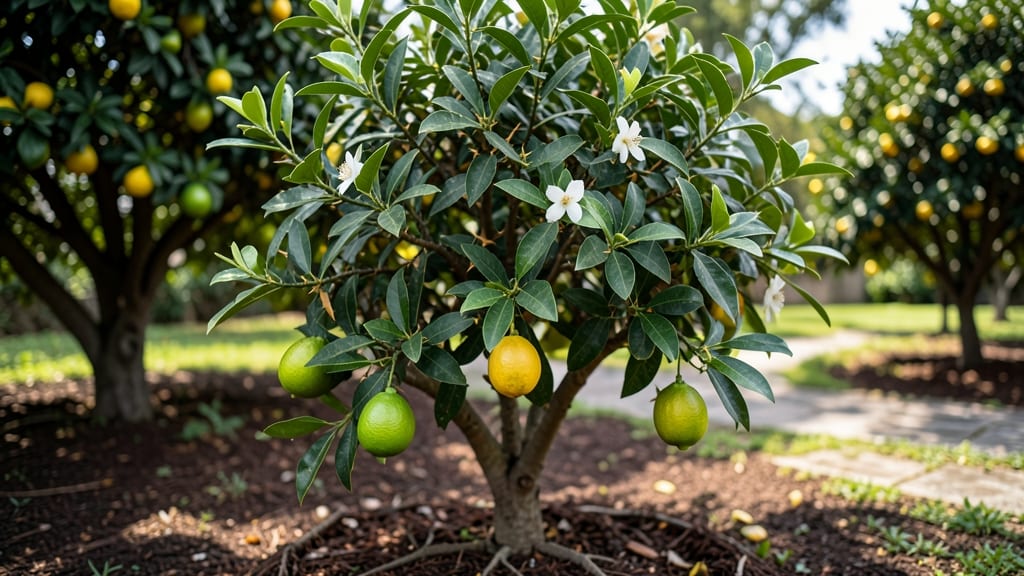
Pruning your thorny lime tree in late winter unlocks spring's most fragrant blooms—and I've learned the hard way that timing and technique make all the difference. 🌿 Those sharp thorns aren't just for defense; they signal a tree that needs careful handling to thrive.
My first attempt left me with a tangled mess, but now I prune like a pro, shaping the tree while protecting my hands. The secret starts with sharp bypass pruners and a clear goal: open the center for airflow and sunlight.
Focus on removing dead wood first, then thin out crowded branches—never cut more than 25% of the tree in one session. Those thorns might seem intimidating, but working slowly and wearing heavy gloves turns the job into a manageable task that pays off with glossy new growth.
By late spring, you'll see bright green leaves and clusters of white flowers that eventually become your homegrown limes. The tree rewards patience with disease resistance and a stronger structure for years to come. Just remember: pruning too late risks encouraging new growth that won't harden off before frost.
This method works for both Mexican lime (Citrus aurantiifolia) and thorny lemon varieties, making it versatile for any citrus lover. The key is consistency—prune annually in late winter or early spring before new growth begins, and your tree will thank you with abundant blooms and fruit.
📚 In This Guide
- What you need
- Instructions
- Tips and common mistakes
- Wrapping up and next steps
What you need
- ● Bypass pruners: Sharp, clean pruners (10–12-inch blades) for cuts under ½ inch thick. Must be sterilized with rubbing alcohol before/after use to prevent disease.
- ● Loppers: Heavy-duty (18–24-inch handles) for branches ½–2 inches thick. Look for ratcheting models for extra leverage.
- ● Pruning saw: Curved-tooth saw for thick branches (2+ inches). Warning: Wear gloves—those thorns are no joke! 🦵
- ● Ladder: Extendable aluminum ladder (20+ feet) rated for 375 lbs. Secure it with ladder stabilizers for safety.
- ● Disposable gloves: Nitrile or leather gloves (thorn-resistant) to protect your hands.
- ● Rubbing alcohol (70%+) or bleach solution: 1 part bleach to 9 parts water for sterilizing tools.
- ○ Pruning sealant (optional):strong> For cuts larger than 2 inches—use a latex-based sealant to prevent disease entry.
- ● Weather check: Prune on a dry, cloudy day (or early morning) to avoid stressing the tree. No pruning in frost or extreme heat! ❄️☀️
- ● Tree assessment: Identify dead, diseased, or crossing branches before starting. Snap a photo for reference!
- ● Safety gear: Safety glasses (to shield from debris) and closed-toe shoes.
- ● Cleanup supplies: Heavy-duty trash bags (20+ gallon) and a shredder (if recycling branches).
- ● 🔨 Sharpen your tools! Dull blades tear wood, inviting pests. Test by slicing a paper bag—if it rips, sharpen up.
- ● 🌡️ Work in layers: Remove ¼ of the tree’s canopy max per session to avoid shocking it.
- ● ✨ Label cuts: Use masking tape to mark branches for removal if you’re unsure—double-check before cutting!
Step-by-Step guide to pruning dormant lime trees
Here's how to revitalize your thorny lime tree for a bountiful spring bloom cycle.
✂️ Step 1: Assess the Tree's Structure and Health
Start by examining your lime tree's branches with a critical eye. Look for dead, diseased, or crossing branches—these are your top priorities for removal. I always scan from the ground up, using a 10-foot pole pruner to reach higher limbs safely. Dead branches will be brittle and snap easily when bent; diseased wood often shows dark spots or oozing sap.
Mark branches to remove with a piece of twine or flagging tape before climbing. This prevents accidental cuts to healthy growth. Focus on branches that rub against each other—the friction creates wounds that invite pests and disease. Remember, lime trees naturally grow dense, so you'll be opening up the canopy for better airflow and sunlight penetration.
✂️ Step 2: Remove Dead, Diseased, and Problem Branches
Make your first cuts at a 45-degree angle, about ¼ inch above an outward-facing bud or branch collar. This angle helps water run off the cut, preventing rot. For larger branches over ½ inch thick, use the three-cut method: start with an undercut, then top cut, and finish by removing the branch stub. This prevents tearing the bark.
Sterilize your pruners between cuts by wiping with rubbing alcohol or a 10% bleach solution to prevent spreading disease. Remove any suckers (shoots growing from the base or trunk) immediately—they drain energy from fruit production. I always prune on a dry, sunny day when the tree is fully dormant, typically between late winter and early spring before new growth begins.
✂️ Step 3: Thin the Canopy for Airflow and Sunlight
Step back and visualize how sunlight will penetrate the tree after pruning. Remove 20-30% of the canopy by selectively thinning branches from the inside outward. This opens up the center, allowing air to circulate and reducing humidity that encourages fungal growth. Focus on branches that grow inward or downward—they create dense, shaded areas that discourage fruit production.
For each branch you remove, look for a lateral branch growing from the same point but in a better direction. Pruning to these lateral branches encourages a more open, productive structure. Avoid "lion tailing" (cutting all but the last few inches of a branch)—this creates weak, overcrowded growth. Instead, make cuts just above a bud that faces outward.
⏰ Step 4: Shape the Tree for Optimal Growth
Now's the time to refine the tree's shape while maintaining its natural form. Lime trees benefit from a modified central leader structure—one main trunk with evenly spaced scaffold branches. Prune to create a balanced silhouette where no single branch dominates the tree. I like to leave 3-5 main scaffold branches spaced 12-18 inches apart vertically.
Use your pruners to encourage horizontal branching by cutting back the tips of vigorous upright shoots. This redirects energy into lateral growth, which produces more flowers and fruit. For young trees, you can be more aggressive with shaping, while mature trees (over 10 years old) require gentler pruning to avoid stress. Always step back occasionally to check your progress—what looks balanced from close up may not be from a distance.
🌿 Step 5: Clean Up and Apply Protective Measures
After pruning, gather all debris and remove it from the area to prevent disease and pests. I use a heavy-duty trash bag to collect larger branches and a shop vacuum for smaller clippings. Dispose of diseased wood immediately—don't compost it. Seal larger pruning wounds on the trunk with pruning sealant to protect against infection, but skip this for small cuts on branches.
Apply a 2-inch layer of mulch around the tree's drip line (the edge of the tree's canopy) but keep it 6 inches away from the trunk. This conserves moisture and regulates soil temperature. Water deeply after pruning to help the tree recover. Avoid fertilizing immediately—wait until 4-6 weeks after pruning when new growth appears, then apply a balanced citrus fertilizer to support spring blooming.
Tips & tricks for perfect dormant lime tree pruning
Transforming your thorny lime tree into a productive spring bloomer starts with these essential pruning insights.
Pruning Angle Precision: That 45-degree angle in Step 2 isn't just arbitrary—it's about water drainage. When you make cuts at this angle, rainwater runs off cleanly rather than pooling in the wound. For branches over ½ inch thick, the three-cut method prevents bark tearing that can invite disease. I've seen pruning wounds fester when this technique is skipped, so don't rush this step—take your time to make clean cuts.
Seasonal Timing Insight: The late winter to early spring window mentioned in Step 2 is critical because it coincides with the tree's natural dormancy. Pruning during this period minimizes stress on the tree while maximizing recovery time before spring growth begins. If you're in a warmer climate where winters are mild, aim for just before the first signs of bud swell—this is your cue that dormancy is ending.
Canopy Thinning Strategy: When you're removing 20-30% of the canopy in Step 3, focus on creating vertical layers rather than just opening up the center. Think of it like removing the middle seats in a theater—you want to create sightlines for sunlight to penetrate all levels. I've found that removing branches from the inside outward creates a more natural light distribution that encourages fruit production throughout the entire tree structure.
Equipment Upgrade: While a basic pruner works for small branches, invest in a pair of bypass pruners for cleaner cuts on medium-sized branches. For anything larger than ½ inch, a pruning saw with a curved blade makes the job much easier. I keep my tools sharpened and sterilized between cuts—rusty, dull blades can cause more damage than the pruning itself. The 10-foot pole pruner mentioned in Step 1 is a game-changer for reaching higher limbs safely without a ladder.
Pro Tips for Lime Tree With Thorns
- Transforming your thorny lime tree into a productive spring bloomer starts with these essential pruning insights.
- Pruning Angle Precision: That 45-degree angle in Step 2 isn't just arbitrary—it's about water drainage.
- Seasonal Timing Insight: The late winter to early spring window mentioned in Step 2 is critical because it coincides with the tree's natural dormancy.
Frequently asked questions
When is the best time to prune a lime tree with thorns?
Prune your lime tree with thorns during its dormant season—typically late winter or early spring (just before new growth starts). This timing minimizes stress on the tree and promotes healthier spring blooms. Avoid pruning in fall or summer, as it can expose the tree to pests or diseases.
Do I need special tools to prune a thorny lime tree?
Yes! Use thick, heavy-duty gloves (like leather work gloves) to protect your hands from thorns. A pruning saw or loppers (for thicker branches) and sharp bypass pruners (for smaller cuts) are essential. Sterilize tools with rubbing alcohol to prevent disease spread.
How much can I trim off without harming the tree?
Remove no more than 25-30% of the tree’s foliage in one session. Focus on dead, diseased, or crossing branches first, then thin out dense areas for airflow. Over-pruning can stress the tree, so prioritize shape and health over aggressive cuts.
What should I do if my lime tree bleeds sap after pruning?
Sap bleeding is normal but can attract pests. To minimize it, prune on a dry day and avoid cutting into wet wood. Seal larger cuts with pruning sealant (optional) or let them heal naturally. Keep the area clean to deter ants or fungi.
Are there alternatives to pruning if my tree is too thorny to handle?
If thorns make pruning too risky, consider selective pruning (targeting only the most problematic branches) or hiring a professional with experience in thorny trees. You can also train young trees with a central leader to reduce future thorn density.
Wrapping up and next steps
Pruning your lime tree with thorns during dormancy isn’t just about shaping—it’s your secret to a vibrant spring bloom and a healthier tree. By removing dead wood, thinning dense branches, and encouraging airflow, you’re setting the stage for lush foliage and sweet, fragrant flowers.
Remember, patience and precision pay off—your efforts will reward you with a thriving tree that’s ready to burst into life when warmer weather arrives.
Ready to take action? Grab your tools, mark your calendar, and give your lime tree the care it deserves. Spring blooms start with winter prep—so why wait? 🌱✨