
Pruning
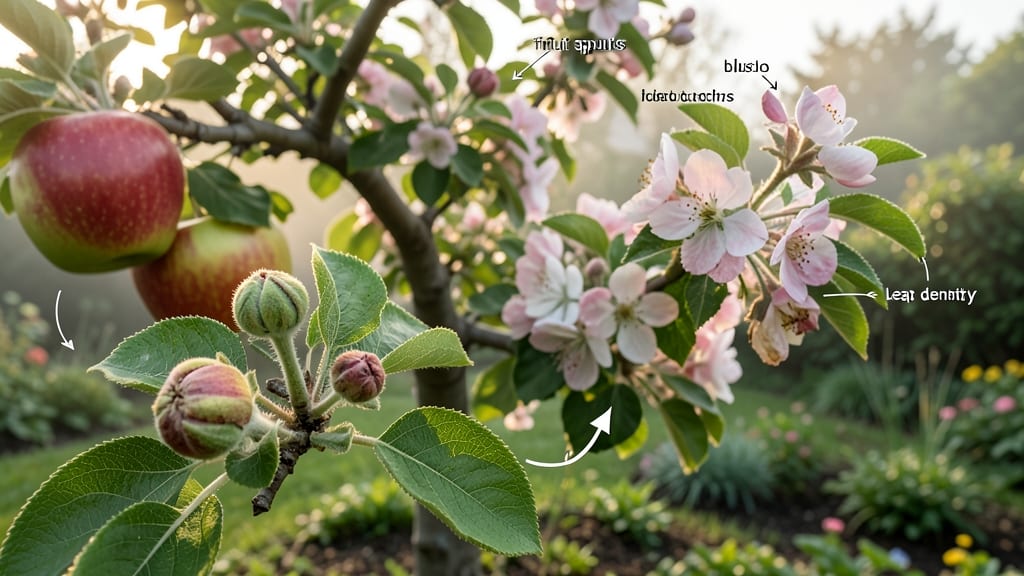
Telling if an apple tree 🍎 will fruit boils down to spotting the right signs in spring—before the blossoms even appear.
Wondering if your apple tree will bear fruit this season? Spotting early signs now can save you from months of guessing—and help you optimize care for a bountiful harvest.
Young trees or wrong varieties often fool gardeners into thinking they’ll fruit, but a few key details—like blossom buds, leaf shape, and branch growth—reveal the truth early.
Below, I’ll walk you through 5 foolproof signs to check this spring, plus what to do if your tree isn’t quite ready yet.
5 Key visual signs your apple tree will fruit this year
Spring is the perfect time to inspect your apple tree for early signs of fruit production. Many gardeners miss these subtle clues, assuming their tree won't bear fruit when it actually has great potential.
The key lies in understanding what healthy blossom buds, leaf patterns, and branch development look like before flowers even appear. These visual cues can tell you months in advance whether your tree will produce apples this season.
One of the first things to check is the blossom buds that form along last year's branches. These are typically larger than leaf buds and have a more rounded shape. If your tree has plenty of these fruit buds (often called "spurs"), it's a strong indicator of future apple production.
Look closely—sometimes they're hidden among smaller leaf buds, but they'll stand out once you know what to look for.
Don't overlook the leaf shape and branch growth patterns either. Healthy apple trees develop new growth in a balanced way, with branches spreading outward rather than growing inward. If you notice vigorous new shoots emerging in early spring, your tree is likely storing enough energy for fruit production.
These shoots should be firm to the touch and have a rich green color when they first appear.
Age matters too—young apple trees (under 3 years old) may not fruit heavily, but they still show early signs. Mature trees (5+ years) with established central leaders and scaffold branches are far more likely to produce abundant fruit.
Pay attention to how your tree's structure has developed over the years, as this gives you valuable clues about its fruiting potential.
🌱 How to Tell If Your Apple Tree Will Fruit
- 1. Look for plump blossom buds along last year's branches—these are fruit buds (not leaf buds). They should be rounded and larger than other buds, often appearing in clusters.
- 2. Check for vigorous new shoots emerging in early spring. Healthy green growth indicates stored energy for fruit production.
- 3. Examine leaf buds—they should be oval-shaped and tightly closed. If they're swollen and firm, your tree is preparing for growth.
- 4. Observe branch spread. Trees with outward-growing branches (not inward) have better air circulation and fruit potential.
- 5. Note tree maturity. Mature trees (5+ years) with established scaffold branches are far more likely to fruit than young specimens.
Pro Tip: Use a 10x magnifying glass to inspect buds closely—early detection makes all the difference!
Another important visual clue is the presence of spurs—short, stubby branches that form along the main limbs. These are powerhouses for fruit production, often bearing apples for years. If your tree has multiple spurs (each about 1-3 inches long), it's a great sign.
You might also spot flower clusters forming at the tips of these spurs, which will bloom into those iconic apple blossoms.
Don't forget to compare your tree's growth to its variety characteristics. Some apple varieties (like 'Granny Smith') produce fruit more reliably than others ('Golden Delicious' often needs cross-pollination).
If you know your tree's variety, research its typical fruiting habits—this helps you set realistic expectations. For example, dwarf varieties often fruit earlier than standard-sized trees.
Timing is everything when it comes to spotting these signs. The best time to inspect your apple tree is in late winter to early spring, before the buds swell. This gives you a head start on adjusting care if needed.
If you notice few blossom buds or weak growth, you might need to adjust fertilization or pruning strategies to encourage better fruit production next year.
One common mistake is confusing ornamental apple trees with fruiting varieties. Ornamental trees often have beautiful flowers but rarely produce edible apples. Check your tree's label or ask your nursery—if it's labeled as "ornamental," it won't bear fruit.
For fruiting trees, look for small fruitlets forming after the flowers fall (a sign of successful pollination).
Finally, keep an eye on your tree's overall health. Yellowing leaves, cracked bark, or unusual spots can signal problems that may prevent fruiting. Healthy trees with dark green foliage and smooth bark are far more likely to produce apples.
If your tree shows these signs, you're on the right track for a fruitful season!
How tree age and variety affect fruit production
Apple trees don’t produce fruit immediately after planting—age and variety play crucial roles in determining fruit-bearing potential. Young trees often focus energy on root and branch growth before flowering, while mature trees (3–5 years old) typically enter peak production.
The apple variety also matters: some, like Granny Smith, fruit reliably after 3 years, while others, like Honeycrisp, may take 5+ years.
Seasonal timing is equally important. Trees planted in early spring (before bud break) establish stronger root systems, giving them a head start for flowering the following year. Late plantings may delay fruiting by 1–2 seasons.
Even with the right age and timing, pollination compatibility is critical—many apple varieties require a second tree for cross-pollination to produce fruit.
Dwarf apple trees (6–12 ft tall) often fruit faster than standard varieties due to their accelerated growth cycles. For example, a dwarf Honeycrisp might produce apples in 3 years, while a standard tree could take 5–7 years.
However, dwarf trees have shorter productive lifespans (15–20 years) compared to standard trees (30+ years). If you’re impatient for fruit, prioritize dwarf or semi-dwarf varieties like Liberty or Zestar!.
Seasonal timing also influences fruiting. Trees planted in late winter/early spring (USDA Zones 5–8) establish roots before bud break, giving them energy to flower the next spring. In warmer climates (Zones 9–10), plant in winter to avoid summer stress.
Always check your variety’s chill hour requirements—some apples need 500–1,000 hours below 45°F to flower properly.
Even with the right age and variety, environmental stress—like drought or extreme heat—can delay fruiting. Young trees need consistent watering (1–1.5 inches weekly) to support growth, while mature trees benefit from deep, infrequent watering (every 10–14 days).
Mulching with wood chips or straw helps retain moisture and encourages root development, both critical for future fruit production.
If your tree is past 3 years old but still not fruiting, check for poor pollination, nutrient deficiencies (like nitrogen or boron), or disease pressure (e.g., fire blight).
A soil test and targeted fertilization can often revive a struggling tree’s fruiting potential. Patience is key—some varieties simply take longer to mature!