
Pruning
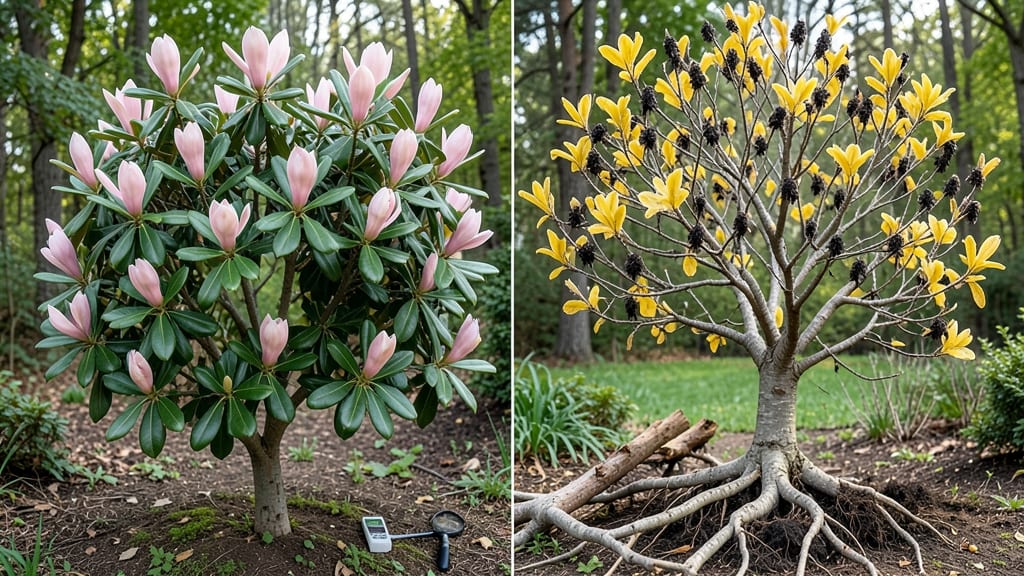
How to tell if a magnolia tree is dying—that sudden silence—no blooms, no new leaves—is a heartbreaking sight. 🌿 I’ve watched mine struggle through fungal infections and drought, and these 5 key clues will tell you if your tree is just resting or in real trouble before it’s too late. The first red flag is leaves turning yellow or brown in patches, especially if they’re curling or falling early. Healthy magnolias keep their glossy foliage until frost. Then there’s the bark: cracks, oozing sap, or blackened spots mean disease or pest damage. Don’t ignore missing buds either—if your tree skips spring blooms for two years in a row, it’s signaling stress. Act fast: prune dead branches, check for pests like scale insects, and water deeply if the soil feels dry. A thriving magnolia should bounce back with proper care, and you’ll be back to admiring those fragrant, creamy blooms by next spring. For stubborn cases, consult a local arborist—they can diagnose root rot or nutrient deficiencies with soil tests. Prevention is key: mulch properly, avoid overwatering, and fertilize in early spring. Your tree’s survival depends on catching these signs early.
Root Causes Behind Dying Magnolias
Magnolia trees are majestic and long-lived, but when they start struggling, it’s often due to specific environmental or care-related stressors. Understanding the why behind your tree’s decline is the first step to reviving it—or at least preventing further damage.
Below, we break down the most common culprits, backed by science and actionable insights.
Magnolias thrive in slightly acidic, well-draining soil (pH 5.0–6.0). When soil conditions are off, roots suffocate, nutrients become unavailable, and the tree weakens.
- Compacted or Waterlogged Soil 💧 Magnolias hate soggy roots. Heavy clay or poorly draining soil cuts off oxygen, leading to root rot (a fungal infection that strangles the tree).
Symptoms? Yellowing leaves, stunted growth, and a foul odor at the base. - Fix: Improve drainage with organic matter (compost or peat moss) or install a French drain.
- Nutrient Imbalance 🌿 Magnolias need nitrogen (N), phosphorus (P), and potassium (K) in balance.
A deficiency in any of these (especially nitrogen) causes: - Yellowing leaves (chlorosis) if iron or magnesium is lacking. - Brown leaf edges if potassium is deficient. - Fix: Conduct a soil test ($20–$50 at garden centers) and amend with slow-release fertilizer (e.g., 10-10-10) in early spring.
- Soil pH Imbalance 🧪 If soil pH rises above 7.0 (alkaline), iron and manganese become locked out, causing yellowing between leaf veins. Lime (calcium carbonate) worsens this.
- Fix: Apply elemental sulfur or iron chelate to lower pH gradually.
Magnolias are susceptible to pathogens that thrive in wet, humid conditions. These infections often start in the roots or leaves and spread rapidly if unchecked.
- Root Rot (Phytophthora spp.) 🍄 A water-loving fungus that attacks roots in saturated soil. Symptoms include:
- Soft, mushy roots that ooze when cut.
- Wilting despite moist soil (the tree can’t absorb water).
- Fix: Prune affected roots, improve drainage, and apply copper fungicide (e.g., Bordeaux mixture).
- Magnolia Scale & Anthracnose 🐜
- Scale insects (sap-sucking pests) weaken trees by clogging pores, leading to sooty mold (black fungal growth on leaves).
- Anthracnose (a fungal leaf spot) causes brown, crinkled leaves in spring.
- Fix: Spray with neem oil (for scale) or copper-based fungicide (for anthracnose) in early spring before buds swell.
- Bacterial Leaf Spot (Xanthomonas) 🔬 Causes water-soaked spots that turn brown and drop leaves prematurely. Spreads via rain or tools.
- Fix: Remove infected leaves, sterilize pruners with rubbing alcohol, and avoid overhead watering.
Magnolias are adaptable but hate extremes. Sudden changes in light, temperature, or water can shock them into decline.
- Overwatering or Underwatering 💦
- Overwatering leads to root rot (as discussed above).
- Underwatering causes leaf scorch (brown edges) and dropping buds.
- Fix: Water deeply 1–2 times per week (1–1.5 inches per week). Mulch (2–3 inches) to retain moisture.
- Sunburn or Frost Damage ❄️☀️
- Southern exposure + no acclimation → sunburn (white/yellow patches on leaves).
- Late spring frosts → bud death (no flowers or new growth).
- Fix: Provide afternoon shade for young trees. Wrap the trunk in burlap for frost protection in cold climates.
- Wind & Physical Damage 🌪️ Strong winds can tear bark or break branches, creating entry points for pests/disease. Poor pruning also weakens structure.
- Fix: Prune in late winter/early spring (before buds swell). Use three-cut pruning to avoid bark tears.
While magnolias are relatively pest-resistant, certain insects can drain their vitality over time.
- Magnolia Scale & Spider Mites 🕷️ - Scale (sticky, armored insects) sucks sap, causing yellowing and leaf drop. - Spider mites (tiny red pests) thrive in dry heat, creating fine webbing on leaves. - Fix: Blast off scale with water spray, then apply horticultural oil.
For mites, use neem oil or soapy water spray.
- Borers & Beetles 🪲
- Southern pine beetles or magnolia borers tunnel into trunk/roots, disrupting nutrient flow.
- Signs: Sawdust-like frass at the base or oozing sap.
- Fix: Inject systemic insecticide (e.g., imidacloprid) into the trunk. Remove heavily infested wood.
Sometimes, well-intentioned gardening mistakes accelerate decline.
- Over-Fertilizing 💥 Too much synthetic nitrogen burns roots, causing leaf yellowing and dieback.
- Fix: Switch to organic fertilizer (e.g., compost or fish emulsion) and water thoroughly after application.
- Improper Pruning ⚔️
- Topping (cutting back to a stub) creates weak regrowth.
- Pruning in late summer/fall encourages new growth that won’t harden off before winter.
- Fix: Prune only in late winter/early spring (before buds break). Use clean, sharp tools and seal large cuts with pruning sealant.
- Planting in the Wrong Location 📍 Magnolias need partial shade (especially in hot climates) and space (roots spread widely).
- Fix: Choose a spot with 6+ hours of dappled sun. Avoid competition with aggressive roots (e.g., nearby grass or weeds).
Magnolias are sensitive to abrupt climate changes, especially in urban heat islands or microclimates.
- Urban Heat Stress 🏙️ Pavement and buildings trap heat, causing leaf scorch even with adequate water.
- Fix: Install a drip irrigation system and use light-colored mulch to reflect heat.
- Late Spring Freezes ❄️➡️☀️ If buds swell before last frost, flowers and leaves can die back.
- Fix: Cover young trees with frost cloth on cold nights.
- Drought Stress 🏜️ Extended dry spells cause wilting, leaf drop, and branch dieback.
- Fix: Deep water every 7–10 days during droughts. Use mulch to lock in moisture.
Revive Your Magnolia Tree Now
If your magnolia tree is showing signs of distress, don’t panic—many issues are fixable with the right care. Below are targeted solutions for common problems, paired with easy-to-follow steps and prevention tips to keep your tree thriving. 🌿💚
Yellowing leaves are often a cry for help—whether your magnolia lacks nutrients or suffers from soggy roots.
✅ Step-by-Step Fix:
- 🌱 Test the Soil (pH & Moisture) - Grab a soil sample (6 inches deep) and test its pH—magnolias prefer acidic soil (pH 5.0–6.5).
If it’s too alkaline, amend with sulfur or peat moss. - Check moisture: Stick your finger in the soil. If it’s damp after 24 hours, you’re overwatering.
- 💧 Adjust Watering Habits - Underwatering? Water deeply 1–2 times per week (more in extreme heat). - Overwatering? Let the top 3–4 inches of soil dry out between waterings.
Improve drainage by adding organic mulch (3–4 inches) around the base (but keep it 6 inches away from the trunk).
- 🍃 Fertilize Smartly
- Use a slow-release, acidic fertilizer (like 10-10-10 or a magnolia-specific blend) in early spring and late summer.
- Pro Tip: 💡 Avoid high-nitrogen fertilizers—they burn roots and worsen yellowing.
- 🌿 Prune Damaged Foliage
- Snip off yellowed or brown leaves with clean pruners to redirect energy to healthy growth.
🛡️ Prevention Tips:
- Mulch annually to retain moisture and acidity.
- Water in the morning to reduce fungal risks.
- Avoid heavy clay soil—amend with compost if needed.
Wilting branches can signal root rot (from overwatering) or pests like scale insects sucking sap.
✅ Step-by-Step Fix:
- 🔍 Diagnose the Problem
- Root rot? Lift a small section of mulch—if the roots smell rotten or look mushy, you’ve got rot.
- Pests? Check for sticky residue (honeydew) on leaves or tiny bumps on stems (scale insects).
- 💦 Fix Root Rot
- Stop watering immediately and let the soil dry out.
- Improve drainage by adding perlite or coarse sand to the soil.
- Fungal treatment: Spray copper fungicide on the soil and lower trunk.
- 🐜 Eliminate Pests
- Scale insects? Wipe them off with a soapy water cloth or spray neem oil (follow label instructions).
- Aphids? Blast them off with a strong water spray or use insecticidal soap.
- 🌱 Support Weak Branches
- If branches are severely drooping, prop them up with soft ties and stakes to prevent snapping.
🛡️ Prevention Tips:
- Space mulch properly (6 inches from the trunk) to prevent moisture buildup.
- Inspect leaves weekly in spring/summer for early pest signs.
- Avoid compacted soil—aerate annually with a garden fork.
Brown, crispy leaf edges often mean drought stress, sun scorch, or fungal diseases like anthracnose.
✅ Step-by-Step Fix:
- 🌞 Shield from Harsh Sun
- If your magnolia is in a hot, exposed spot, provide afternoon shade with a lightweight shade cloth (30–50% coverage).
- Pro Tip: 🌡️ Mulch heavily (4–6 inches) to regulate soil temperature.
- 💧 Hydrate Properly
- Deep water 2–3 times per week during dry spells (check soil moisture first).
- Mist leaves in extreme heat to prevent scorching.
- 🍄 Fight Fungal Diseases
- Prune infected branches (sterilize tools with rubbing alcohol).
- Apply fungicide (like copper-based or neem oil spray) every 2 weeks until new growth appears.
- 🌿 Boost Tree Health
- Fertilize with iron (if leaves are yellow with brown edges—this signals iron chlorosis).
- Avoid overhead watering to prevent fungal spores from splashing onto leaves.
🛡️ Prevention Tips:
- Plant in partial shade if your climate is hot and dry.
- Water at the base (not leaves) to reduce fungal risks.
- Choose disease-resistant varieties (like ‘Little Gem’ or ‘Ann C. Moore’) if fungal issues are recurrent.
If your tree is bare branches, oozing sap, or struggling to leaf out, it may need emergency care or even professional help.
✅ Step-by-Step Fix:
- 🌳 Assess the Damage
- No leaves + soft stems? Likely root rot or severe pest damage.
- Oozing sap? Could be bacterial infection (like canker disease).
- 🔪 Prune Aggressively (But Correctly)
- Remove dead/dying branches at the branch collar (the swollen area where the branch meets the trunk).
- Avoid topping the tree—this stresses it further.
- 💊 Apply a Rescue Treatment
- For root rot: Dig around the roots, trim mushy sections, and replant with fresh, well-draining soil.
- For bacterial canker: Prune infected areas, then sterilize cuts with copper spray.
- 🌱 Consider Professional Help
- If the tree is over 50% dead, consult an arborist—some magnolias can be saved with deep root fertilization or mycorrhizal fungi treatments.
🛡️ Prevention Tips:
- Plant magnolias in the right spot (partial shade, acidic soil).
- Monitor for pests/diseases year-round, not just in summer.
- Avoid heavy pruning in late summer—it stresses the tree before winter.
With these fixes, your magnolia can bounce back—but act fast! The sooner you address the issue, the better its chances of recovery. 🌟 Keep an eye on it, adjust care as needed, and soon you’ll be admiring lush, blooming branches again.
Frequently asked questions
Why are my magnolia leaves turning yellow but staying attached?
This is often a sign of iron deficiency (iron chlorosis) or overwatering. Magnolias need slightly acidic soil (pH 5.0-6.5)—if your soil is too alkaline, iron becomes unavailable. Check soil pH with a test kit and amend with elemental sulfur or iron chelate if needed. Yellow leaves between veins? That's classic chlorosis.
Can I save a magnolia with no leaves at all?
It depends! If the branches are still firm and the bark isn't cracked, there's hope. Start by checking for root rot (lift mulch—rotten smell = bad news). Prune dead wood immediately, then focus on deep watering (1-2 times/week) and fertilizing with slow-release acid-loving plant food. If over 50% of the tree is dead, consult an arborist.
What do magnolia scale insects look like, and how do I get rid of them?
Magnolia scale appears as tiny brown bumps on stems and leaves (they're armored pests). Look for sticky honeydew on leaves too. Blast them off with water first, then treat with horticultural oil or neem oil spray (repeat every 7-10 days). For severe cases, use systemic insecticide like imidacloprid.
Is it too late to save my magnolia if it's already lost most of its branches?
Not necessarily! Even severely pruned magnolias can regrow if the root system is healthy. Prune back to live wood (green underneath bark) and fertilize with high-phosphorus food to encourage new growth. Water deeply 2-3 times/week for the first month. Young trees recover faster than mature ones.