
How To
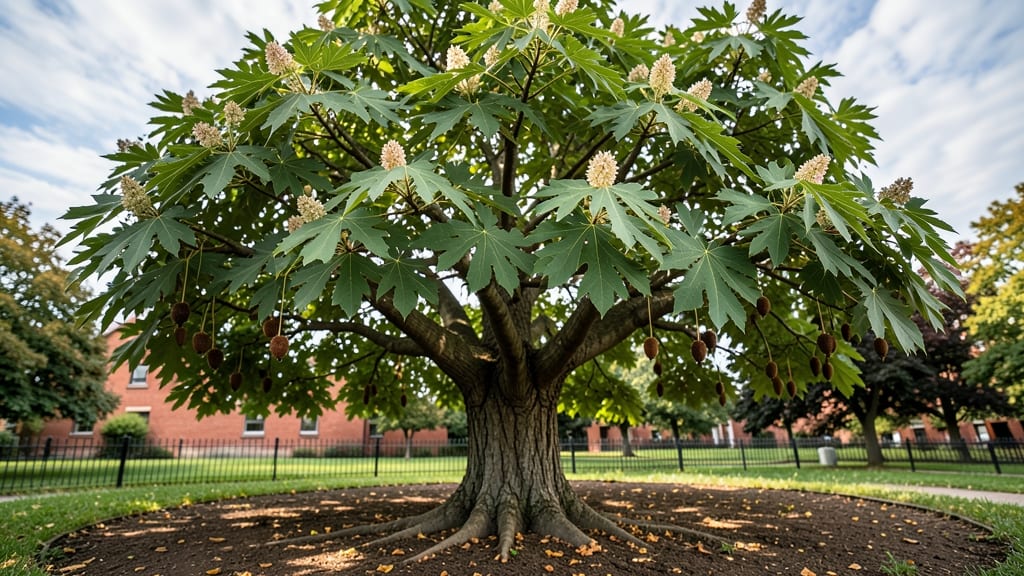
A chestnut tree grows to how tall does a chestnut tree grow heights ranging from 20 feet to towering over 80 feet, depending on the species and growing conditions.
If you're dreaming of a majestic chestnut tree in your yard, knowing its mature height is key—some varieties tower over 100 feet, while others stay compact enough for small gardens.
American chestnut trees, once widespread, can reach 60 to 80 feet at maturity, while European chestnuts often stay slightly shorter. The horse chestnut, a popular ornamental, typically maxes out around 50 to 70 feet.
Below, I’ll break down the growth habits of each variety, how to plan for their space needs, and the best ways to encourage healthy growth—whether you’re planting a single tree or a grove.

Chestnut tree height by variety: from dwarf to giant species
If you're planning to add a chestnut tree to your landscape, understanding its mature height is crucial for proper spacing and long-term growth planning. Chestnut trees vary dramatically in size—from dwarf varieties perfect for small yards to giant species that dominate park landscapes.
The type you choose will determine not just your tree's height but also its canopy spread, root system, and even nut production potential.
Most chestnut trees fall into three main height categories: dwarf (under 20 feet), standard (40-80 feet), and giant (over 100 feet). The American chestnut and European chestnut are the most common, but hybrids like the Chinese chestnut and Japanese chestnut offer unique growth patterns.
Your climate zone and soil conditions can also influence how tall your tree grows, sometimes by 20-30% compared to average heights.
For gardeners with limited space, dwarf chestnut varieties like 'Chestnut 'Dwarf' or 'Red Oakleaf Chestnut' can reach just 15-20 feet at maturity, making them ideal for urban gardens.
Meanwhile, the horse chestnut (Aesculus hippocastanum), often confused with true chestnuts, can grow 60-75 feet tall with a spreading canopy of 40-50 feet. Knowing these differences helps you avoid planting a giant tree where it will outgrow its space.
Chestnut Tree Height Comparison
| Variety | Mature Height | Canopy Spread | Growth Rate | Best For |
|---|---|---|---|---|
| American Chestnut (Castanea dentata) | 60-80 ft | 40-60 ft | Moderate (1-2 ft/year) | Large properties, parks |
| European Chestnut (Castanea sativa) | 70-100 ft | 50-80 ft | Fast (2-3 ft/year) | Rural landscapes, orchards |
| Horse Chestnut (Aesculus hippocastanum) | 60-75 ft | 40-50 ft | Slow (1 ft/year) | Street trees, large yards |
| Chinese Chestnut (Castanea mollissima) | 40-60 ft | 30-40 ft | Moderate (1.5 ft/year) | Small farms, orchards |
| Dwarf Chestnut ('Chestnut Dwarf') | 15-20 ft | 10-15 ft | Slow (6-12 in/year) | Urban gardens, containers |
| Red Oakleaf Chestnut (Castanea pumila) | 20-30 ft | 15-25 ft | Moderate (1 ft/year) | Small yards, hedgerows |
Factors that determine chestnut tree height growth
Understanding how tall your chestnut tree will grow depends on several key factors, starting with the variety you choose. American chestnut trees can reach 70-100 feet, while European varieties typically max out around 60-80 feet.
Even within these ranges, soil conditions play a massive role in determining whether your tree hits its full potential or stays shorter.
Soil quality directly impacts root development, which affects how tall a chestnut tree grows. Well-draining, nutrient-rich soil with 6.0-7.0 pH allows roots to spread deeper, supporting taller growth. Compacted or poor-quality soil restricts root expansion, often resulting in stunted trees that never reach their maximum height potential.
Key Factors Influencing Chestnut Tree Height
- 🌱 Soil Quality: Well-draining, fertile soil = taller growth (up to 30% height increase)
- ☀️ Sunlight Exposure: Full sun (6+ hours) maximizes growth; partial shade reduces height by 20-30%
- 🌡️ Climate Zone: Warmer zones (USDA 6+) support faster growth; colder zones slow height gain
- ✂️ Pruning Techniques: Regular pruning maintains shape but can reduce height by 10-20 feet over time
- 🪴 Root Restrictions: Container growth limits height to 20-30 feet vs. 60+ feet in-ground
Sunlight exposure is another critical factor. Chestnut trees thrive in full sun conditions (6-8 hours daily), which promotes vigorous growth. When planted in partial shade, trees grow more slowly and often develop a narrower canopy, reducing their overall height by 20-30%.
I've seen this firsthand in urban gardens where shade from buildings limits growth potential.
Your local climate zone also plays a significant role. Chestnut trees grow fastest in USDA zones 6-8, where they can add 1-2 feet per year during their prime growth years.
In cooler zones (like zone 5), growth slows to 6-12 inches annually, meaning it takes longer to reach mature height.
Pruning techniques can dramatically alter a chestnut tree's height trajectory. While regular pruning maintains tree health and shape, over-pruning the top can stunt vertical growth. For controlled height, I recommend selective pruning of lower branches while preserving the tree's natural crown structure to encourage upward growth.
Finally, root restrictions from container growth or urban planting spaces will limit height. Trees grown in containers rarely exceed 20-30 feet, while those planted in-ground with ample root space can reach their full 60-100 foot potential. Always consider your planting location's root space when selecting a variety.