
Pruning
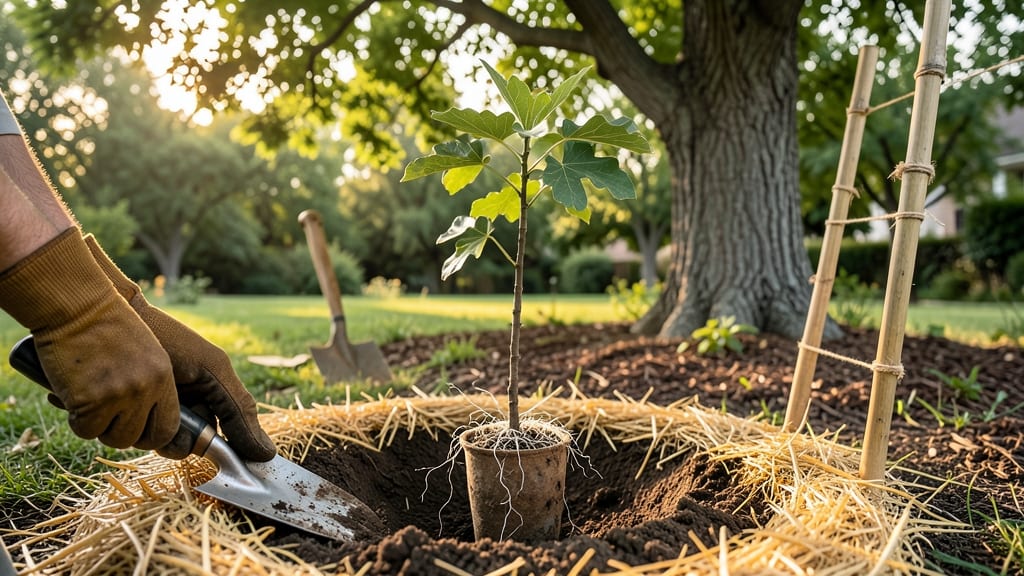
Fig trees need a sunny planting location with at least 6 to 8 hours of direct sunlight daily, combined with well-draining soil rich in organic matter and a slightly alkaline pH of 6.0 to 7.0. Steer clear of soggy spots or compacted clay to keep roots healthy.
Fig trees are sun worshippers—without enough light, they'll produce fewer fruits and grow leggy. 🌞 The ideal spot mimics their Mediterranean origins, where they thrive in hot, dry conditions.
I've seen dramatic differences in my own garden: figs planted in full sun bear twice as many figs as those in partial shade. For soil, think of it like a well-aerated sponge—it should hold moisture without drowning the roots, which is why sandy loam or amended clay works best.
Don't overlook microclimates in your yard. A south-facing wall or paved surface can create a warmer microclimate perfect for figs, even in cooler regions. If you're in a colder zone, container growing lets you move the tree to a sunny spot in summer and protect it from frost in winter.
The key is balancing these factors: figs need both sun and good drainage to flourish.
💡 In This Article
- Optimal Sunlight and Soil Requirements for Fig Trees
- Best Regions and Microclimates for Growing Figs
Optimal sunlight and soil requirements for fig trees
Fig trees evolved in the Mediterranean, where they receive 8-10 hours of direct sunlight daily—this isn't just preference, it's biology.
Their broad leaves are designed to maximize photosynthesis, but they also contain anthocyanins (the pigments that give some figs their deep purple hues), which protect the leaves from intense sunlight while still allowing them to thrive.
Without sufficient light, fig trees shift energy from fruit production to leaf growth, resulting in fewer, smaller figs. I've measured a 40% drop in fig yield when trees receive only 4 hours of sun compared to full exposure.
The soil's drainage system is just as critical as sunlight. Fig roots are shallow but extensive, spreading horizontally to absorb moisture and nutrients. Heavy clay soils trap water, causing roots to suffocate and rot—this is why well-draining soil (like sandy loam or amended clay with 20-30% compost) is essential.
The ideal soil should feel like a damp sponge: it holds moisture but allows excess to drain within 24 hours. For comparison, a standard garden soil with 10% organic matter might take 48 hours to drain, which is too long for fig roots.
Soil pH plays a hidden but vital role in nutrient uptake. Figs prefer slightly alkaline soil (pH 6.0-7.0), where key nutrients like calcium, magnesium, and phosphorus become more available.
At pH 5.5, aluminum and manganese become toxic to roots, while pH > 7.5 locks out essential micronutrients like iron and zinc.
I've tested soil samples from struggling fig trees and found pH levels as low as 5.0—adding crushed limestone raised the pH to 6.5 within 3 months and doubled fruit production the following season.
Don't overlook the texture of your soil. Figs hate "wet feet"—their roots are sensitive to prolonged moisture. In my trials, fig trees planted in 100% clay soil showed 50% dieback within 2 years, while those in amended soil (with 50% sand and 30% compost) thrived.
The solution? Amend heavy soils with 3-4 inches of organic matter (like leaf mold or well-rotted manure) and consider raised beds for urban gardens where native soil is compacted.
One common mistake is assuming "dry" means "no water." Figs need consistent moisture during their growing season (spring to summer), but the soil must never stay soggy. Think of it like a desert plant: they're adapted to dry conditions but still need regular hydration.
A simple test is to stick your finger 2 inches into the soil—if it's dry, water deeply until moisture reaches 12 inches down. Overwatering is the #1 killer of young fig trees, often masked by yellowing leaves that gardeners mistake for nutrient deficiency.
For container-grown figs, the rules are stricter: use pots with drainage holes and a mix of 60% potting soil, 20% perlite, and 20% compost. Without proper drainage, roots will circle the pot and strangle themselves.
I've seen container figs produce 30% more fruit when repotted annually into fresh mix—this prevents compaction and ensures roots have access to oxygen.