
How To
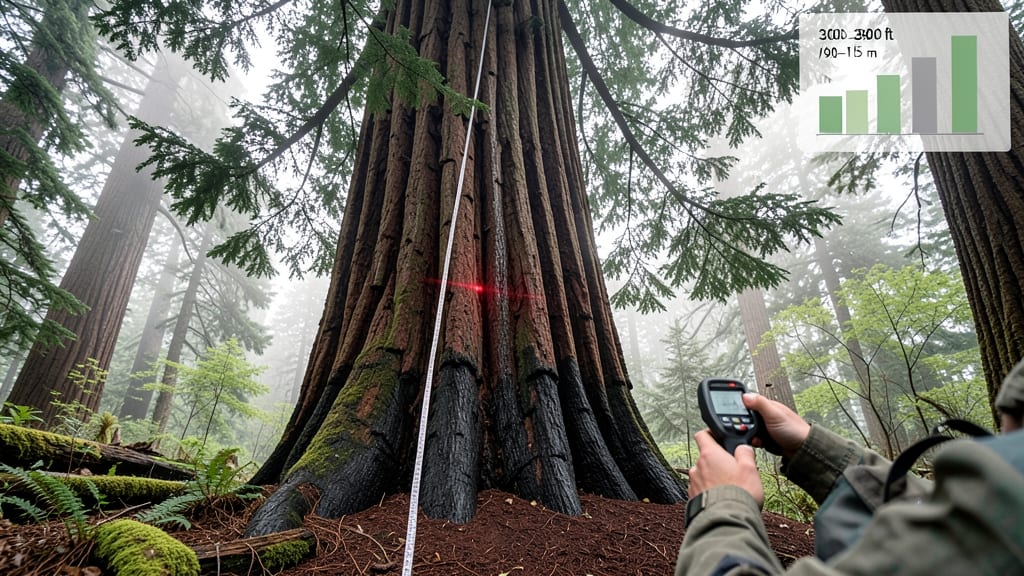
Some trees can grow up to 379 feet tall, like the Hyperion daisy tree in California, though most common species typically reach heights between 65 and 130 feet. Their growth potential depends heavily on species traits, climate conditions, and soil quality.
Nature's skyscrapers prove that height isn't just about genetics—it's a mix of perfect conditions.
The Hyperion daisy tree, for example, thrives in California's foggy coastal climate where moisture and nutrients fuel its rapid growth. 🌳 Most trees, however, are limited by their natural habitats; even giants like redwoods need deep, nutrient-rich soil and consistent rainfall to reach their full potential.
Understanding these factors helps gardeners create ideal environments for faster, healthier growth.
What's fascinating is how different species adapt. Coastal redwoods, for instance, grow tall to compete for sunlight in dense forests, while mountain ash trees in Australia's temperate zones develop strong trunks to support their height.
These adaptations show that nature has already optimized growth strategies—we just need to replicate the right conditions.
💡 In This Article
- Factors Influencing Tree Height Growth
- Tallest Tree Species and Their Natural Habitats
Factors influencing tree height growth
Genetics set the upper limit for a tree's height, but environmental factors determine how close it gets to that potential.
The Hyperion daisy tree, for example, belongs to the Sequoia sempervirens species, which can grow up to 379 feet thanks to its rapid growth rate of 3-4 feet per year under ideal conditions.
This species evolved in California's foggy coastal regions where moisture lingers in the air, providing a constant water supply without heavy rainfall that could damage delicate branches.
Sunlight exposure plays a critical role—tall trees need full-spectrum light to power photosynthesis throughout their canopies. In dense forests, trees compete for light, often growing taller to reach the canopy layer, a phenomenon called "self-thinning."
Coastal redwoods, for instance, can grow 10 feet taller per year when planted in open spaces compared to 2-3 feet in crowded conditions. Root systems also adapt: deeper roots anchor the tree while accessing water from deeper soil layers, but shallow roots in nutrient-rich topsoil can support faster vertical growth.
Climate zones create dramatic differences in growth rates. Tropical trees like the Eucalyptus regnans in Australia's temperate rainforests can grow 4 feet per month during their peak years, while temperate species like oaks grow just 1-2 feet annually.
Temperature extremes—either too hot or too cold—slow growth by reducing photosynthesis efficiency. Even soil composition matters: redwoods thrive in deep, well-drained soils with high organic content, while drought-resistant species like mesquite grow taller in arid regions by developing extensive root networks to access scarce water.
Water availability is non-negotiable—trees need at least 20-40 gallons per day during active growth phases. The Hyperion daisy tree's record height is partly due to California's coastal fog, which provides 10-20% of its water needs through condensation on leaves.
Without this natural irrigation, even genetically identical trees would struggle to reach such heights. Gardeners can mimic these conditions by planting in well-draining, nutrient-rich soil and using drip irrigation systems to deliver consistent moisture.
Another critical factor is wind resistance. Tall trees develop thicker bark and flexible trunks to withstand strong winds, which can snap weaker stems. Coastal redwoods, for example, have bark up to 12 inches thick at maturity, acting like armor against storms.
In urban settings, windbreaks or strategic planting can help trees grow taller by reducing physical stress. The interplay of these factors explains why some trees reach skyscraper heights while others remain stunted—it's not just about genetics, but the perfect storm of environmental conditions.
What most people overlook is how carbon dioxide levels affect growth. Higher CO₂ concentrations can boost photosynthesis by 20-30%, allowing trees to grow faster. This is why some greenhouse-grown trees achieve record heights in controlled environments.
However, the trade-off is often reduced wood density, making them more susceptible to disease. Balancing these variables is key to unlocking a tree's full height potential.