
How To
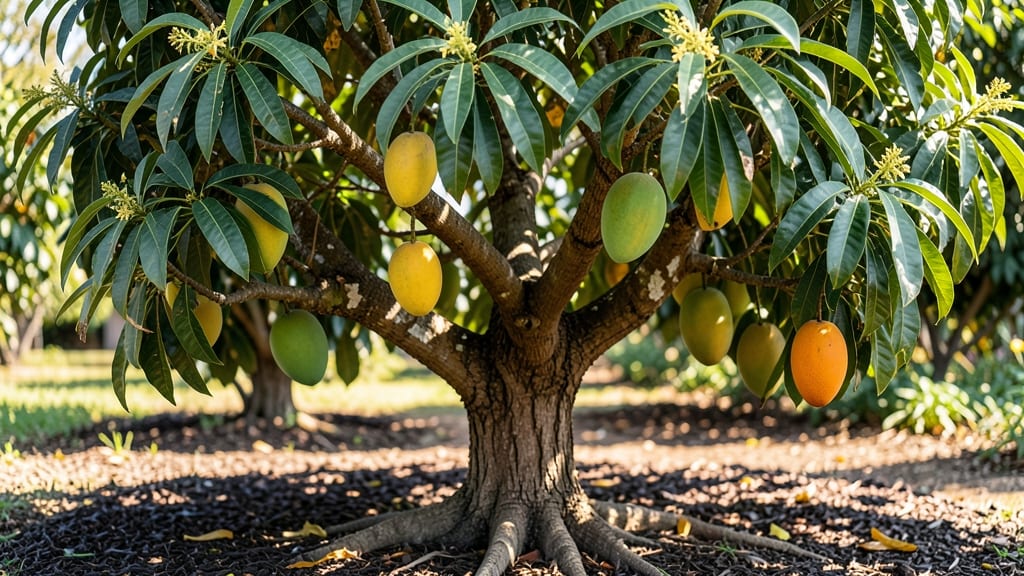
A mango tree can grow up to 100 feet tall in ideal tropical conditions, turning your backyard into a lush, fruiting giant if you choose the right variety.
Imagine biting into a ripe mango plucked straight from a towering tree in your backyard—if you knew the right variety and growing conditions, you could turn your garden into a tropical paradise.
But how tall can a mango tree really grow? The answer depends on whether you’re growing a dwarf variety for containers or a full-size tropical giant.
Most standard mango trees reach 60 to 80 feet in height, while dwarf varieties stay between 15 and 25 feet, making them perfect for smaller spaces. Climate, soil, and pruning play a huge role in determining how tall your 🥭 tree will become.
In this guide, I’ll break down the height ranges by variety, how to control growth with pruning, and the best conditions to keep your mango tree thriving—whether you want a manageable backyard tree or a sky-high tropical giant.

Mango tree height by variety: from dwarf to giant giants
If you're dreaming of a backyard mango grove, the first question is always: how tall can a mango tree grow? The answer depends entirely on the variety you choose, with heights ranging from compact 10-foot dwarfs to towering 100-foot giants.
Selecting the right type is crucial—whether you have limited space or want to create a tropical canopy. Let’s explore the extremes and everything in between.
Most home gardeners opt for dwarf or semi-dwarf varieties because they’re easier to manage, fruit sooner, and fit into smaller yards. These varieties can reach 15 to 30 feet at maturity, making them ideal for container growing or urban homesteads.
On the other end of the spectrum, standard tropical varieties like 'Alphonso' or 'Kent' can soar to 60 to 100 feet, requiring orchard-level space and professional care.
Below is a breakdown of the most popular mango varieties by height, including their growth habits, fruit characteristics, and ideal climates. Whether you're a backyard enthusiast or a commercial grower, this guide will help you pick the perfect tree for your space and goals.
The 'Cogshall' variety is one of the most popular choices for home gardeners because it stays under 15 feet tall while still producing sweet, 8-ounce mangos. It’s perfect for container growing and thrives in USDA Zones 9–11, making it ideal for California, Florida, and Hawaii.
If you’re limited on space but still want fresh mangos, this variety is a game-changer.
For those with slightly more room, the 'Julie' variety grows to 12–20 feet and yields medium-sized fruit with a rich, creamy texture. It’s also cold-hardy enough for Zone 9, which opens up options for gardeners in southern Texas or coastal North Carolina.
The trade-off? It takes a few extra years to mature compared to dwarfs.
If you’re aiming for a commercial-scale harvest, varieties like 'Keitt' or 'Haden' are excellent choices. These semi-dwarf varieties reach 20–40 feet and produce high-yielding fruit that’s prized in grocery stores.
'Keitt' mangos, for example, are known for their fibrous flesh and bold flavor, while 'Haden' offers a sweeter, more aromatic profile.
On the opposite end, tropical giants like 'Alphonso' and 'Kent' can grow to 60–100 feet in their native habitats. These varieties are staples in Indian and Southeast Asian orchards, where their massive, juicy fruit (often weighing over 2 pounds) is celebrated.
However, they require tropical climates (Zones 10–11+) and ample space, making them impractical for most home gardens.
Before planting, consider your local climate and available space. Even dwarf varieties need room to spread their roots and branches, while giant varieties may require professional pruning and support systems to prevent storm damage.
If you’re in a cooler climate, opt for cold-hardy varieties like 'Julie' or 'Cogshall'—they’ll reward you with fruit even in Zone 9.
Climate and soil factors that determine mango tree height
A mango tree's final height depends heavily on its native climate and soil conditions. In tropical zones like USDA 10-11, these trees can soar to 60-100 feet, while cooler climates limit growth to 20-30 feet or less.
The right balance of humidity, sunlight, and drainage determines whether your tree becomes a towering giant or a manageable backyard feature.
Tropical climates with consistent warmth (75-90°F) and high humidity (70%+) create ideal conditions for rapid vertical growth. Meanwhile, subtropical zones (like Florida or Southern California) can support mango trees but often result in shorter, bushier growth due to seasonal temperature swings.
Let’s explore how to optimize height based on your local conditions.
| Factor | Tropical Climate (USDA 10-11) | Subtropical Climate (USDA 9-10) | Cooler Climate (USDA 8 or below) |
|---|---|---|---|
| Temperature Range | 75-90°F year-round | 60-90°F (mild winters) | 50-85°F (frost risk) |
| Humidity Level | 70-90% | 50-70% | 30-50% (dry air) |
| Sunlight Exposure | Full sun (8+ hours) | Full sun (6-8 hours) | Partial shade (4-6 hours) |
| Soil Drainage | Well-draining, sandy loam | Moderately draining, loamy | Fast-draining, raised beds |
| Expected Height | 60-100 feet | 30-50 feet (or dwarf varieties) | 15-25 feet (container-grown) |
In tropical climates, mango trees thrive with year-round warmth and high humidity, allowing them to reach their full genetic height potential. For example, the 'Alphonso' variety can grow over 100 feet in ideal conditions.
Meanwhile, in subtropical zones, trees grow slower due to cooler winters, often staying between 30-50 feet unless pruned.
Soil drainage is another critical factor—waterlogged roots stunt growth, while well-draining sandy loam encourages rapid vertical expansion. If your soil is heavy clay, amend it with compost and perlite to improve aeration.
In cooler climates, raised beds or containers help mimic tropical conditions, keeping trees manageable at 15-25 feet.
Sunlight exposure also plays a role: mango trees need 6+ hours of direct sun daily to maximize height. In shadier climates, growth slows significantly, and fruit production may suffer.
If you’re in a USDA Zone 8 or below, consider dwarf varieties like 'Cogshall' or grow your tree in a large container that can be moved indoors during winter.
To optimize height in cooler climates, focus on seasonal adjustments: protect young trees with burlap wraps in winter, use mulch to retain heat, and fertilize with high-potassium blends to support fruiting.
With the right care, even subtropical growers can enjoy fruit-bearing mango trees without the towering height of tropical giants.
🌱