
Light Requirements
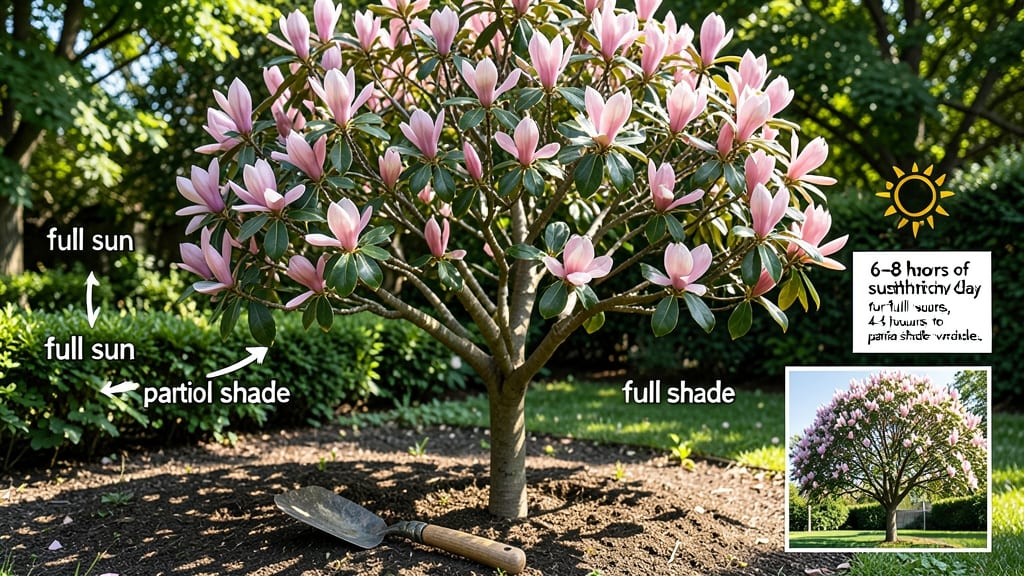
A magnolia tree needs how much sun does a magnolia tree need—between 4 to 6 hours of sunlight daily 🌸 — but the exact amount depends on the variety, your climate, and how you want it to grow.
Struggling to keep your magnolia tree healthy? The right amount of sunlight isn’t just about location—it’s about matching your tree’s variety to its ideal light conditions. Get it wrong, and you risk poor blooms, weak growth, or even tree decline.
Southern magnolias, for example, thrive in full sun, while star magnolias prefer partial shade to protect their delicate blooms. Even a single wrong placement can turn your tree into a shadowy struggle instead of the showstopper you planted.
Below, I’ll break down the sunlight needs by variety, how to spot over- or under-exposure, and the simple fixes—like pruning or mulching—that can save your tree before it’s too late.


Magnolia sunlight requirements by variety: full sun vs. partial shade needs
Magnolias are stunning additions to any landscape, but their sunlight needs vary dramatically by variety. Some thrive in bright morning sun with afternoon shade, while others demand full sun for vibrant blooms.
Understanding these differences ensures your magnolia grows strong and flowers abundantly. Let’s break down the ideal sunlight exposure for 12+ popular magnolia varieties, so you can place yours perfectly.
Choosing the wrong location can lead to leaf scorch, sparse blooms, or weak growth. For example, a Southern Magnolia planted in full afternoon sun will suffer, while a Star Magnolia might struggle in deep shade.
The key is matching the variety to its natural light preferences—whether that’s dappled shade, filtered sunlight, or full sun exposure. Let’s explore the specifics for each type.
| Variety | Sunlight Needs | Best Planting Location | Tolerates |
|---|---|---|---|
| Southern Magnolia (Magnolia grandiflora) | Partial shade to full sun | East-facing or lightly shaded areas | Morning sun, afternoon shade |
| Saucer Magnolia (Magnolia × soulangeana) | Full sun to partial shade | South or west-facing with afternoon shade | Full sun in cooler climates |
| Star Magnolia (Magnolia stellata) | Full sun to partial shade | South or east-facing with dappled shade | Bright indirect light |
| Sweet Bay Magnolia (Magnolia virginiana) | Partial shade to full shade | North-facing or heavily shaded areas | No direct sun |
| Cucumbertree Magnolia (Magnolia acuminata) | Full sun to partial shade | West or south-facing with afternoon shade | Full sun in wet climates |
| Lily Magnolia (Magnolia liliflora) | Partial shade to full sun | East or north-facing with filtered light | Morning sun only |
| Yulan Magnolia (Magnolia denudata) | Partial shade | North or east-facing with dappled shade | No afternoon sun |
| Jane Magnolia (Magnolia 'Jane') | Full sun to partial shade | South or west-facing with afternoon shade | Full sun in cooler zones |
| Loebner Magnolia (Magnolia × loebneri) | Full sun | South or west-facing with no shade | Intolerant of shade |
| Bigleaf Magnolia (Magnolia macrophylla) | Partial shade | North-facing or heavily shaded areas | No direct sunlight |
| Kadota Hybrid Magnolia (Magnolia × kadotae) | Full sun to partial shade | East or south-facing with afternoon shade |
How to adjust sunlight for mature magnolias: signs of over- or under-exposureYour mature magnolia might look stunning now, but subtle sunlight changes can drastically impact its health. Leaf scorch on edges or yellowing between veins often signals too much sun, while sparse blooms or leggy growth usually mean under-exposure. These signs aren't just cosmetic—they affect your tree's ability to produce those iconic fragrant blooms year after year. Adjusting sunlight for established magnolias requires patience and strategic planning. Unlike young trees, mature magnolias have deep root systems that make relocation difficult. Instead, we'll focus on pruning, mulching, and seasonal sunlight management to create the perfect balance. The key is understanding how your specific variety responds to light changes. ⚠️ callout-warning ⚠️
⚠️ Warning: Magnolias Need Balance
Most magnolias thrive in morning sun (4-6 hours) with afternoon shade. Full sun exposure (6+ hours daily) can cause leaf scorch and bloom failure, while deep shade (less than 3 hours) leads to weak stems and fewer flowers. Southern varieties like Magnolia grandiflora tolerate more sun, while Star Magnolias prefer filtered light. 🌱 Action Tip: Test your tree's current light exposure for 2 weeks before making adjustments. Use a light meter app or observe shadows at 10 AM and 2 PM. If your magnolia shows signs of sunburn, like crispy brown edges on leaves, it's getting too much direct afternoon sun. Start by pruning nearby branches to create shade or install a lightweight shade cloth (30-50%) on the western side. For varieties like Saucer Magnolias, even 3 hours of afternoon sun can be too intense, so consider planting taller sun-loving shrubs nearby to break up harsh rays. Under-exposed magnolias reveal their struggles through pale green leaves and stretched growth toward light sources. To fix this, gradually introduce more light by thinning out dense foliage from nearby trees or removing obstructive structures. For urban gardens, a reflective surface like a white fence or light-colored wall can increase indirect light by up to 30% without direct sun exposure. Seasonal adjustments are crucial for magnolias. In summer, when sun is most intense, mulch heavily with 3-4 inches of organic mulch to keep roots cool. In winter, when days are shorter, avoid heavy pruning that could reduce next year's bloom potential. Instead, focus on light structural pruning to maintain an open canopy that allows even light distribution. Remember that magnolias are slow growers, so changes may take 1-2 seasons to show results. Monitor your tree's response by checking new leaf growth in spring and bloom quantity in early summer. With patience and these adjustments, your magnolia will reward you with healthier foliage and more abundant flowers year after year. 🌸 |