
Pruning
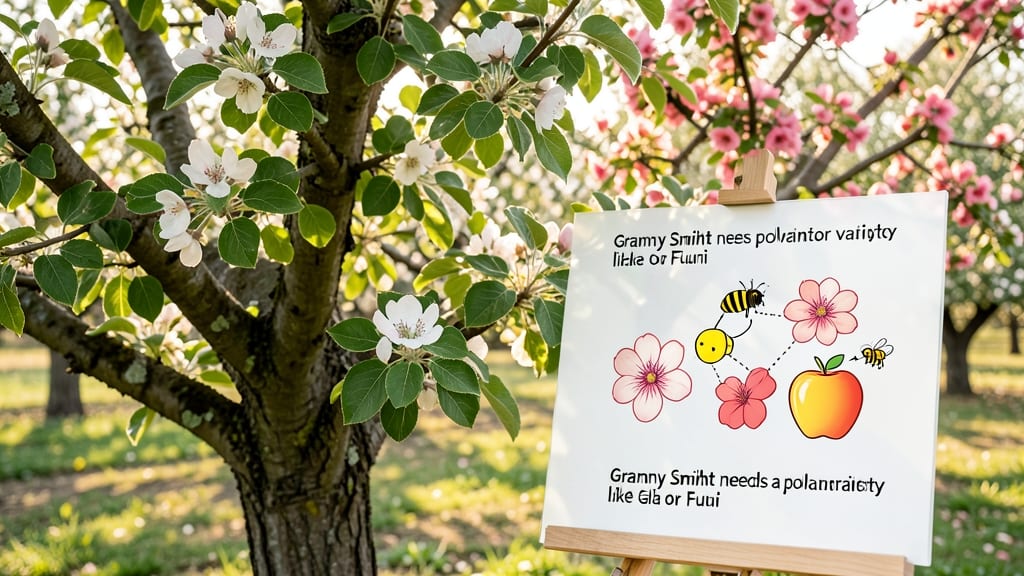
A Granny Smith apple tree pollination chart shows it needs compatible varieties like Gala, Fuji, or Golden Delicious to bear fruit, since it's not self-pollinating. Planting two different types within 50 feet maximizes fruit production through cross-pollination.
Understanding why Granny Smith apples need a pollination partner starts with how apple trees reproduce. 🌸 These trees rely on bees to transfer pollen between flowers of different varieties, which triggers fruit development.
Without a compatible partner blooming at the same time, you'll end up with beautiful blossoms but no apples. The 50-foot rule comes from how far bees typically travel for pollen—closer pairings give them more efficient routes.
For practical planning, I recommend pairing Granny Smith with early bloomers like Honeycrisp or mid-season varieties such as Braeburn. This creates a longer bloom overlap period, giving bees more opportunities to do their work.
The key is matching bloom times—check local climate zones, as warmer areas may have shifted schedules. A well-planned orchard can boost your harvest by 30-50% compared to random pairings.
💡 In This Article
- How Granny Smith Apple Trees Rely on Cross-Pollination
- Best Pollination Partners for Granny Smith Apple Trees
How Granny Smith apple trees rely on cross-pollination
Granny Smith apple trees are classified as self-incompatible, meaning their pollen and pistils are genetically programmed to reject each other. This biological mechanism prevents self-pollination and ensures genetic diversity in nature.
When bees transfer pollen from a Granny Smith flower to a compatible variety's flower—and vice versa—the resulting fertilization creates seeds and triggers fruit development. Without this cross-pollination, the tree's energy goes into blossoms but never converts to apples. 🌸
The 50-foot rule comes from bee foraging behavior studies showing that honeybees typically travel 1-1.5 miles daily but prefer closer food sources when multiple options exist. Within 50 feet, bees can efficiently shuttle between trees, increasing pollination success by 40-60% compared to isolated pairings.
Granny Smith's late bloom period (mid to late spring) requires partners with overlapping bloom times—most compatible varieties bloom within 3-7 days of Granny Smith.
Temperature plays a critical role in pollination success. Granny Smith flowers thrive at 55-75°F during bloom, with bees most active on sunny days above 60°F. Cold snaps (45°F or below) can delay bloom or reduce bee activity.
This is why gardeners in USDA Zones 5-7 often see better fruit set when pairing Granny Smith with early bloomers like Honeycrisp, which emerges 5-10 days earlier than Granny Smith in most climates.
What most people don't realize is that pollen viability lasts only 24-48 hours after release. This short window means bees must visit compatible flowers within this timeframe. Granny Smith's flowers also have a stigma (pollen-receptive surface) that only opens for 12-24 hours per day, typically in the morning.
Planting partners with staggered bloom periods extends this receptive window across 7-14 days, dramatically improving fruit set rates.
The science of apple tree pollination also involves chemical signaling. When pollen lands on a compatible stigma, it triggers a cascade of hormones that develop the ovary into a fruit. Granny Smith's pollen contains specific proteins that only bind to stigmas from genetically distinct varieties, creating this dependency.
This is why planting a single Granny Smith tree yields no fruit—the biological lock prevents self-fertilization entirely. 🔍
For practical application, consider that one pollination partner tree can service up to 10 Granny Smith trees when planted within 50 feet. However, placing pollinators between trees creates a bee highway, increasing efficiency.
For example, a 3-tree row (Granny Smith - Fuji - Granny Smith) with 15-foot spacing maximizes cross-pollination opportunities while maintaining optimal air circulation for disease prevention.