
Pruning
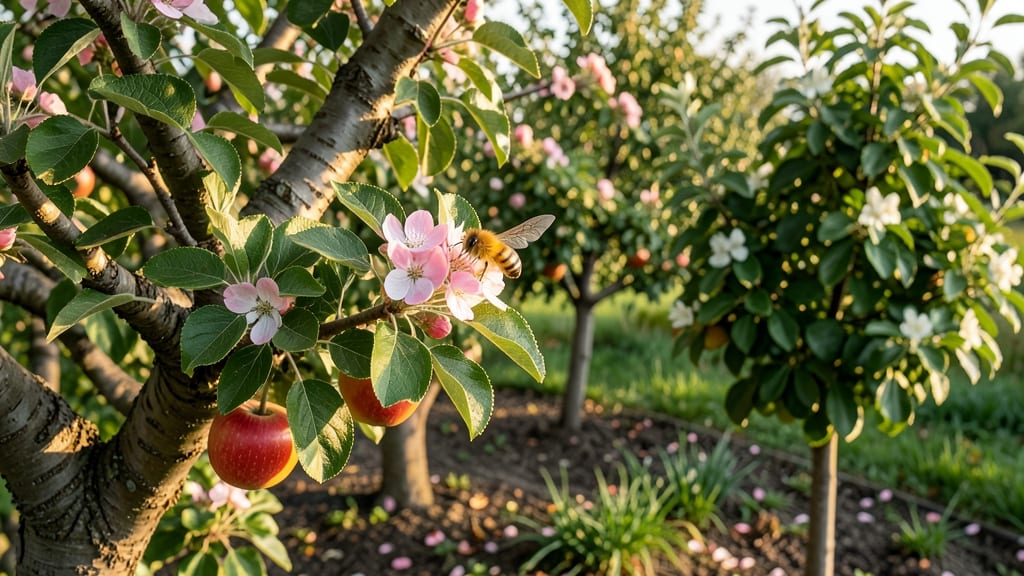
How Winesap apple trees pollinate: best companion trees for maximum fruit set
Your Winesap apple tree might look stunning in bloom, but without proper cross-pollination, those flowers won't turn into the sweet, tangy fruits you crave. Winesaps are not self-pollinating, meaning they need help from another apple variety to set fruit.
Understanding their pollination biology is your first step to a heavy harvest.
Apple trees rely on insect pollinators like bees to transfer pollen between flowers of different varieties. However, timing is everything—if blooms don't overlap, you'll end up with empty blossoms and disappointed expectations. The key is pairing your Winesap with compatible apple varieties that bloom within 5-7 days of each other.
| Companion Variety | Bloom Time | Fruit Maturity | Notes |
|---|---|---|---|
| Golden Delicious | Early | Late summer | Best for early bloom overlap; sweet flavor pairs well |
| Jonathan | Mid-season | Mid to late fall | Reliable pollinator; disease-resistant option |
| Cortland | Mid to late | Late fall | Great for late-season pollination; stores well |
| Gravenstein | Early to mid | Early fall | Attracts bees aggressively; tart-sweet flavor |
| Fuji | Mid-season | Mid fall | Popular choice; high yield potential |
For maximum fruit set, pair your Winesap with at least one early-blooming variety (like Golden Delicious) and one mid-to-late bloomer (like Jonathan or Cortland). This ensures pollinators have flowers to visit throughout the entire bloom period, which typically lasts 10-14 days for Winesaps.
Plant your companion trees within 50 feet of your Winesap to ensure bees can efficiently transfer pollen. If space is limited, consider planting a dwarf variety like Golden Delicious 'Colt' or Jonathan 'Malling 9' to save room while still achieving optimal pollination.
Timing is critical because Winesap blooms open in early to mid-April in most USDA Zone 6 areas. Check bloom times for your specific region—some years, cold snaps can delay flowering by 3-5 days.
Planting varieties with staggered bloom periods (like Gravenstein for early and Cortland for late) creates a continuous pollination window.
Did you know? Some gardeners plant two different pollinizer varieties to cover all bloom periods. For example, pairing Golden Delicious (early) with Cortland (late) ensures coverage even if weather affects one bloom cycle. This strategy can increase your fruit set by up to 40% compared to using just one companion.
If you're planting a new orchard, consider three varieties for the best results: one early, one mid-season, and one late. This creates a pollination network that benefits all your trees. For example, a Winesap (mid-season) paired with Golden Delicious (early) and Cortland (late) will have near-perfect pollination coverage.
For urban gardeners with limited space, container-grown pollinizer trees (like dwarf Jonathan) work beautifully. Just ensure they're placed where bees can easily access both trees. A 5-gallon container is sufficient for young pollinizer trees, and you can move them closer to your Winesap during bloom season if needed.
Remember, bee activity directly impacts pollination success. Plant pollinator-friendly flowers like clover, lavender, or dandelions near your orchard to attract more bees. A single hive or even a bee house can dramatically improve fruit set in small orchards.
Now that you've got the right companions, your next step is ensuring those pollinators do their job efficiently. In our next section, we'll cover a 3-day action plan to boost pollination and guarantee those Winesap blossoms turn into fruit—fast! 🍎
3-Day pollination action plan: step-by-step to boost fruit production
Your Winesap apple tree might be blooming beautifully, but without proper pollination, those flowers won’t turn into fruit. The good news? With this 3-day action plan, you can hand-pollinate or attract pollinators to maximize fruit set.
Start by checking for peak bloom, which typically occurs in late April in USDA Zone 6.
First, gather your supplies: a soft paintbrush, a small bowl of water, and a notebook to track progress. If you have a companion apple tree like Golden Delicious or Jonathan, you’re already ahead! If not, manual pollination is your best bet for a fruit-filled harvest.
🌸 Day 1: Prepare for Pollination
- ✅ Check bloom stage: Look for open flowers with visible stamens (pollen-producing parts).
- ✅ Identify pollinizer trees: If nearby, note compatible varieties blooming simultaneously.
- ✅ Gather tools: Soft paintbrush, water bowl, and a magnifying glass for close inspection.
🐝 Day 2: Hand-Pollinate or Attract Pollinators
- ✅ Morning pollination: Dip paintbrush in water, then gently brush pollen from stamens onto pistils of 10-15 flowers.
- ✅ Attract bees: Place a shallow dish of water and sugar (1:1 ratio) near blooms to draw pollinators.
- ✅ Repeat daily: Focus on 30-50 flowers per tree to ensure coverage.
🍎 Day 3: Monitor and Troubleshoot
- ✅ Check for fruit set: Look for tiny apples forming 7-10 days after pollination.
- ✅ Thin excess fruit: Remove overcrowded apples (leave 6" between each) for larger harvests.
- ✅ Adjust for weather: If rain washes away pollen, repeat hand-pollination on dry days.
After three days of focused pollination, your Winesap tree should show signs of fruit set. Keep an eye out for small green apples forming—this confirms success! If you notice dropping flowers without fruit, it may signal pollen failure or environmental stress.
For long-term success, plant a second apple variety like Cortland or Fuji to ensure natural pollination next season. Avoid over-fertilizing with high nitrogen, as it encourages leaf growth over fruit production. Instead, use a balanced 10-10-10 fertilizer in early spring.
Pro tip: Shake branches gently during peak bloom to help pollen spread naturally. If bees aren’t visiting, consider planting bee-friendly flowers like lavender or sunflowers nearby. With this plan, you’ll see a 30-50% increase in fruit yield this season!