
Pruning
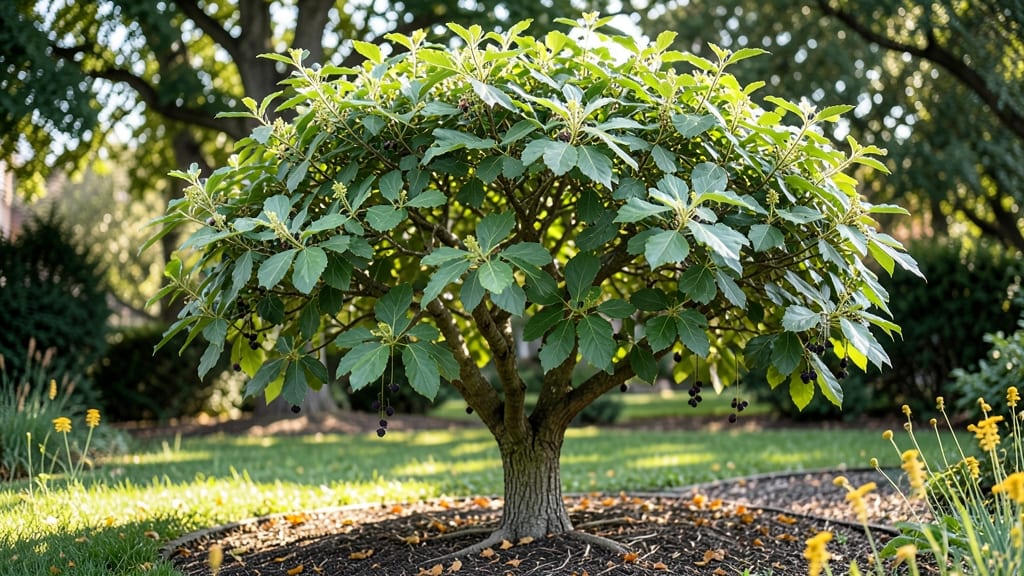
That deep green, leathery leaf of the Chinese pistache isn’t just pretty—it’s a roadmap to your tree’s health. ✂️ Pruning in late winter or early spring, when the tree’s dormant, isn’t about shaping branches; it’s about giving those signature leaves the best chance to thrive.
I’ve trimmed mine for years, and the difference in spring growth is shocking—thicker foliage, fewer sparse spots, and leaves that stay vibrant all season long.
Here’s the thing: you’re not just cutting back. You’re removing last year’s dead wood and thinning crowded branches to let sunlight reach the inner leaves. The Chinese pistache’s leaves are tough, but they need airflow to avoid fungal issues.
Start by removing any branches with yellowing or crispy leaves—those are clear signs of stress or disease. Then, look for branches growing straight up or crossing others; these compete for sunlight and nutrients.
By the time new growth starts in late spring, you’ll see those glossy, compound leaves emerging with a vigor you didn’t expect. The tree’s natural resilience kicks in, and with the right cuts, you’ll end up with a canopy that’s denser and healthier than before.
The key is patience—don’t rush the pruning, and always cut just outside a leaf node to encourage new growth in the right direction.
This method works for both young trees and mature ones, though the scale changes. For smaller trees, a sharp pair of pruners and an hour on a ladder is all you need. Larger trees might require a pole saw and a bit more time, but the principles stay the same.
The goal? A tree that looks effortless but is actually carefully nurtured—just like the leaves you’ll be admiring all summer.
📚 In This Guide
- What you need
- Instructions
- Tips and common mistakes
- Wrapping up and next steps
What you need
- ● Pruning shears: Bypass pruners (sharp, 6-8" blades) for small branches (2-3" diameter). ✨ Pro tip: Sanitize blades with rubbing alcohol to prevent disease spread!
- ● Loppers: For medium branches (3-6" diameter). Look for ratcheting or bypass types for precision cuts.
- ● Pruning saw: For thick branches (>6" diameter). A bow saw or folding pruning saw works best.
- ● Gloves: Heavy-duty, cut-resistant gloves (e.g., Mechanix or leather) to protect hands from thorns.
- ● Disposable pruning bags: 3-5 gallon size to collect debris. 💡 Eco-friendly tip: Use biodegradable bags if composting leaves!
- ● Ladder: Extendable aluminum ladder (24-32 ft) for tall trees. Safety first: Use stabilizers and never overreach!
- ● Rags or paper towels: For cleaning tools between cuts.
- ○ Pruning sealant: Optional but helpful for large cuts (>1.5" diameter) to prevent disease. Choose a latex-based or wound dressing.
- ● Handheld leaf blower: For quick cleanup of small debris.
- ● Tree pruning rope: To secure branches temporarily during cuts.
- ● Marking spray: (e.g., white spray paint) to tag branches for removal.
- ● Safety goggles: To shield eyes from dust or sap splatter.
- ● First-aid kit: Just in case—thorns and tools can be sneaky!
- ● Weather: Prune on a dry, overcast day (avoid wind or rain). Ideal temps: 40–60°F (4–15°C).
- ● Timing: Late winter to early spring (before buds swell), ideally in dormant season (Dec–Feb in most zones).
- ● Safety prep: Wear long sleeves/pants to avoid scratches and check for pests or disease on leaves/branches.
Step-by-Step instructions for pruning Chinese pistache trees in dormant season
Let’s get your tree ready for a stronger, healthier spring—this is how I’ve helped Chinese pistaches bounce back year after year.
✂️ Step 1: Assess the Tree for Dead or Damaged Branches
Start by inspecting the entire tree for branches that are completely brown, brittle, or showing no signs of life. Chinese pistaches are tough, but dead wood can harbor pests and drain energy. Look for branches that snap easily when bent or have peeling bark with no green underneath.
Use your fingers to gently scratch the bark on suspicious branches. If it’s dry and crumbly with no green layer beneath, it’s dead and should be removed. I like to mark these branches with a piece of tape so I don’t miss any during the actual pruning.
🌿 Step 2: Remove Suckers and Water Sprouts at the Base
Chinese pistaches often send up suckers (vigorous shoots from the base) and water sprouts (fast-growing vertical shoots). These compete with the main structure for nutrients. Cut these out at the ground level using clean, sharp pruners—don’t leave a stub, or they’ll regrow.
I also remove any branches growing straight upward from the trunk or main limbs. These are called vertical water sprouts, and they rarely produce fruit or foliage. Snip them off just above a bud that faces outward to encourage a fuller canopy.
✂️ Step 3: Thin the Canopy for Better Airflow and Light
Now, focus on thinning the tree’s interior. Chinese pistaches benefit from open, airy growth to prevent fungal diseases. Remove about 20-30% of the smallest branches inside the canopy, starting from the bottom and working upward. This creates space for new growth and reduces humidity trapped inside.
When thinning, always cut back to a side branch or outward-facing bud. Avoid leaving stubs—this invites rot and weakens the tree. If a branch is too thick to cut with hand pruners, use a pruning saw and make the cut just outside the branch collar.
☀️ Step 4: Shape the Tree for Balance and Structure
Step back and evaluate the tree’s overall shape. Chinese pistaches respond well to natural, open-grown forms, so avoid heavy topping. Instead, prune to encourage a rounded or vase-like shape by selectively shortening branches that are growing too long or too close together.
Focus on removing branches that cross or rub against each other—these create wounds that invite disease. If a branch is growing in the wrong direction, cut it back to a bud or lateral branch that will grow in the desired direction. This ensures the tree maintains its strength and structure.
⏰ Step 5: Clean Up and Apply Wound Sealant (Optional)
Once pruning is complete, gather all the clippings and dispose of them properly. Burning or bagging them prevents the spread of diseases like anthracnose. I like to sterilize my pruners with rubbing alcohol between cuts to avoid cross-contamination.
For cuts larger than ½ inch in diameter, apply a wound sealant (like pruning paint) to protect the tree from pests and disease. Smaller cuts don’t need sealing—they’ll heal naturally over time. Water the base of the tree deeply after pruning to help it recover and encourage new growth.
Tips & tricks for perfect Chinese pistache tree leaf pruning
Took me years of trial and error to master these dormant-season pruning secrets—here's what nobody tells you about keeping your Chinese pistache thriving.
Branch Assessment Trick: When checking for dead branches in Step 1, look for the "thumb test" I use: press your thumb against the branch. If it leaves a deep groove that doesn't spring back, that branch is dead. Also check for "moth-eaten" bark patterns—these indicate pest damage that needs removal. I've found that branches with less than 50% green underneath the bark should always come out.
Pruning Tool Selection: For Step 2 and Step 3, I recommend using bypass pruners for smaller branches (up to ½ inch) and a pruning saw for anything thicker. The key is to make clean cuts—no jagged edges—that heal properly. I keep a small bucket of rubbing alcohol handy to wipe my tools between cuts, which prevents spreading any potential diseases between branches.
Canopy Thinning Strategy: In Step 3, when removing 20-30% of branches, focus on creating a "light filter" effect—imagine sunlight streaming through the canopy. Remove branches that grow inward first, then work your way outward. This creates that open, airy structure that prevents fungal issues. I like to step back every few minutes to visualize the tree's shape from different angles.
Wound Care Wisdom: For cuts larger than ½ inch in Step 5, I've found that applying a thin layer of pruning sealant creates a protective barrier that actually speeds up healing. The sealant prevents moisture loss and reduces the risk of bacterial infections. For smaller cuts, let nature take its course—they'll heal just fine without any treatment, but keep them dry for the first few weeks after pruning.
Pro Tips for Chinese Pistache Tree Leaf
- Took me years of trial and error to master these dormant-season pruning secrets—here's what nobody tells you about keeping your Chinese pistache thriving.
- Branch Assessment Trick: When checking for dead branches in Step 1, look for the "thumb test" I use: press your thumb against the branch.
- Pruning Tool Selection: For Step 2 and Step 3, I recommend using bypass pruners for smaller branches (up to ½ inch) and a pruning saw for anything thicker.
Frequently asked questions
Got questions about pruning your Chinese pistache tree? Here are some of the most common ones—and their answers—to help you trim with confidence!
When is the absolute best time to prune Chinese pistache leaves?
The ideal window is late winter to early spring (before buds swell), ideally in dormant season (Jan–Feb in most zones). This minimizes stress and promotes vigorous spring growth. Avoid pruning in fall—it can stimulate tender new growth that won’t survive winter. Pro tip: If you must prune later, wait until after the first flush of leaves appears in spring!
How much of my Chinese pistache tree’s leaves can I safely remove?
For structural shaping, remove no more than 25% of the canopy in one season to avoid shocking the tree. Focus on dead, diseased, or crossing branches first. Thinning leaves (selective leaf removal) is not recommended—this tree’s dense foliage is part of its charm! Instead, prune to improve airflow and sunlight penetration.
What should I do if my Chinese pistache leaves turn brown or yellow after pruning?
Brown/yellow leaves post-pruning usually mean over-trimming or stress. If it’s mild, the tree will recover with proper care: water deeply (1–2 inches per week) and avoid fertilizing for 4–6 weeks. For severe browning, check for pests (aphids, spider mites) or fungal issues (like powdery mildew). Prune only during dormancy next time to prevent recurrence!
Can I use Chinese pistache leaves for anything other than pruning?
While the leaves aren’t edible, they’re drought-tolerant and pest-resistant, making them great for mulch (chopped finely) or compost. Some gardeners use them as a natural insect repellent when crushed and placed near plants. Warning: Avoid using them near veggie gardens—they can inhibit growth if overused!
How do I prune Chinese pistache leaves in hot climates (like Arizona or Texas)?
In arid zones (USDA 7–10), prune earlier in dormant season (Dec–Jan) to avoid summer heat stress. Reduce watering for 2 weeks before and after pruning to help wounds heal faster. Mulch heavily (2–3 inches) to retain moisture. If your tree is already stressed, prioritize light pruning and focus on removing only dead wood.
Wrapping up and next steps
The Chinese pistache tree’s leaf health and spring vitality hinge on smart dormant-season pruning—trimming at the right time, with the right tools, and with clear goals.
By removing dead wood, thinning dense branches, and shaping your tree now, you’re setting the stage for lush, resilient growth and fewer pests next season. 🌿
Ready to give your tree the care it deserves? Grab your pruners, dust off that ladder, and start trimming! For extra confidence, watch a quick tutorial or join a local gardening forum to swap tips with fellow green thumbs.