
Propagation
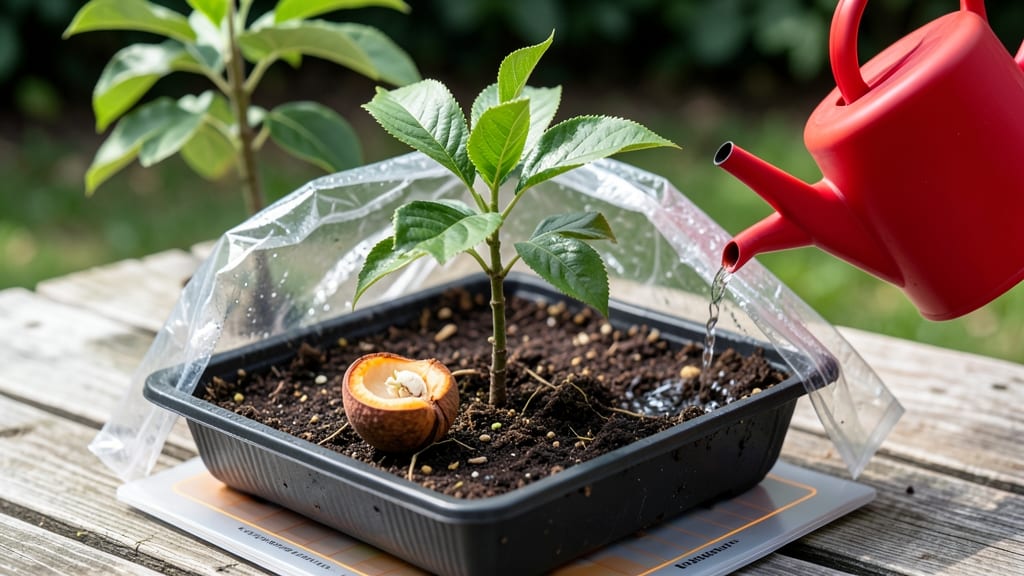
You can start a peach tree from a peach pit, but the process requires patience and specific conditions. Germination rates are low due to natural dormancy and genetic unpredictability, so success depends on proper cold treatment and careful planting techniques.
Growing a peach tree from a pit is more of a long-term experiment than a guaranteed outcome. 🌱 The key challenge lies in breaking the seed's natural dormancy—peach pits need 60-90 days of cold stratification (around 35-40°F) to mimic winter conditions and trigger germination.
Even then, the resulting tree might take 3-5 years to bear fruit, if at all, since peach seeds often produce trees with different traits than the parent. I've found that using pits from heirloom varieties increases your chances of getting a tree with desirable characteristics, though there's still no guarantee.
Once you've successfully germinated a pit, the real work begins with nurturing the delicate seedling. Young peach trees are particularly vulnerable to disease and pests, so providing well-draining soil, full sunlight, and consistent moisture is essential.
Many gardeners choose to grow their seedlings in pots first before transplanting outdoors, which gives them better control over growing conditions. Remember, even with perfect care, only about 1 in 10 peach pits will successfully grow into a mature tree.
💡 In This Article
- Peach Pit Germination Science: Why Success Rates Are Low
- Step-by-Step Guide: Planting and Caring for Peach Pits
Peach pit germination science: why success rates are low
The primary obstacle to growing a peach tree from a pit is the seed's natural dormancy, a survival mechanism that prevents germination until conditions are favorable. Peach pits contain hard, woody shells that resist water absorption, while the embryo inside remains inactive until exposed to specific environmental triggers.
This dormancy isn't just about moisture—it requires a period of cold exposure to break down growth inhibitors naturally present in the seed. Without this cold treatment, the pit might never sprout, even with ideal warmth and light.
The cold stratification process mimics winter conditions by exposing pits to temperatures between 35-40°F for 60-90 days. During this time, internal chemical changes occur: the hard seed coat softens slightly, and growth regulators like abscisic acid (which suppresses germination) break down.
Moisture plays a crucial role too—keeping the medium damp (not soggy) at around 30-50% humidity prevents mold while allowing oxygen to reach the embryo. I've seen stratification success rates jump from near 0% to 10-20% when these conditions are met precisely.
Even when germination occurs, the resulting tree often differs significantly from the parent fruit. Peach seeds are genetically variable—what you get might be a completely different variety with different fruit size, color, or even flavor. This happens because peach trees are not true-to-type when grown from seed (they're not clones).
The genetic diversity is part of nature's way of ensuring survival, but it's frustrating for gardeners hoping to replicate their favorite peach. For example, a pit from a juicy Freestone peach might grow into a tree producing small, tart fruit with a thin skin.
Another biological hurdle is the seed's sensitivity to ethylene gas, a plant hormone that can trigger premature germination or rot if present in high concentrations. This is why many gardeners avoid storing pits in plastic bags or sealed containers—ethylene builds up quickly in confined spaces.
The ideal stratification setup uses a breathable medium like damp sand or peat moss, allowing gas exchange while maintaining moisture. Proper ventilation becomes especially critical during the 3-4 week period when the seed first begins to metabolize and produce its own ethylene.
What most people don't realize is how the seed's internal pressure system works against germination. When a peach pit first forms, the embryo develops under high pressure within the seed coat.
This pressure must be released gradually during stratification—too rapid a release (from sudden warmth) can cause the seed to split or rot before sprouting. The optimal temperature gradient during stratification should rise slowly from 35°F to 40°F over the 90-day period, mimicking natural spring warming patterns.
Consider these key factors when preparing your pits:
- Seed coat thickness: Thicker coats (common in commercial varieties) require longer stratification
- Moisture balance: Too dry = no germination; too wet = fungal growth
- Oxygen availability: Compacted medium restricts root development
- Light exposure: Germination occurs in darkness—light inhibits this process
The science behind these requirements explains why most gardeners see such low success rates—it's not just about planting a pit and waiting. Each biological barrier must be carefully managed, and even then, nature often has other plans for your seedling. 🌱