
Pruning
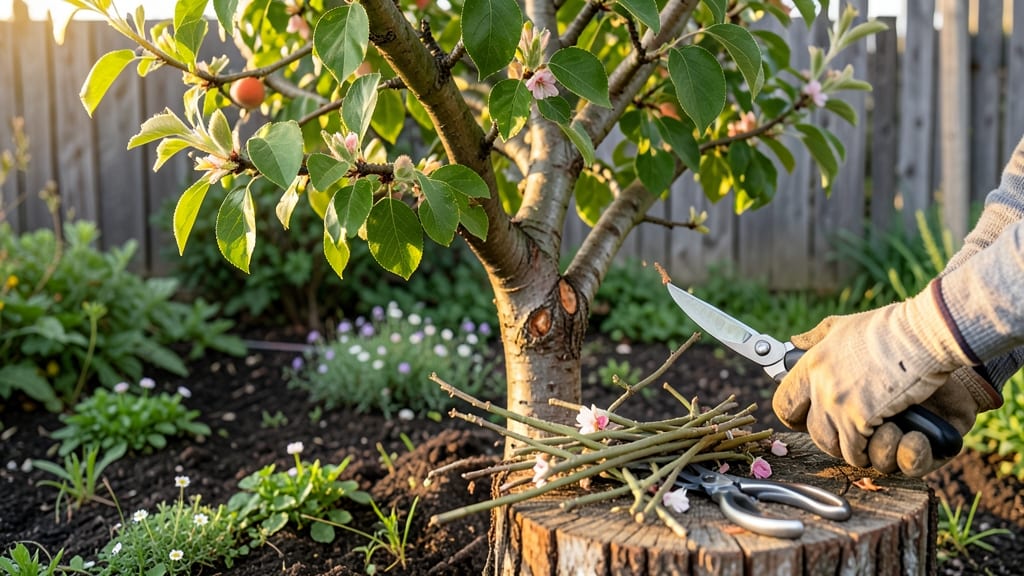
You can prune a peach tree after it blooms, but only minimally—remove only dead, diseased, or crossing branches to prevent severe damage to fruit production. Aggressive trimming at this stage risks reducing next year’s harvest by up to 50%.
Peach trees rely on a delicate balance between growth and fruit production, and their flowering cycle is the key to understanding why post-bloom pruning is so risky. 🌸 When you prune after blooms appear, you interrupt the tree's natural process of setting fruit buds for next season.
The hormonal signals that trigger flower formation are already in motion, and cutting branches can disrupt this entire cycle. Even light pruning can weaken the tree's ability to support fruit development, which is why experts recommend waiting until late winter when the tree is dormant.
If you must prune after blooming—perhaps to remove storm damage or diseased limbs—focus on minimal cuts and prioritize branches that are already compromised. Use sharp, clean tools to make precise cuts just outside the branch collar, and avoid removing more than 10-15% of the tree's canopy at once.
This approach helps maintain the tree's energy reserves while still addressing urgent issues without sacrificing future harvests.
💡 In This Article
- Why Pruning Peach Trees After Blooming Damages Fruit Production
- Safe Light Pruning Techniques for Post-Bloom Peach Trees
Why pruning peach trees after blooming damages fruit production
The real danger of post-bloom pruning lies in how peach trees form fruit buds. These buds develop on spurs—short, stubby branches along the main limbs—and require 6-8 weeks of stable growth after flowering to mature properly.
When you prune after blooms appear, you remove potential fruit-bearing wood while the tree is already diverting energy toward current season's fruit development. This creates a double stress: the tree must support existing fruit and recover from pruning wounds, often at the expense of next year's flower buds.
Hormonal shifts play a critical role. Pruning stimulates the production of auxin, a growth hormone that promotes vegetative growth (leaves and branches) over reproductive growth (flowers and fruit).
At this stage, auxin production can delay or prevent the formation of flower buds for next season, which typically begin developing in late summer but need undisturbed growth through fall and winter.
Studies show that aggressive post-bloom pruning can reduce flower bud formation by 30-50%, directly impacting next year's harvest.
The timing of peach tree growth cycles explains why late winter is ideal. During dormancy (typically December-February in most climates), the tree's energy is focused on root development and bud formation.
Pruning at this time removes damaged wood while allowing the tree to allocate resources toward flower buds without competition from active growth. In contrast, post-bloom pruning occurs when the tree is already in its active fruit-bearing phase, making it far more vulnerable to stress.
Consider this example: A 5-year-old peach tree with 200 flower clusters might produce 150-200 fruit under ideal conditions. If you prune heavily after blooming (removing 25% of the canopy), you could see flower bud formation drop to just 80-100 clusters next season—a 50% reduction in potential fruit.
The tree's energy that would have gone toward flower buds instead repairs pruning wounds and supports existing fruit.
Even light pruning after blooming can trigger water sprouts—fast-growing, weak shoots that compete with fruit for nutrients. These sprouts often appear within 4-6 weeks of pruning and can drain 15-20% of the tree's energy if left unchecked.
The tree's natural response to pruning is to produce these vigorous shoots to replace lost foliage, further diverting resources from fruit development and next year's flower buds.
For visual clarity, think of a peach tree's growth cycle as a three-phase process:
- Phase 1 (Winter Dormancy): Root growth and flower bud formation (safe pruning window)
- Phase 2 (Spring Blooming): Flowering and fruit set (high-risk pruning period)
- Phase 3 (Summer Fruit Development): Fruit growth and energy storage for next year (avoid pruning)
Understanding this cycle helps explain why even well-intentioned post-bloom pruning—like removing a single large branch—can trigger a cascade of negative effects on both current and future fruit production. 🌿