
How To
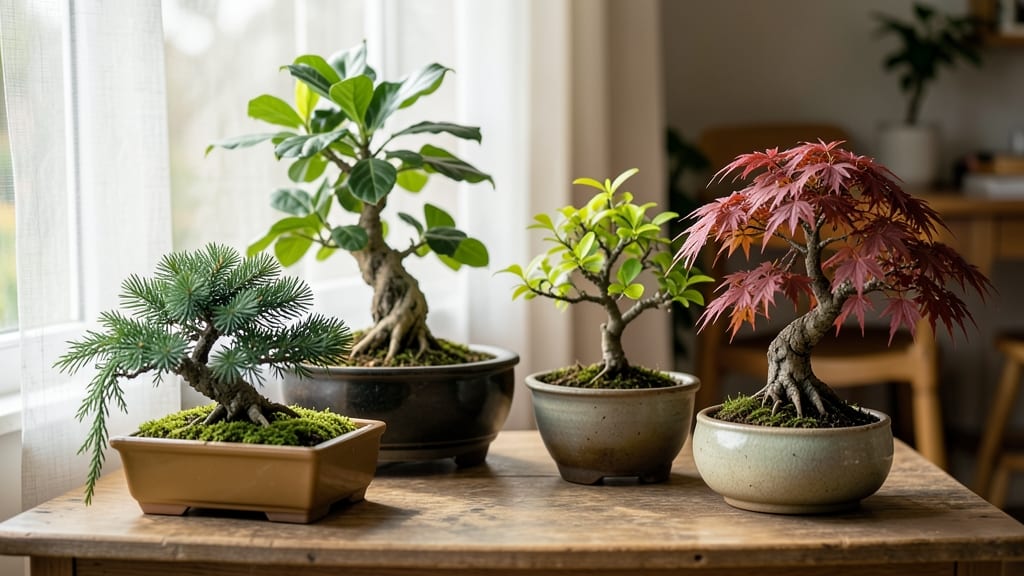
Bonsai trees grow between 8 inches and 3 feet tall, depending on the species and how you shape them 🌳—but getting that perfect miniature look takes more than just luck.
If you’ve ever dreamed of cultivating a miniature forest in your home or garden, understanding the height potential of bonsai trees is your first step—because what starts as a tiny sapling can become a breathtaking centerpiece or a lifelong hobby, depending on your choices.
Some varieties, like the dwarf junipers, naturally stay under a foot, while others, such as the Japanese maple, can reach nearly 3 feet if left unchecked. The key? Pruning, wiring, and patience—tools that turn a fast-growing seedling into a work of art.
In this guide, I’ll break down the natural height ranges, the best techniques to control growth, and the common mistakes that make bonsai trees grow taller than you want. Ready to shape your own living masterpiece?

Natural height ranges of bonsai trees: dwarf vs standard varieties
When you first bring home a bonsai tree, its tiny size can be deceiving—because without proper care, even the most miniature varieties can grow surprisingly tall. The key difference lies in the species and its natural growth habit.
Some bonsai trees, like the Pinus mugo (Mountain Pine), stay naturally under 12 inches even without pruning, while others, like the Japanese Maple, can reach 3 feet if left unchecked. Understanding these height ranges helps you choose the right tree for your space and aesthetic goals.
Not all bonsai trees require aggressive pruning to stay small—some varieties are inherently dwarf and thrive at miniature sizes. For example, the Sageretia theezans (or "bonsai box") rarely exceeds 8 inches, making it perfect for desk-sized displays.
Meanwhile, standard bonsai species like Ficus retusa or Carmona microphylla can grow much taller but are easily managed with regular pruning and root restriction techniques. Your choice of species will dictate how much effort you’ll need to invest in height control.
The mature height of a bonsai tree isn’t just about the species—it’s also about the style you cultivate. A formal upright bonsai, for instance, will naturally grow taller than a cascade or literati style, where branches are trained to grow downward or horizontally.
Even within the same species, a slower-growing cultivar might stay shorter than a faster-growing one. For example, a Juniper procumbens bonsai in a cascade style might max out at 15 inches, while the same species in an upright style could reach 24 inches.
One of the most common misconceptions about bonsai trees is that they stay small naturally. In reality, most bonsai species are simply pruned and trained to remain miniature.
For example, a Ficus retusa left in the ground would grow into a full-sized tree, but as a bonsai, it’s kept at 18–36 inches through root pruning, defoliation, and w
How pruning and training control bonsai tree height
Controlling the height of your bonsai tree isn’t just about cutting branches—it’s an art that blends pruning techniques, seasonal timing, and patience. The key lies in understanding how defoliation, wiring, and root pruning work together to shape your tree’s growth.
Without these methods, even dwarf varieties can outgrow their intended size, leaving you with a leggy, unbalanced specimen. Let’s explore how to keep your bonsai at your desired height while ensuring it thrives.
Many beginners assume that simply trimming the top of a bonsai will stunt its growth, but this approach often backfires. Over-pruning the apical bud (the topmost growth point) can actually accelerate vertical growth as the tree compensates by stretching upward.
Instead, we’ll focus on strategic cuts that encourage bushier growth and maintain the tree’s natural proportions. Think of pruning as a conversation with your bonsai—you’re guiding its development, not forcing it into submission.
Here’s how to master the techniques that keep your bonsai at the perfect height:
Remove 50-70% of leaves in late spring or early summer to slow vertical growth. This forces the tree to produce smaller, denser foliage. Use clean, sharp branch shears to avoid damaging stems.
Use aluminum or copper wire (1-3mm thickness) to gently shape branches. Wrap wire around limbs in early spring and remove after 2-3 months to prevent scarring. Ideal for creating cascade or sweeping styles.
Trim 20-30% of roots during repotting (every 2-3 years) to limit nutrient uptake and slow vertical growth. Focus on fibrous roots near the pot’s edges to encourage denser foliage.
Prune deciduous bonsai in late winter/early spring (just before new growth). For evergreens, prune in late spring or early summer. Avoid heavy pruning in fall or winter when the tree is dormant.
Gather these essentials: concave cutters (for clean branch cuts), branch shears (for foliage), aluminum wire, and a root rake for repotting. Keep tools sanitized with rubbing alcohol.
One common mistake is assuming that more pruning equals better control. Over-pruning can weaken your bonsai, making it susceptible to pests or disease. Always aim for balanced cuts—remove no more than 20-30% of foliage in a single session.
Pair pruning with proper fertilization (like a balanced 7-7-7 NPK) to support healthy regrowth.
For dwarf varieties like Pinus mugo or Sageretia theezans, focus on light defoliation and frequent wiring to maintain their compact forms. Standard bonsai, such as Japanese Maple or Black Pine, benefit from selective branch removal to encourage a fuller canopy while keeping the trunk dominant.
Remember, the goal is harmony—your bonsai should look natural, not forced.
With these techniques, you’ll not only control your bonsai’s height but also foster a healthier, more resilient tree. The secret lies in consistency—regular, thoughtful pruning will reward you with a miniature masterpiece that stays within your desired dimensions for years to come. 🌿✂️🪴