
Pruning
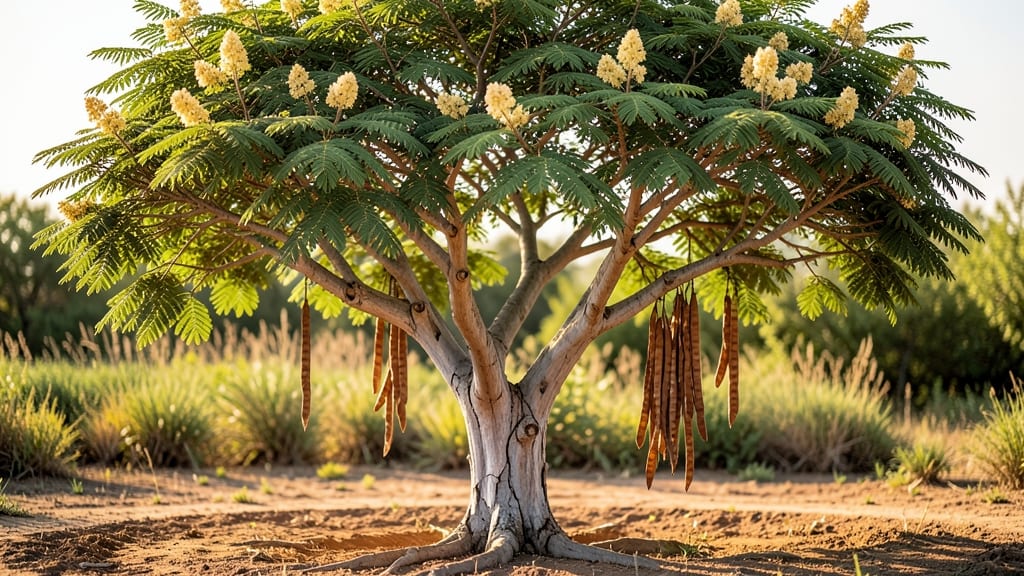
The Shami tree in English is called the Prosopis cineraria, also known as the desert date or khejri tree, prized for its drought resistance, medicinal uses, and role in arid ecosystems. It thrives in harsh climates and holds deep cultural significance in South Asia.
The Prosopis cineraria, or Shami tree, earns its reputation as a hardy survivor through its deep taproots that access groundwater up to 50 feet below the surface. 🌵 This adaptation makes it invaluable in regions like the Thar Desert, where it stabilizes shifting sands while providing shade and fodder.
Beyond its ecological benefits, its leaves contain compounds used in traditional medicine to regulate blood sugar—a fact that's gained modern interest among herbalists studying natural diabetes treatments.
What truly sets this tree apart is its dual role in both rural economies and cultural traditions. Farmers rely on its branches as livestock feed during dry seasons, while its gum resin has been used for centuries in Ayurvedic remedies.
The tree's ability to thrive with minimal water makes it a cornerstone of sustainable agriculture in water-scarce areas, proving nature's resilience in some of Earth's most challenging environments.
💡 In This Article
- Botanical Features and Ecological Role of Prosopis cineraria
- Traditional and Modern Uses of Shami Tree Wood and Leaves
Botanical features and ecological role of Prosopis cineraria
The Prosopis cineraria—or Shami tree—belongs to the legume family (Fabaceae) and is classified under the genus Prosopis, which includes over 40 species known for their resilience in arid environments.
Its scientific name reflects its habitat: cinereus (Latin for "ash-colored"), describing its silvery bark that helps reflect sunlight and reduce water loss.
This tree's most striking feature is its deep root system, capable of extending 50-60 feet underground to tap into groundwater, a trait that allows it to survive in regions with less than 10 inches of annual rainfall. 🌵
Ecologically, this tree acts as a soil stabilizer in sandy deserts like the Thar, where its roots bind loose particles and prevent erosion. Studies show that a single mature Shami tree can improve soil moisture retention by up to 30% in its immediate vicinity, creating microhabitats for wildlife.
Its compound leaves (with 10-20 leaflets) provide shade, while its bright yellow flowers in spring attract pollinators like bees and butterflies, supporting local biodiversity. The tree's ability to fix atmospheric nitrogen also enriches poor soils, making it a natural fertilizer.
What makes Prosopis cineraria uniquely adapted to drought is its water storage mechanism: its thick, spongy bark and stems can hold moisture for extended periods, releasing it slowly during dry spells.
This trait is critical in regions where temperatures can exceed 113°F (45°C) during summer months. 💧 Unlike many desert plants that rely on surface water, this tree's roots access deep aquifers, allowing it to thrive where others wither.
Its presence in India's arid zones has been documented for over 2,000 years, with historical texts like the Manusmriti mentioning its use in ancient landscapes.
The tree's regional distribution spans India, Pakistan, and parts of the Middle East, thriving in the Rajasthan, Gujarat, and Sindh deserts. Its hardiness extends to salt-affected soils, where many crops fail, making it a keystone species in degraded lands.
The Shami tree's ecological role is so vital that its decline in some areas has been linked to increased desertification, underscoring its importance in maintaining fragile ecosystems. 🌍
Botanists also note its symbiotic relationship with bacteria in its roots, which convert atmospheric nitrogen into usable forms for the plant—a process that enhances soil fertility. This natural nitrogen fixation can add up to 150 kg per hectare annually, benefiting surrounding vegetation.
The tree's ability to re-sprout from stumps after cutting further highlights its resilience, a trait that has made it a staple in traditional agroforestry systems.
For gardeners or land managers in arid regions, planting Shami trees offers a low-maintenance solution for soil conservation and biodiversity enhancement. Its slow growth (reaching 15-20 feet in 10 years) and long lifespan (over 100 years) make it a sustainable investment.
The tree's multi-functional benefits—from shade to soil improvement—demonstrate why it's often called the "desert's lifeline." ✨