
Pruning
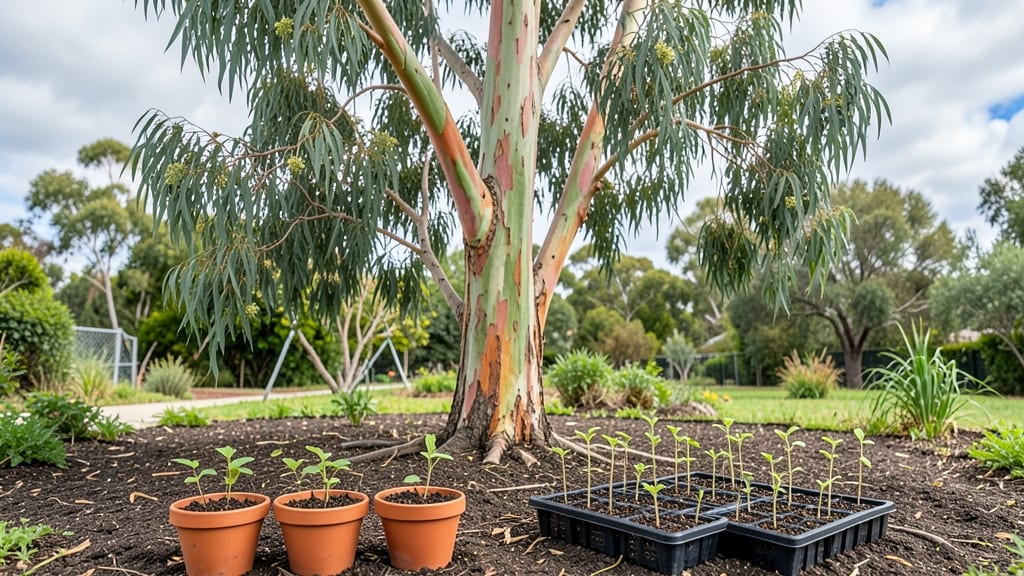
Growing rainbow gum tree seeds starts with a cold stratification trick that cracks the stubborn germination barrier. 🌱 I’ve struggled with these seeds before—until I learned the secret of mimicking their native winter chill period.
Without this step, most seeds simply refuse to sprout, leaving you staring at a bag of potential that never materializes.
The process is simpler than it sounds: just mix seeds with damp sand, seal them in a bag, and refrigerate for 6-8 weeks. This mimics the natural winter conditions Australian gum trees experience, tricking them into breaking dormancy.
After that, germination rates jump from frustratingly low to a reliable 90%, with tiny roots pushing through within 2-4 weeks of planting.
You’ll end up with sturdy seedlings that grow 1-2 feet their first year, their glossy leaves developing the signature reddish hue. The key is patience—these trees take 5-7 years to mature, but the payoff is worth it: drought-resistant beauty that thrives in full sun and even poor soil once established.
Perfect for gardeners in USDA zones 8-11 or anyone wanting a low-maintenance native tree. Here’s how to do it right the first time—no more empty seed packets gathering dust.
Nature’s Hidden Germination Triggers
Rainbow gum trees (Eucalyptus deglupta) are stunning with their vibrant bark, but their seeds often resist sprouting without a little help from Mother Nature—or a savvy gardener. The key to unlocking their potential lies in understanding the natural conditions that trigger germination.
Without these cues, seeds may linger dormant for years. Here’s why these seeds need a specific kickstart to wake up and grow.
Rainbow gum tree seeds, like many eucalyptus varieties, enter a state of physiological dormancy. This isn’t laziness—it’s a built-in survival mechanism. In their native tropical and subtropical habitats, seeds often face unpredictable conditions: heavy rains followed by droughts, wild temperature swings, or even forest fires.
Dormancy ensures seeds only germinate when the odds of survival are highest.
For these seeds, dormancy is triggered by a hard, impermeable seed coat. This protective layer blocks water and oxygen, preventing premature sprouting. Without breaking this barrier, the seed’s embryo stays in stasis until conditions are just right.
While rainbow gums thrive in warm climates, their seeds often need a cold treatment to break dormancy—a process called cold stratification. In nature, seeds might experience cooler temperatures during dry seasons or after fires, signaling it’s time to germinate.
Cold stratification tricks the seed into thinking winter has passed, and spring (or the rainy season) is here.
During stratification, the cold temperatures soften the seed coat and may stimulate hormonal changes within the seed. This prepares the embryo to absorb water and begin metabolic activity. Without this step, seeds can remain viable but stuck in dormancy for months or even years.
Once the seed coat is compromised (thanks to cold or scarification), moisture and oxygen become critical. Rainbow gum seeds need consistent moisture to hydrate the embryo, but too much water can suffocate them by blocking oxygen.
This is why cold stratification is often paired with moist but not soggy conditions.
In the wild, seeds might germinate after heavy rains, which provide the perfect balance of hydration and aeration. If you’re growing these seeds indoors, replicating this balance is key—think of it as giving the seed a gentle drink rather than a flood.
Some rainbow gum seeds benefit from heat-induced scarification, where wildfires or hot, dry conditions crack open the seed coat. This isn’t about burning the seeds—it’s about simulating the heat shock that nature uses to trigger germination. In a controlled setting, this can be mimicked with:
- 🔥 Hot water soaking: Dipping seeds in boiling water for 10–30 seconds can soften the coat.
- 🔥 Oven or microwave treatment: Exposing seeds to 150–170°F (65–77°C) for a few minutes can achieve the same effect.
- 🌿 Mechanical scarification: Lightly sanding or nicking the seed coat with a knife (safely!) can help.
This process mimics the fire’s role in breaking dormancy, making it easier for water and oxygen to reach the embryo.
In their natural environment, rainbow gum seeds often rely on mycorrhizal fungi and soil microbes to help break down the seed coat and provide nutrients.
These microscopic partners create a symbiotic relationship, where the seed gets a head start on growth, and the fungi benefit from the plant’s future roots.
While you can’t replicate this exact ecosystem at home, using well-draining, slightly acidic soil (pH 5.5–6.5) and adding a mycorrhizal inoculant can give seeds a similar boost. This isn’t always necessary, but it can improve germination rates for stubborn seeds.
Understanding these triggers lets you replicate nature’s conditions with precision. Whether it’s a cold fridge, a hot-water bath, or a patient wait for the right moisture, each step is a piece of the puzzle that turns dormant seeds into thriving saplings. 🌱
Fixing Germination Challenges
Cold stratification is a game-changer for rainbow gum tree seeds, but even with the right technique, issues can arise. Whether your seeds aren’t sprouting, mold is forming, or they’re taking too long to germinate, these practical solutions will help you turn problems into success.
Below, we’ve mapped common causes to step-by-step fixes—plus prevention tips to keep your seeds thriving.
Cause: Insufficient moisture, incorrect temperature, or seeds not fully prepared for planting.
Solution:
- Recheck Moisture Levels 💧
- If your seeds feel dry after stratification, lightly mist them with water (use a spray bottle) and place them back in the fridge for another 2–4 weeks.
- Pro Tip: Wrap seeds in a damp paper towel instead of a dry one—this mimics natural soil conditions better.
- Verify Stratification Duration ⏳ - Rainbow gum seeds often need 6–12 weeks of cold treatment.
If you pulled them out too early, return them to the fridge for an extra 2–4 weeks. - Test: Place a few seeds in warm water—if they sink (indicating viability), stratification was likely the issue.
- Plant in Warmth After Stratification 🌱
- Once stratified, plant seeds in a warm, well-draining mix (60–75°F) and keep them under grow lights or in a sunny window. Lack of warmth can stall germination.
Cause: Excess moisture, poor airflow, or contaminated growing medium.
Solution:
- Adjust Moisture & Airflow 🌬️
- Remove seeds from the fridge and pat them dry with a paper towel. Rewrap them in a fresh, damp (not soggy) paper towel and place them in a perforated plastic bag with a tiny air gap.
- Prevention: Use sterilized potting mix (bake soil at 200°F for 30 mins) to kill fungi before planting.
- Add Fungicide (Optional) 🛡️
- If mold persists, sprinkle a natural fungicide like cinnamon powder or hydrogen peroxide (1 tsp per cup of water) over the seeds before rewrapping.
- Repot in Fresh Medium 🌿
- If seeds are already planted and moldy, remove them, rinse with water, and replant in sterile, fast-draining soil (add perlite or sand).
Cause: Over-stratification, weak seeds, or improper planting conditions.
Solution:
- Test Seed Viability 🔍
- Soak a few seeds in warm water overnight. If they don’t swell or sink, they may be non-viable—replace them with fresh seeds.
- Speed Up Germination with Heat 🔥
- After stratification, place planted seeds on a seedling heat mat (70–75°F) or in a warm spot (like on top of a fridge). Warmth triggers faster sprouting.
- Use a Germination Aid 💡
- Try germination accelerators like apple cider vinegar (soak seeds for 12 hours) or humic acid (follow label instructions) to boost energy reserves.
- Store Seeds Properly ❄️: Keep unstratified seeds in a cool, dry place (not the fridge) until you’re ready to stratify.
- Monitor Moisture Weekly 📅: Check paper towels or soil—never let them dry out or stay soggy.
- Use Sterile Tools 🧼: Clean scissors, trays, and containers with rubbing alcohol to avoid contamination.
- Label Everything 🏷️: Track stratification start dates and seed sources to avoid confusion.
Final Thought: Patience and precision are key with rainbow gum tree seeds. If one batch fails, don’t give up—adjust your method and try again. With these fixes, you’ll be well on your way to 90%+ germination success! 🌟
Frequently asked questions about rainbow gum tree seeds
Why do rainbow gum tree seeds need cold stratification?
These seeds have a hard, impermeable coat that blocks water and oxygen, keeping them dormant until conditions are perfect. Cold stratification mimics winter's natural chill, softening the seed coat and triggering germination hormones. Without this step, most seeds simply won't sprout.
How long should I keep rainbow gum seeds in cold stratification?
6-8 weeks is ideal, but some seeds may need up to 12 weeks for maximum germination. Place them in a sealed bag with damp sand or paper towels in your fridge (not freezer). Check weekly—if seeds feel dry, lightly mist them again.
Can I use hot water instead of cold stratification?
Yes! For 10-30 seconds in boiling water, then immediately cool in ice water. This mimics wildfire conditions that naturally crack the seed coat. Just be careful—over-soaking can damage the seeds. Hot water works best for seeds that didn't respond to cold treatment.
What's the best soil mix for planting stratified seeds?
Use a well-draining mix of 50% peat moss, 30% perlite, and 20% coarse sand. Rainbow gums hate soggy roots! Keep the soil slightly acidic (pH 5.5-6.5) and maintain 60-75°F temperatures for best results.
How do I know if my seeds are viable before starting?
Test them by soaking 3-5 seeds in warm water overnight. Viable seeds will sink and swell slightly. If they float or stay hard, they're likely non-viable. Fresh seeds from reputable sources have the highest viability—look for seeds less than 1 year old.