
Pruning
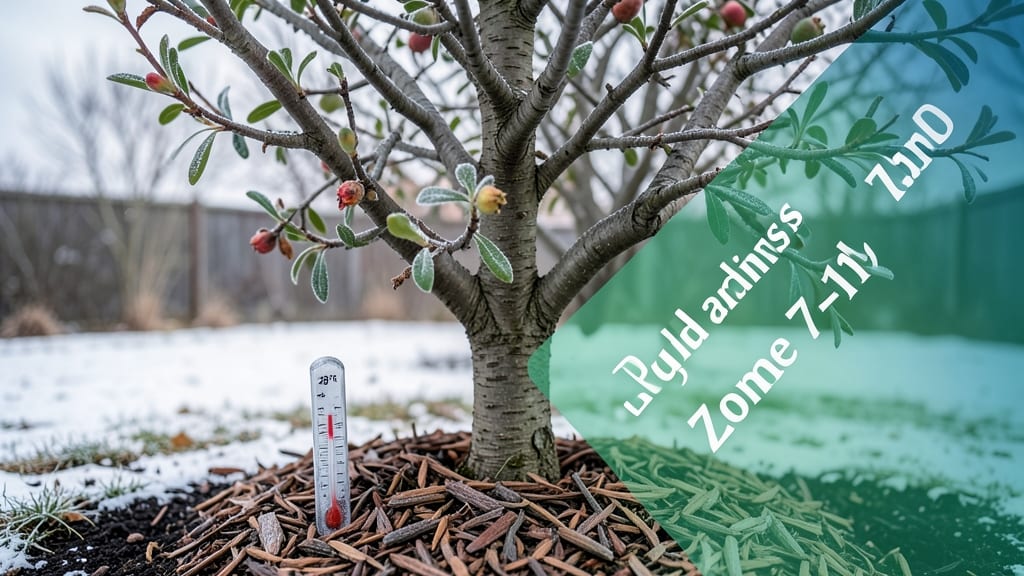
Understanding pomegranate tree cold hardiness reveals they perform best in USDA zones 7-11, enduring brief cold snaps down to 15°F (-9°C) while younger trees and tender varieties may suffer damage when temperatures drop below 10°F (-12°C).
Pomegranate trees show remarkable resilience in colder climates once established, but their cold hardiness varies dramatically between young and mature specimens. 🌱 The key difference lies in their root systems—mature trees develop deeper, frost-resistant roots that protect them better than shallow juvenile roots.
Varieties like 'Wonderful' and 'Eversweet' are particularly cold-tolerant, often surviving winter dormancy with proper protection, while newer hybrids may struggle in zone 6 unless heavily insulated.
What makes this plant so interesting is its ability to adapt through dormancy—a natural survival mechanism where growth slows dramatically during freezing temperatures. This biological response allows established trees to push through winter, but young trees lack this built-in protection.
That's why gardeners in colder regions focus on creating microclimates through mulching and strategic pruning rather than relying solely on the tree's natural hardiness.
💡 In This Article
- Pomegranate Tree Cold Tolerance by Variety and Age
- Winterizing Pomegranate Trees for Cold Climates
Pomegranate tree cold tolerance by variety and age
Cold hardiness in pomegranate trees isn't one-size-fits-all—it varies dramatically based on both variety and age. Mature trees like the classic 'Wonderful' variety can handle temperatures down to 15°F (-9°C) thanks to their established root systems that store energy reserves.
These roots develop deeper over time, creating a natural insulation layer that protects the trunk and branches. In contrast, young trees with shallow root systems often struggle below 20°F (-7°C), as their limited energy reserves can't sustain prolonged cold exposure.
The key difference lies in how each part of the tree responds to cold. Canopy damage typically occurs first when temperatures drop below 10°F (-12°C), as the leaves and branches lack the protective bark of the trunk.
Varieties like 'Eversweet' show superior cold tolerance because their leaves have thicker cuticles that reduce moisture loss during winter dormancy. 🌿 Meanwhile, newer hybrids like 'Crimson Beauty' may exhibit leaf burn or dieback if exposed to sudden freezes without protection, even in zone 7 climates.
Age plays a critical role in survival rates—juvenile trees enter dormancy later in fall and exit earlier in spring, making them more vulnerable to late-season freezes. A 3-year-old tree might survive a single 15°F (-9°C) event but suffer severe damage if exposed to multiple cold snaps below 20°F (-7°C).
Mature trees, however, can withstand these conditions because their deeper roots act as a thermal buffer, maintaining soil temperatures around the root zone at 32-35°F (0-2°C) even when air temperatures drop.
Dormancy adaptations are where pomegranates truly shine. During winter, these trees produce antifreeze proteins in their cells that prevent ice crystal formation, similar to how some evergreens survive freezing temperatures. This biological mechanism allows established trees to remain dormant for months while still maintaining cellular integrity.
However, young trees lack sufficient antifreeze protein production, which is why they require additional winter protection in colder zones.
Consider these variety-specific cold thresholds when selecting pomegranates for your climate:
- 'Wonderful': 15°F (-9°C) tolerance; best for zones 7-11
- 'Eversweet': 10°F (-12°C) tolerance; more cold-hardy than 'Wonderful'
- 'Crimson Beauty': 18°F (-8°C) tolerance; needs protection in zone 6
- 'Sweetheart': 20°F (-7°C) tolerance; ideal for zone 6 gardeners
The most cold-tolerant varieties often produce slightly smaller fruit but demonstrate remarkable resilience. For example, 'Eversweet' might yield 20-30% fewer pomegranates in zone 6 compared to zone 8, but the trees themselves are far more likely to survive multiple winters.
This trade-off between yield and hardiness is why many northern gardeners prioritize these varieties over more tender cultivars.