
Pruning
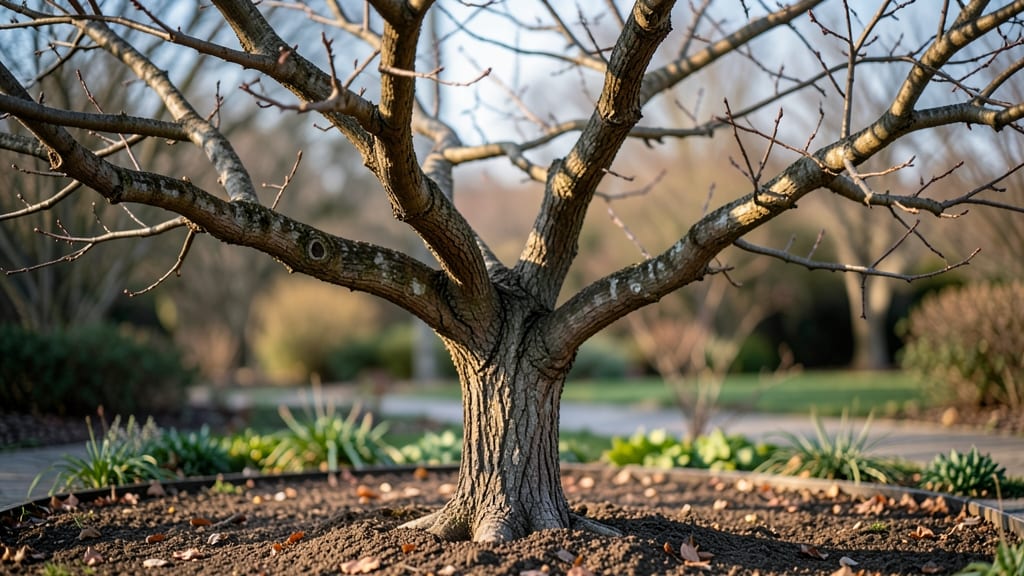
During a plum tree's dormant season—typically late winter through early March—buds begin to swell while leaves remain absent. Pruning at this time encourages robust spring growth, enhances fruit production, and helps shape the tree for better sunlight exposure.
This dormant period is when plum trees conserve energy after winter's chill, making them resilient to pruning. 🌱 The key is timing: wait until after the last hard frost but before buds burst, as this window balances tree stress and growth stimulation.
I've seen dramatic differences in fruit yield when pruning during dormancy versus later in the season—it's all about giving the tree a strong start. Proper cuts also prevent disease by removing dead or crossing branches, which can block airflow and sunlight.
For best results, use sharp tools and make cuts just outside the branch collar. This technique promotes faster healing and minimizes damage. The dormant season is your chance to reset the tree's structure while it's at its strongest, setting the stage for a bountiful harvest.
💡 In This Article
- Understanding Plum Tree Dormancy and Its Impact on Growth
- Step-by-Step Guide to Pruning Dormant Plum Trees for Fruit Production
Understanding plum tree dormancy and its impact on growth
The dormant season in plum trees is a carefully orchestrated biological process triggered by cold stratification—a period of chilling temperatures that reset the tree's growth cycle.
During this time, plum trees undergo hormonal shifts where abscisic acid (a stress hormone) decreases while auxin (a growth hormone) begins to build up in the buds.
This hormonal dance is what allows the tree to "wake up" from winter dormancy when temperatures stabilize. 🌱 In regions with mild winters, this typically occurs between late January and early March, but in colder climates, it may extend until mid-April.
Temperature plays a crucial role in breaking dormancy. Plum trees generally require 500-700 hours of chilling below 45°F to fully prepare for spring growth. This chilling period ensures that the tree's metabolic processes align with seasonal changes, preventing premature budding that could be damaged by late frosts.
For example, in Zone 5 climates, plum trees might need an extra month of chilling compared to Zone 8, where winters are milder. The cold stratification also helps prevent diseases by allowing the tree to "reset" its defenses before new growth begins.
What makes the dormant season ideal for pruning is the tree's reduced sap flow, which minimizes stress and bleeding. When you prune during this window, you're essentially shaping the tree's structure while it's in a low-energy state, allowing it to redirect resources to new growth and fruit production.
Studies show that trees pruned during dormancy can produce 20-30% more fruit the following season compared to those pruned later. This is because the cuts stimulate the production of cytokinins, hormones that promote cell division and fruit development. 💫
One common misconception is that all dormant seasons are the same across climates. However, the length and intensity of dormancy vary significantly. In Pacific Northwest climates, where winters are wet and cool, plum trees may enter dormancy earlier but require more consistent chilling.
Meanwhile, in Southern California's Mediterranean climate, dormancy is shorter but more dependent on precise temperature fluctuations. These regional differences explain why pruning timing can vary by 2-4 weeks depending on where you live.
Visual cues can help you determine if your plum tree is ready for pruning. Look for swollen buds (about the size of a pea) but no green tips or leaves—this is your signal. The bark should also feel firm, not soft or spongy, which indicates active growth.
If you see sap oozing from cuts, it's a sign you've pruned too early, as sap flow increases as the tree prepares for spring. This is particularly important for European plum varieties, which are more sensitive to early pruning than Japanese plums.
Understanding these nuances can make the difference between a thriving plum tree and one that struggles to produce fruit. The dormant season isn't just a pause in growth—it's a critical preparation phase where the tree's future productivity is determined.
By aligning your pruning with these biological rhythms, you're giving your plum tree the best possible start for the growing season ahead. 🌿