
Pruning
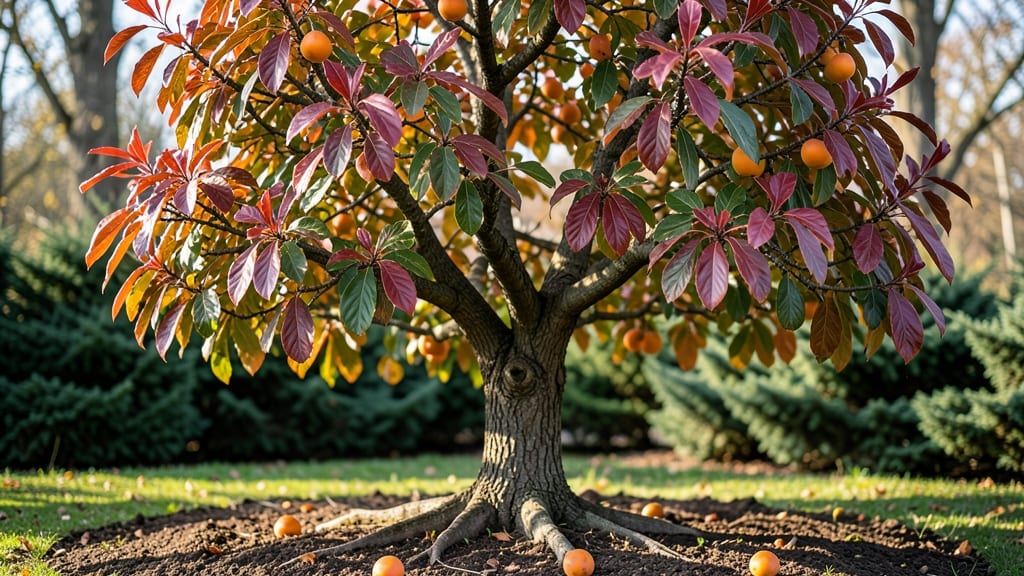
Fall pruning your persimmon tree unlocks next year's bounty—right now, while the leaves turn fiery gold. 🌿 I’ve learned that the best time to shape these trees is after the fruit drops but before hard frost, when the branches reveal their true structure.
The goal? Open up the canopy so sunlight reaches every branch, ensuring sweeter fruit and fewer pests next season.
Start by removing dead, crossing, or weak branches first—they’re easy to spot when the tree’s bare. Then, thin out about 20-30% of the smaller branches to improve airflow, which cuts down on fungal diseases like anthracnose.
Use sharp pruners and make clean cuts just outside the branch collar, where the branch meets the trunk.
You’ll notice a difference immediately: the tree’s framework becomes clearer, and new growth in spring will be stronger. The right cuts now mean fewer branches to prune later, and your tree will reward you with heavier fruit production and that signature persimmon aroma in autumn.
Works for both American and Asian persimmons, though Asian varieties (like Fuyu) need slightly less aggressive pruning. Just avoid heavy cuts on young trees—they’re still establishing their root systems. Here’s how to do it right the first time.
📚 In This Guide
- What you need
- Instructions
- Tips and common mistakes
- Wrapping up and next steps
What you need
- ● Pruning shears: Bypass pruners (for cuts up to ½ inch thick) – 1 pair (look for ergonomic, sharp blades for clean cuts).
- ● Lopping shears: For branches ½ to 2 inches thick – 1 pair (longer handles for leverage).
- ● Pruning saw: For thick branches 2+ inches in diameter – 1 saw (bow or folding saw with fine teeth).
- ● Gloves: Heavy-duty, cut-resistant (e.g., leather or synthetic blend) – 1 pair (protects from thorns and sharp tools).
- ● Ladder: Sturdy, extendable (20–30 ft, with non-slip feet) – 1 ladder (for tall trees; ensure it’s rated for your weight).
- ● Disinfectant: 70% isopropyl alcohol or bleach solution (1 part bleach to 9 parts water) – small spray bottle (prevents disease spread).
- ● Heavy-duty trash bags: 30–50 gallon – 2–3 bags (for collecting pruned branches).
- ○ Marking twine or flags: (optional) – small roll (to tag branches for removal or special attention).
- ● Weather check: Prune on a dry, cool day (avoid frost or rain within 24 hours).
- ● Safety glasses: ANSI-rated – 1 pair (protects eyes from debris).
- ● Long sleeves/pants: Wear thick, loose fabric (to avoid snags and scratches).
- ○ First-aid kit: (optional but recommended) – small kit (for minor cuts or scrapes).
- ○ Tree pruning guide/reference: (optional) – printed or digital (e.g., USDA pruning guidelines for persimmons).
Step-by-Step guide to pruning persimmon trees in fall
Fall is the perfect time to shape your persimmon tree for next year’s bounty—here’s how to do it right.
🌿 Step 1: Assess the Tree for Dead or Damaged Branches
Start by examining your persimmon tree from all sides, looking for branches that are completely brown, brittle, or showing signs of disease. These are your first targets for removal. Persimmons are tough, but dead wood can harbor pests or fungal spores that weaken the tree over time. Run your fingers along the bark—healthy branches should feel firm, while dead ones will crumble easily.
Check for crossing branches or those growing inward at sharp angles. These often rub against each other, creating wounds that invite infection. If you spot any, mark them with a small piece of tape or a pencil so you don’t miss them later. I always prune these first because they’re the easiest to spot and remove without complicating the rest of the job.
✂️ Step 2: Remove Suckers and Water Sprouts
Next, hunt for suckers—those aggressive shoots sprouting from the base of the tree or along the trunk. These steal energy from your fruit-bearing branches, so they’ve got to go. Use sharp bypass pruners to cut them off at the base, making sure to sever the root connection completely. If you leave even a small stub, the sucker will just grow back stronger.
Look for water sprouts—fast-growing, vertical shoots that shoot up from the main branches. These are the tree’s way of reaching for light, but they rarely produce fruit and make the tree look messy. Snip these back to a lateral bud or branch that’s already producing fruit. You’ll know you’re doing it right when the cuts leave a small, smooth collar where the branch meets the trunk.
☀️ Step 3: Thin Out Overcrowded Branches for Better Airflow
Persimmon trees thrive when they get plenty of sunlight and airflow, so your next goal is to open up the canopy. Focus on branches that are growing too close together—aim to space them about 6-12 inches apart along the main trunk. Start by removing the smallest, weakest branches first, as these are competing with stronger ones for nutrients. Cut back to a healthy outward-facing bud just above a lateral branch or the trunk.
If you’re unsure which branches to keep, imagine the tree as a vase shape—wide at the bottom, narrower at the top, with branches spaced evenly. This shape ensures sunlight reaches the center of the tree, where fruit develops. Avoid cutting more than 25% of the tree’s foliage in one season, or you’ll stress the persimmon and reduce next year’s harvest.
⏰ Step 4: Shape the Tree for Optimal Fruit Production
Now it’s time to refine the tree’s structure. Persimmons respond well to an open-center or modified central leader form, which directs energy toward fruit production. Start by identifying the main scaffold branches—these are the thick, sturdy limbs that form the tree’s framework. If any scaffold branches are rubbing or crossing, remove the weaker one at its point of origin.
For branches that are too long or leggy, shorten them by cutting back to a lateral bud that faces outward. This encourages bushier growth and more fruit-bearing wood. Avoid making flush cuts—always leave a small branch collar to prevent disease. Step back occasionally to visualize the tree’s shape; you’re aiming for a balanced, open structure that lets light and air move freely through the canopy.
🌱 Step 5: Clean Up and Protect the Tree
After pruning, sterilize your tools with rubbing alcohol or a 10% bleach solution to prevent spreading disease between cuts. Rake up and dispose of all pruned branches—don’t leave them on the ground, as they can harbor pests or fungal spores. If you’re dealing with a diseased tree, bag the debris and dispose of it in the trash, not the compost.
Finally, apply a thin layer of mulch around the base of the tree (but keep it 3-4 inches away from the trunk to prevent rot). This helps retain moisture and protects the roots over winter. Water the tree deeply if fall has been dry, then sit back and admire your handiwork. Your persimmon will thank you next spring with stronger growth and a better fruit crop.
Tips & tricks for pruning persimmon trees in fall
Pruning in fall sets the stage for a healthier tree next year—here's what I've learned after years of shaping my own persimmons.
Tool Prep: Always sterilize your pruners between cuts, especially when dealing with diseased branches. I use a 1:9 bleach-to-water solution between trees to prevent spreading pathogens. For large branches, consider using a pruning saw—it gives you more control and reduces tearing of the bark. Remember, clean tools mean healthier cuts and fewer infections for your tree.
Branch Selection: When choosing which branches to remove in Step 3, prioritize those growing inward or downward—they'll never get enough sunlight to produce fruit. Look for branches that are thinner than a pencil; these are competing with stronger scaffold branches for nutrients. I usually remove about 15-20% of the canopy in fall, which is less aggressive than spring pruning but still effective for shaping.
Visualization Technique: Before making any cuts, step back and visualize your tree as a vase shape. The bottom should be wider with sturdy scaffold branches, while the top should narrow slightly. This creates an open center that lets sunlight reach all parts of the tree. I mark my target branches with a piece of colored tape first—this helps me see the overall shape before I start cutting.
Timing Consideration: If you're in a region with mild winters, you can safely prune up to 6 weeks before your first expected frost. In colder climates, aim to finish pruning by early November to allow wounds to heal before winter stress sets in. I always check my local frost dates and plan accordingly—this prevents winter dieback from exposed cuts.
Pro Tips for Persimmon Tree In Fall
- Pruning in fall sets the stage for a healthier tree next year—here's what I've learned after years of shaping my own persimmons.
- Tool Prep: Always sterilize your pruners between cuts, especially when dealing with diseased branches.
- Branch Selection: When choosing which branches to remove in Step 3, prioritize those growing inward or downward—they'll never get enough sunlight to produce fruit.
Frequently asked questions
Got questions about pruning your persimmon tree in fall? You’re not alone! Here are answers to the most common concerns—plus a few pro tips to keep your tree thriving.
When is the exact best time to prune a persimmon tree in fall?
The ideal window is late fall to early winter (November–February in most U.S. zones), after leaves drop but before hard freezes. Prune before new growth starts in spring. For colder climates (zones 5–7), wait until late winter to avoid frost damage.
Can I prune a persimmon tree in fall if it’s still holding some leaves?
Yes! Persimmons often cling to leaves late into fall, but focus on dormant branches (no green tips). If you spot fresh growth, wait until spring. Over-pruning leafy branches now can stress the tree. Pro tip: Use a sharp bypass pruner for clean cuts.
What mistakes should I avoid when pruning persimmon trees in fall?
- Topping the tree: Never cut the main trunk flat—it invites disease and weakens structure.
- Pruning too late: Avoid heavy cuts after late winter (March+), as new growth may not harden off before spring.
- Ignoring water sprouts: Remove fast-growing vertical shoots (they drain energy from fruit production).
Will pruning in fall reduce next year’s persimmon harvest?
Not if done correctly! Strategic pruning boosts fruit quality by improving airflow and sunlight. Focus on:
- Removing dead, diseased, or crossing branches (prioritize these first).
- Thinning out overcrowded limbs to ¼ of the tree’s canopy.
What if my persimmon tree has no leaves—is it dead or just dormant?
Persimmons are deciduous and drop leaves in fall/winter. Check for:
If unsure, wait until spring to assess.
Wrapping up and next steps
Fall is the perfect time to give your persimmon tree the care it needs for a burst of spring vitality! By pruning during its dormant season, you’re not just tidying up—you’re shaping a healthier, more productive tree.
Whether you’re a seasoned gardener or just starting, these steps will set your persimmon up for years of lush growth and sweet rewards.
Ready to roll up your sleeves? Grab your tools and head outside—your tree’s future starts with one confident cut at a time! 🌳✂️ For extra guidance, check out our pruning timeline or explore organic fertilizer tips to supercharge next season’s growth.