
Trees
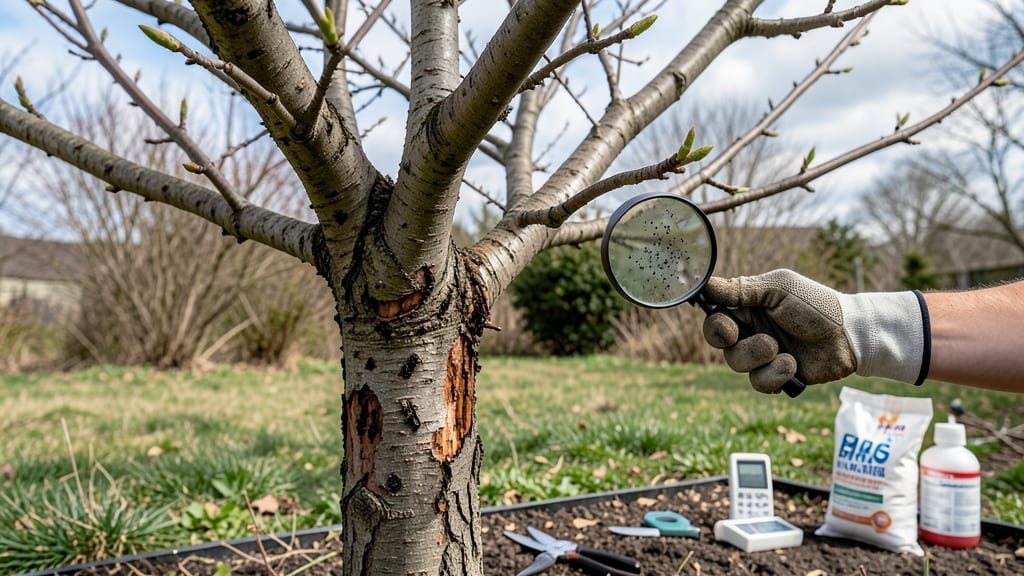
Your peach tree lost all leaves, and panic sets in—but this isn’t always a death sentence. 🌿 I’ve watched trees bounce back from total defoliation, and the key is identifying why it happened first.
Was it a late frost, fungal infection, or something else? The right diagnosis means the difference between recovery and replacement.
Common culprits include peach leaf curl (those puckered, red leaves), bacterial spot (tiny brown spots with yellow halos), or environmental stress like drought or frost damage.
Spider mites can also suck leaves bare, leaving fine webbing behind. The good news? Each problem has a specific fix—from copper sprays to proper watering adjustments.
Within 3 simple steps, you’ll restore your tree’s health: first, confirm the cause (visual clues matter), then treat it (fungicides, pruning, or pest control), and finally, protect it for next season. I’ve nursed trees back from worse—even when they looked hopeless at first glance.
This method works whether your tree is young or mature, in-ground or container-grown. Let’s get that canopy growing back, branch by branch. The first flush of new leaves is always worth the effort.
Root Causes Behind Bare Branches
When your peach tree suddenly sheds its leaves, it’s rarely a coincidence—nature (or pests!) is sending an urgent distress signal. Understanding the why behind the defoliation is the first step to reviving your tree.
Below, we break down the most common culprits, from environmental stressors to hidden invaders, with clear explanations and actionable insights.
Peach trees are hardy but sensitive to sudden temperature swings, especially when they’re caught off guard. Late spring frosts (below 28°F) can cause rapid leaf drop, while heatwaves or drought stress force the tree to conserve water by shedding foliage. Young trees or those recovering from pruning are particularly vulnerable.
How to spot it:
- Leaves turn brown or crispy at the edges before falling.
- New growth appears stunted or curled.
- Soil feels dry 2–3 inches below the surface.
Quick fixes:
- 💡 Mulch deeply (3–4 inches of organic mulch) to insulate roots and retain moisture.
- 🌧️ Water deeply at the base (1–1.5 inches per week) during dry spells—avoid wetting leaves to prevent fungal issues.
- 🛡️ Protect from frost with frost cloth or a row cover if late frosts are forecasted.
Peach trees are a buffet for pests like aphids, peach tree borers, spider mites, and tent caterpillars. These critters don’t just nibble—they suck sap, lay eggs in bark, or spin webs that strangle leaves. Heavy infestations force the tree to drop leaves as a survival tactic.
How to spot it:
| Pest | Signs | Leaf Damage |
|---|---|---|
| Aphids | Sticky residue (honeydew) on leaves/bark; curled or yellowing leaves. | Leaves pucker and fall prematurely. |
| Peach Tree Borer | Sawdust-like frass near the trunk; oozing sap or wilting branches. | Leaves yellow and drop in patches near infested areas. |
| Spider Mites | Fine webbing on undersides of leaves; tiny yellow dots. | Leaves turn bronze or gray before falling. |
Action plan:
- 🔥 Blast pests off with a strong spray of water (especially for aphids/mites).
- 🛡️ Apply horticultural oil or neem oil in early spring to smother eggs/larvae.
- 🪒 Prune and burn heavily infested branches (especially borer-damaged wood).
- 🐝 Invite predators: Ladybugs and lacewings eat aphids—buy or attract them!
Fungi like leaf curl, brown rot, or powdery mildew thrive in damp, warm conditions and can cause peach trees to drop leaves en masse. These pathogens clog stomata (leaf pores), preventing gas exchange and forcing the tree to jettison infected foliage.
How to spot it:
- Leaf curl: Leaves pucker, thicken, and turn red/purple before falling.
- Brown rot: Dark, mushy spots on fruit/leaves; twigs may ooze gum.
- Powdery mildew: White, flour-like coating on leaves (common in humid summers).
Prevention & treatment:
- ✨ Improve airflow by pruning dense branches and spacing trees 15–20 feet apart.
- 🌡️ Water at the base (avoid overhead watering) and prune for sunlight exposure.
- 💊 Use fungicides early:
- Copper fungicide for brown rot/leaf curl (apply at bud swell).
- Neem oil or sulfur spray for powdery mildew (reapply every 7–10 days).
- 🔥 Remove and destroy infected leaves/fruit to stop spore spread.
Peach trees hate soggy roots. Overwatering or compacted/clay soil leads to root rot (Phytophthora or Pythium), which chokes the tree’s ability to absorb nutrients. As roots suffocate, the tree sheds leaves to reduce water loss.
How to spot it:
- Yellowing leaves that stay attached but wilt.
- Mushy, foul-smelling roots when dug up.
- Slow growth despite regular watering.
Fix it fast:
- 🚰 Check drainage: Dig a 12-inch hole near the tree—if water pools after 30 minutes, amend soil with compost or sand.
- 🌱 Raise the tree by mounding soil around the base (but not against the trunk) to improve airflow.
- ⏰ Adjust watering: Water deeply but only when the top 2 inches of soil are dry.
- 🌿 Transplant if needed: Severely affected trees may require relocating to well-draining soil.
Peach trees need a balanced diet of nitrogen (N), phosphorus (P), and potassium (K). A deficiency—especially in magnesium (Mg) or zinc (Zn)—can cause leaf drop as the tree prioritizes survival over fruit production.
How to spot it:
Deficiency
Leaf Symptoms
Other Clues
Nitrogen (N)
Old leaves turn yellow (but veins stay green).
Stunted growth, weak stems.
Magnesium (Mg)
Interveinal chlorosis (yellow between veins) on older leaves.
Crinkled or cupped leaves.
Zinc (Zn)
Small, thick leaves with white stripes; leaves drop early.
Short internodes (tight spacing between leaves).
Boost nutrients:
- 📊 Soil test first! Send a sample to your local extension office for precise recommendations.
-
Revive Your Tree: Quick Fixes for Leaf Loss
When your peach tree sheds all its leaves, panic isn’t the first step—action is! The good news? Most causes of leaf loss are reversible with the right care. Below, we’ve mapped out practical, step-by-step solutions tailored to the most common culprits, plus prevention tips to keep your tree thriving.
Let’s get your peach tree back to its lush, leafy glory!
---
Signs: Yellowing leaves, soggy soil, or a tree struggling to stand upright. Fix: 1. 🔥 Stop Watering Immediately – Let the soil dry out completely before watering again. 2. 🍳 Improve Drainage – Dig a shallow trench around the base (12–18 inches deep) to redirect excess water. Mix in coarse sand or gravel into the top 6 inches of soil. 3. 👨🍳 Raise the Tree (If Needed) – If the root zone is perpetually waterlogged, mound soil around the base to elevate roots slightly. 4. ⏰ Monitor Soil Moisture – Use a moisture meter or stick your finger 2 inches into the soil. Water only when it’s dry.
💡 Prevention Tip: Plant peach trees on a slight slope (if possible) to avoid water pooling. Mulch with wood chips (2–3 inches thick) to regulate moisture without suffocating roots.
---
Signs: Crispy, brown edges on leaves, wilting, or leaves falling prematurely. Fix: 1. 🥘 Deep Water Weekly – Water slowly and deeply (1–2 inches per week) at the base, not just a quick sprinkle. Use a soaker hose for even distribution. 2. 🌡️ Provide Shade – If temperatures exceed 90°F (32°C), drape shade cloth (30–50%) over the tree for a few hours daily. 3. 🍎 Mulch Thickly – Spread 4–6 inches of organic mulch (like straw or pine needles) to lock in moisture and cool roots. 4. 💦 Early Morning Watering – Water before 10 AM to reduce evaporation and fungal risks.
🔥 Pro Tip: If leaves are already crispy, prune damaged foliage to redirect energy to healthy growth. Avoid fertilizing until the tree recovers!
---
Signs: Holes in leaves, webbing, black spots, or sticky residue (sap). Fix: 1. 🔪 Identify the Culprit – - Aphids/Scale: Spray with neem oil (1 tsp per quart of water) or insecticidal soap. - Japanese Beetles: Handpick in the morning or use milky spore powder (organic). - Fungal Issues (e.g., brown rot): Remove infected leaves/branches and spray with copper fungicide. 2. 🌿 Encourage Beneficial Bugs – Plant marigolds or dill nearby to attract ladybugs and lacewings. 3. 🚫 Prune Strategically – Cut off infected branches 6 inches below damage and sterilize pruners with rubbing alcohol.
🎯 Prevention Tip: Inspect trees weekly during peak pest seasons (spring/fall). Keep the area weed-free—pests love hiding in overgrown grass!
---
Signs: Blackened leaves, brittle branches, or delayed spring growth. Fix: 1. 🍂 Remove Dead Leaves – Rake up fallen leaves to prevent mold buildup (like brown rot). 2. 🌡️ Protect Young Trees – Wrap the trunk with tree wrap and cover with frost cloth for young peach trees (under 3 years old). 3. 💪 Fertilize Lightly in Spring – Use a balanced 10-10-10 fertilizer once new leaves emerge (avoid heavy nitrogen—it stresses weak trees).
✨ Spring Revival Hack: If buds are still dormant, wait 2–3 weeks before pruning—new growth may surprise you!
--- Signs: Yellowing between leaf veins (iron/chlorosis), stunted growth, or weak stems. Fix: 1. 📊 Test Your Soil – Use a DIY soil test kit (available at garden centers) to check pH (ideal: 6.0–7.0 for peach trees).
2. 💪 Apply Iron Supplement – For chlorosis, spray chelated iron (like Ironite) or apply iron sulfate granules to the soil. 3. 🍎 Balance Fertilizer – Use a low-nitrogen, high-potassium fertilizer (e.g., 5-10-10) in early spring and late summer.
🔥 Prevention Tip: Avoid over-fertilizing—peach trees are sensitive to excess salts. Stick to slow-release granules for steady nutrition.
--- Signs: Wilting, leaf drop within weeks of moving, or slow regrowth. Fix: 1. 🌱 Water Daily for 2 Weeks – Keep soil consistently moist (not soggy) to reduce stress. 2. 🍳 Prune 1/3 of Canopy – Trim back damaged or overly long branches to focus energy on root recovery.
3. 🌿 Mulch Heavily – Apply 6 inches of mulch to protect roots and retain moisture.
💡 Pro Tip: If transplanting, dig a wide hole (twice as wide as the root ball) to encourage root spread. Avoid disturbing roots—keep the root ball intact!
If your tree shows no improvement after 4–6 weeks, dig gently around the base to inspect for: - 🐛 Girdling roots (roots circling the trunk)—prune them carefully with sterilized tools. - 🍄 Fungal root rot (mushy, black roots)—remove infected roots and treat with mycorrhizal fungi to boost healthy microbes.
🚨 Emergency Move: If roots are severely damaged, transplant immediately to fresh soil and monitor closely.
| Step | Action | Frequency | |-------------------------|-------------------------------------|------------------------| | Watering | Deep soak 1–2x/week | Until leaves return | | Pruning | Remove dead/diseased branches | As needed | | Fertilizing | Light feed (5-10-10) | Early spring/late summer | | Pest Control | Weekly inspections | Spring–Fall | | Mulching | Refresh organic mulch | Annually |
Remember: Peach trees are resilient! With the right care, most leaf loss is temporary. Stay patient—your tree may drop a few more leaves at first, but new growth will follow. 🌿✨
(Need a deeper dive? Check out our [Peach Tree Care Guide](#) for long-term tips!)
Frequently asked questions
1Will my peach tree survive if it loses all its leaves?
Most peach trees can recover from total defoliation, especially if the cause isn't fatal (like root rot or severe disease). The key is acting fast—trees often regrow leaves within 4-6 weeks if the roots and trunk remain healthy. Young trees are more vulnerable, so monitor them closely during recovery.
2How can I tell if my tree's leaf loss is from frost damage vs. disease?
Frost damage causes leaves to turn brown and crispy at the edges, often with no spots or discoloration. Disease (like peach leaf curl) shows puckered, red/purple leaves or tiny brown spots with yellow halos. Check for webbing (mites) or sticky residue (aphids) too—those indicate pests, not frost.
3Should I prune my peach tree now if it's lost all leaves?
Wait until spring (after last frost) to prune—even if the tree looks bare. Pruning now removes potential buds that could sprout new leaves. If you must act, only remove dead or diseased branches (cut 6 inches below damage) and sterilize tools with rubbing alcohol.
4What's the fastest way to revive a peach tree with no leaves?
Start with deep watering (1-2 inches weekly) and mulch 3-4 inches thick around the base. For pests, spray neem oil (mixes oil + water + soap). If it's drought stress, provide morning shade until new leaves appear. Most trees show signs of recovery in 2-3 weeks with consistent care.
5Can I still get fruit from a peach tree that lost all leaves?
Possibly—but only if the tree had flower buds before defoliation. Check for small swellings at branch tips (future leaves). If buds are present, the tree will prioritize leaf regrowth over fruit. For next year, focus on balanced fertilization (5-10-10) and pest prevention to maximize fruit production.