
Trees
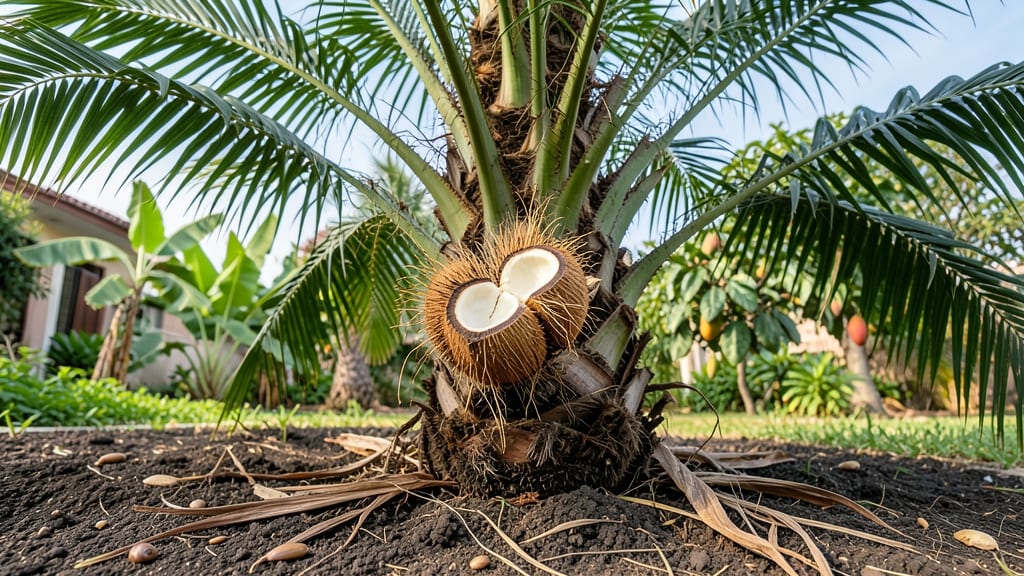
Your palm tree fruit is ready to harvest when the husk turns golden brown and rattles inside—that’s when coconuts and dates reach peak flavor. 🌴 I’ve spent years troubleshooting why some fruits stay hard, rot inside, or get eaten by pests, and the key is catching them at the right stage before problems set in.
The biggest mistakes? Waiting too long or harvesting too early—both ruin the fruit. Coconuts should feel heavy for their size, while dates should pull free from the stem with a slight give.
If you find weevils or mold, act fast with organic sprays or proper pruning to save next year’s crop. By following these steps, you’ll end up with sweet, ripe fruit that’s perfect for eating fresh or storing.
The secret is checking your trees every 10-14 days during harvest season to catch them at their best. This works for both backyard palms and larger varieties—just adjust your timing based on your climate. Let’s get those fruits off the tree the right way!
Natural Triggers Behind Fruit Retention
When you crack open a palm tree fruit—whether it’s a coconut or a date—and find the flesh still intact, it’s not just a surprise; it’s a clue about the tree’s biology, the fruit’s maturity, and even environmental factors.
Understanding why this happens can help you predict ripeness, improve harvest timing, and avoid waste. Here’s a breakdown of the key reasons behind retained fruit inside palm trees.
The most common reason for finding unripe or intact fruit inside a palm tree is simply picking it too early. Palm fruits, like coconuts and dates, undergo a gradual ripening process that can span weeks or even months, depending on the species and climate.
- Coconuts: A coconut’s endosperm (the white "meat") and liquid inside harden as it matures. Harvesting too soon—before the husk turns golden brown and the fruit sounds hollow when shaken—leaves the flesh soft, watery, or even translucent. Pro tip: Wait until the husk is fully brown and the coconut falls naturally (or requires minimal force to detach).
- Dates: Dates ripen in stages, starting firm and green, then softening and turning amber or deep red. Picking them too early results in a hard, seedy, or overly fibrous texture. The fruit inside may still be unfertilized (small and undeveloped) or partially developed (with a thin, watery layer instead of sweet pulp).
💡 Actionable Fix: Research your specific palm species’ ripening timeline. For coconuts, this often means waiting 12–18 months after flowering. For dates, monitor color changes and taste-test a few fruits to gauge sweetness.
Extreme weather, water fluctuations, or poor soil conditions can disrupt a palm tree’s natural fruiting process. When stressed, the tree may produce fruits that fail to develop properly or retain immature characteristics, including undeveloped flesh inside.
- Drought or Overwatering: Both conditions can stunt fruit growth. Drought causes the tree to prioritize survival over reproduction, leading to smaller, underdeveloped fruits with little to no usable flesh. Overwatering, meanwhile, can cause rot or poor nutrient absorption, resulting in mushy, discolored interiors.
- Temperature Swings: Frost or sudden heat waves can damage flowers or young fruits, preventing them from maturing. In tropical regions, inconsistent rainfall patterns (e.g., erratic monsoons) may also lead to uneven ripening across a single cluster.
- Poor Soil Nutrients: A deficiency in potassium, magnesium, or nitrogen can hinder fruit development. Without enough nutrients, the tree may produce fruits that lack sweetness or structural integrity, leaving the inside underdeveloped.
🌡️ Actionable Fix:
- Test soil pH and nutrient levels annually (ideal range for palm trees: 5.5–7.0).
- Mulch around the base to retain moisture and regulate temperature.
- Water deeply but infrequently (e.g., 1–2 times per week, depending on climate) to avoid stress.
Palm trees rely on wind, animals, or insects (like bats or beetles) to transfer pollen from male to female flowers. If pollination doesn’t occur—or is incomplete—the fruit may form but fail to develop properly, leaving the inside hollow, seedy, or filled with only a thin layer of undeveloped tissue.
- Coconuts: Most coconut palms are monoecious (male and female flowers on the same tree) but require cross-pollination for optimal fruit set. Poor pollination leads to small, misshapen coconuts with little to no endosperm.
- Dates: Date palms (Phoenix dactylifera) are dioecious—meaning male and female trees must be nearby for successful pollination. Without it, female flowers may drop early or develop into hard, dry, or seed-filled fruits with no usable pulp.
🐝 Actionable Fix:
- If growing coconuts, plant multiple trees to encourage cross-pollination.
- For dates, ensure at least one male tree is within 100–200 feet of female trees. Hand-pollination with a brush may help in controlled environments.
- Attract pollinators by planting native flowering species nearby and avoiding pesticides.
Insects, fungi, or bacteria can infiltrate palm fruits, causing internal rot, premature abortion, or stunted growth. Even if the fruit looks intact on the outside, the inside may be discolored, mushy, or completely undeveloped due to hidden infestations.
- Common Culprits:
- Rhynchophorus weevils (e.g., red palm weevils) bore into the trunk or fruit, disrupting nutrient flow.
- Fruit flies lay eggs in soft fruits, leading to larval feeding and liquefaction.
- Fungal infections (e.g., Phytophthora) cause brown, water-soaked spots inside the fruit.
🔪 Actionable Fix:
- Inspect trees regularly for signs of chewing, oozing sap, or wilting fronds.
- Remove and destroy infested fruits immediately to prevent spread.
- Apply neem oil or copper-based fungicides as a preventive measure.
🎯 Key Takeaway: Most cases of retained or undeveloped fruit inside palm trees boil down to timing, biology, or environmental factors. By monitoring ripeness, optimizing growing conditions, and addressing pollination or pest issues early, you can maximize the quality—and edibility—of your harvest.
Fixing Common Palm Fruit Issues
When dealing with palm tree fruits—whether it’s a coconut or a date—problems like pests, overripe fruit, or improper harvesting can turn a bountiful harvest into a frustrating mess. Below are practical, step-by-step solutions for the most common issues, along with prevention tips to keep your palm fruits healthy and productive.
If you notice holes, chewed flesh, or larvae inside coconuts or dates, pests like rhino beetles, weevils, or fruit flies are likely the culprits.
How to Fix It
- 🔍 Inspect Early & Often
- Check coconuts and dates weekly for signs of infestation (tiny holes, sawdust-like frass, or weeping sap).
- 💡 Pro Tip: Use a flashlight to spot early-stage damage before it spreads.
- 🛡️ Apply Natural Repellents
- Neem oil spray (mix 2 tbsp neem oil + 1 tsp dish soap + 1 quart water) – spray on fruit and surrounding foliage.
- Diatomaceous earth (food-grade) – Sprinkle lightly around the tree base (avoid direct contact with fruit).
- Citrus or eucalyptus oil – Soak cotton balls in oil and place near the tree to deter pests.
- 🧹 Remove Infested Fruit Immediately
- Drop heavily infested coconuts/dates on the ground and bury them (do not compost—this spreads pests).
- ⚠️ Warning: If weevils are present, bag and dispose of the fruit in sealed plastic to prevent further spread.
- 🐝 Encourage Beneficial Predators
- Ladybugs, lacewings, and parasitic wasps eat palm pests. Attract them with native plants (like dill or fennel) near your tree.
🛡️ Prevention Tips
- 🌱 Prune Dead Leaves – Pests hide in debris; keep the area clean.
- 🕰️ Harvest Early – Pick coconuts before they fall (when they’re firm but not hard) to reduce exposure.
- 🌞 Improve Airflow – Thin out dense fronds to prevent moisture buildup (pests love damp areas).
If your palm fruit is mushy, fermenting, or attracting flies, it’s past its prime. Overripe coconuts can even explode, while dates may turn into a sticky mess.
How to Fix It
- 🍏 Test for Ripeness Early
- Coconuts: Tap them—high-pitched sound = ripe. If it’s dull, it’s overripe.
- Dates: Press gently—slightly soft but firm = perfect. If it’s mushy, compost it.
- 🧊 Store Properly to Slow Ripening
- Coconuts: Keep in a cool, dry place (50–70°F). Never refrigerate—it speeds up spoilage.
- Dates: Store in an airtight container with a paper towel to absorb moisture. Freeze for long-term storage.
- 🔪 Cut Out Damaged Sections (For Dates Only)
- If only part of a date is spoiled, trim the bad section and save the rest (if the core is still firm).
- 🍯 Use Overripe Fruit for Cooking/Baking
- Coconut meat: Blend into smoothies, curries, or coconut milk.
- Dates: Make date syrup, energy balls, or date paste (great for baking!).
🛡️ Prevention Tips
- 🕒 Harvest at Peak Ripeness – Don’t wait until fruit falls naturally.
- 🌡️ Avoid Overwatering – Too much moisture speeds up rot.
- 🕯️ Use Shade Cloth – Protects fruit from excess sun, which can cause premature spoilage.
If coconuts or dates refuse to drop, they may be underripe, diseased, or stuck to the tree.
How to Fix It
- 🌿 Check for Disease or Blight
- Brown spots, mold, or blackened fruit? Trim and remove affected branches.
- 💡 Pro Tip: Spray with copper fungicide if fungal issues are suspected.
- 🪜 Gently Encourage Dropping
- For coconuts: Use a pole or long stick to tap the fruit loose (avoid damaging the tree).
- For dates: Some varieties never drop naturally—hand-pick when ripe.
- 🌱 Prune Strategically
- If fruit is trapped in dense fronds, thin out old leaves to improve access.
🛡️ Prevention Tips
- 🌱 Choose the Right Variety – Some palm trees (like Medjool dates) require manual harvesting.
- 🌱 Fertilize Properly – A balanced palm fertilizer (high in potassium) encourages natural fruit drop.
- 🌱 Avoid Over-Pruning – Too much trimming can stress the tree and delay fruit maturation.
To keep your palm fruits healthy and bountiful, follow these golden rules: ✅ Harvest at the right time – Coconuts (when husk turns brown), Dates (when slightly soft). ✅ Use proper tools – Long shears or a pole for high branches (never climb—risk of injury!). ✅ Handle with care – Wear gloves to avoid cuts from husks or sharp coconut shells. ✅ Rotate harvesting spots – If one tree is overproducing, thin out some fruit to balance energy.
Final Thought: With the right care, your palm tree can yield plump, pest-free fruit for years. Act fast when issues arise, and prevent problems before they start—your future harvest will thank you! 🌴✨
Frequently asked questions
Why do some palm tree fruits stay hard even when the husk looks ripe?
This usually means the fruit was picked too early or the tree didn't receive proper nutrients during development. Coconuts should feel heavy for their size and make a hollow sound when shaken. For dates, they should pull free from the stem with slight softness. Test soil pH (ideal: 5.5–7.0) and add potassium-rich fertilizer if needed.
How can I tell if palm fruit inside is spoiled before cutting it open?
Look for these red flags: moldy spots, unusual odors, or a squishy texture when pressed gently. For coconuts, tap it - a dull thud means it's overripe. If you see tiny holes or sawdust-like frass, pests are likely inside. Remove immediately to prevent spread.
What's the best way to store harvested palm fruits to extend freshness?
Coconuts should be kept in a cool, dry place (50–70°F) with good airflow - never refrigerated. Dates last longest in airtight containers with a paper towel to absorb moisture. For long-term storage, freeze dates or dry coconut meat. Check weekly for signs of spoilage like fermentation smells or mold growth.
Can I save palm fruit that's partially eaten by pests?
Only if the damage is minimal and the core remains firm. For dates, trim the affected sections and save the good parts. Coconuts with small holes can be peeled and cooked (blended into milk or baked) to destroy any larvae. Always bury or bag heavily infested fruit immediately to prevent spreading pests to other fruits.
How often should I check my palm tree for fruit development?
During peak growing season, inspect your tree every 10–14 days. Look for color changes (dates turning amber) and fruit firmness. Early detection helps prevent pest infestations and allows you to harvest at peak ripeness. Keep a record of your tree's fruiting cycle to predict future harvests more accurately.