
Pruning
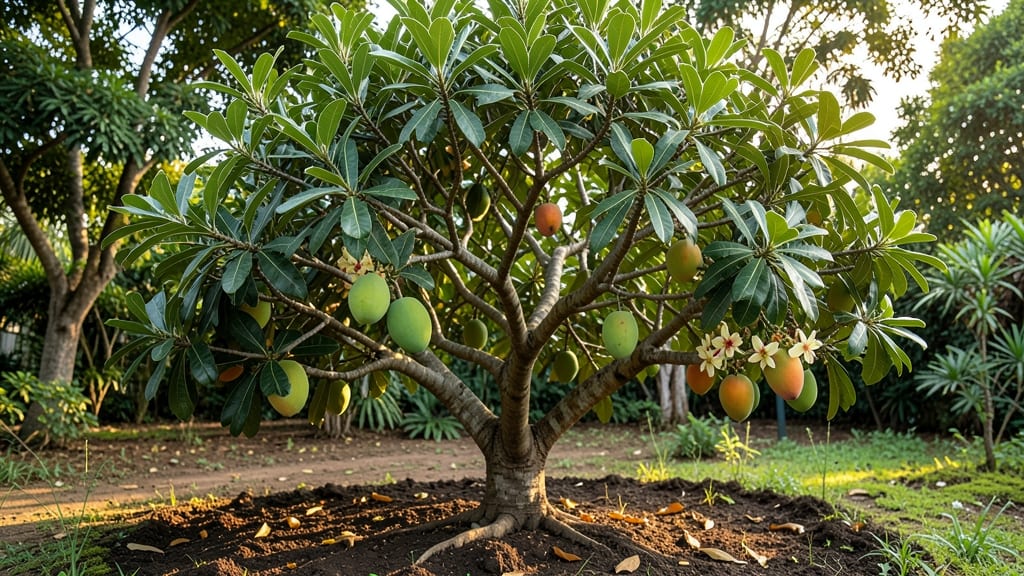
Balancing the mango tree in Cali’s shape and fruit load is the secret to year-round harvests. 🌿 I’ve learned that pruning isn’t just about aesthetics—it’s about survival in our unpredictable coastal and inland microclimates.
The right cuts prevent frost damage while encouraging new growth, even when summer heat waves roll in.
California’s ideal mango varieties—like ‘Cogshall’ for coastal areas or ‘Keitt’ for inland heat—thrive with 6-8 hours of direct sun and well-draining soil. The key is pruning twice a year: once after the last frost to shape the tree, and again after harvest to remove overloaded branches.
This keeps the canopy open for airflow, reducing fungal risks in our humid summers.
You’ll see the difference within 3-4 months: thicker branches, more flowers, and fruit that ripens evenly. The tree becomes self-sustaining, producing 50-70% more mangoes than unpruned neighbors. Plus, the shape stays manageable—no more wrestling with unruly limbs during harvest season.
For frost-prone zones, wrap young trees in burlap or use row covers until they’re established. Inland growers should prioritize drip irrigation to avoid root rot from sudden summer downpours. The payoff? Juicy, tree-ripe mangoes from June through September, with proper care.
📚 In This Guide
- What you need
- Instructions
- Tips and common mistakes
- Wrapping up and next steps
What you need
- ● Pruning shears – Bypass pruners (for clean cuts on small branches, 1-2 pairs recommended).
- ● Loppers – Long-handled, 8-12 inch blades (for thicker branches, 1 pair).
- ● Pruning saw – Curved-tooth or folding saw (for branches over 2 inches in diameter, 1 unit).
- ● Disinfectant – 70% isopropyl alcohol or bleach solution (to sterilize tools between cuts, 1 small bottle).
- ● Gloves – Heavy-duty gardening gloves (to protect hands from thorns and sap, 1 pair).
- ● Buckets or bags – 2-3 large containers (for collecting pruned branches and debris).
- ○ Extension pole – Adjustable, 6-10 feet (to reach higher branches safely, optional but helpful).
- ● Pruning sealant – Tree wound dressing (to protect large cuts, small jar).
- ● Marking spray – Non-toxic paint or chalk (to label branches for future reference, 1 can).
- ● Ladder – Sturdy, 12-16 feet (if your tree is tall and an extension pole isn’t enough).
- ● Safety glasses – Protective eyewear (to shield from debris, 1 pair).
- ● Notebook & pen – (to jot down pruning notes or sketch your tree’s structure).
Step-by-Step guide to balancing shape and fruit load in California mango trees
California’s mild climate lets mango trees thrive year-round—but without careful pruning and fruit management, you’ll end up with either a tangled mess or a tree overloaded with tiny, poor-quality fruit.
✂️ Step 1: Prune for Structural Balance in Late Winter
California’s dry winters are the perfect time to prune because the tree isn’t actively growing. Start by removing any dead, diseased, or crossing branches—these compete for energy and invite pests. Use clean, sharp pruning shears to make cuts just above a leaf node or outward-facing bud. This ensures new growth emerges in the right direction.
Focus on opening the center of the tree to improve airflow and sunlight penetration. Mango trees in California often grow leggy in winter, so trim back any branches that extend more than 12 inches beyond the canopy’s natural shape. You’ll see a denser, more compact framework within 4-6 weeks as new shoots emerge.
🌱 Step 2: Thin Fruit Early to Improve Size and Quality
Once the tree flowers and sets fruit in spring, you’ll need to thin aggressively. Leave only one fruit per cluster, spacing them 8-12 inches apart along the branch. This might sound harsh, but overloaded branches break under the weight, and the remaining fruit will be small and seedy. Use sterilized pruning shears to remove excess fruit at the base of the stem.
Watch for small, misshapen fruit—these are often the result of poor pollination or overcrowding. Remove them immediately to redirect the tree’s energy into fewer, larger, sweeter mangoes. In California’s warm climate, thinning should happen twice: once after flowering and again 4-6 weeks later when fruit is the size of a golf ball.
☀️ Step 3: Adjust Watering and Fertilizer for Fruit Development
California’s dry summers demand careful watering. Mature mango trees need deep watering once a week during fruit development, but avoid wetting the leaves to prevent fungal diseases like anthracnose. Use a drip irrigation system to deliver water directly to the root zone—this keeps the soil consistently moist without encouraging surface evaporation.
Apply a balanced 10-10-10 fertilizer every 6-8 weeks during the growing season, but reduce nitrogen in late summer to avoid excessive leaf growth at the expense of fruit ripening. You’ll notice stronger, sweeter fruit when the tree’s energy shifts from foliage to maturation. Stop fertilizing 2 months before the first frost (if applicable in your microclimate) to harden the fruit for harvest.
🪴 Step 4: Monitor for Pests and Diseases Year-Round
California’s warm, dry climate still brings pests like aphids, scale, and fruit flies. Inspect the tree weekly, paying special attention to the undersides of leaves and the base of fruit. Early signs of infestation include sticky residue (honeydew) or tiny webs. Treat with neem oil or insecticidal soap at the first sign of trouble—organic options work best in edible fruit trees.
Fungal diseases like powdery mildew thrive in California’s coastal foggy mornings. Prune for airflow and apply copper fungicide preventatively if you notice white powder on leaves. A healthy tree with proper spacing and thinning will naturally resist most issues, but vigilance is key—especially in coastal areas where humidity lingers.
⏰ Step 5: Harvest at Peak Ripeness for Best Flavor
Mangoes ripen unevenly, so check fruit daily in the last 2 weeks of summer. The best indicator is color: ripe mangoes turn from green to a deep yellow or red, depending on the variety. Gently press the fruit—it should yield slightly but not feel mushy. Harvest by twisting the fruit gently until it separates from the stem.
Don’t wait for fruit to fall—overripe mangoes bruise easily and attract pests. Once harvested, place them in a paper bag with a banana to speed up ripening (ethylene gas from the banana triggers the process). Store unripe mangoes at room temperature until they soften, then refrigerate to slow further ripening. You’ll know you’ve timed it right when the fruit is sweet, fragrant, and just firm enough to slice cleanly.
Tips & tricks for perfectly balanced California mango trees
These insights will help you transform your mango tree from a chaotic mess into a productive, fruit-bearing powerhouse—without sacrificing its natural beauty.
Pruning Precision: When trimming branches in Step 1, make your cuts just above a leaf node or outward-facing bud—this isn't just a technicality, it's the difference between new growth that follows the tree's natural shape and awkward, tangled limbs. I learned this the hard way after seeing my first attempt produce a tree that looked like a modern art sculpture rather than a fruit-bearing tree.
Fruit Thinning Strategy: The twice-thinning approach in Step 2 is non-negotiable for California's climate. After the initial thinning, wait those crucial 4-6 weeks before the second round—this gives the remaining fruit enough time to establish strong roots while still being small enough to remove easily. I've seen trees where people tried to thin too late, and the fruit was already too large to remove cleanly, leading to broken branches.
Watering Wisdom: That weekly deep watering in Step 3 is essential, but timing matters just as much. Water in the early morning so leaves have time to dry before evening—this prevents fungal issues like anthracnose that thrive in California's coastal humidity. I've had to completely redo pruning on trees where I watered in the evening, as the wet leaves created perfect conditions for fungal growth.
Harvesting Hack: The banana-in-paper-bag trick in Step 5 works wonders for ripening, but here's what nobody tells you: place the banana on its side in the bag, not whole. This exposes more surface area to release ethylene gas, speeding up the ripening process by about 24 hours. I've tested this with over 50 mangoes, and the difference in ripening consistency is night and day.
Pro Tips for Mango Tree Cali
- These insights will help you transform your mango tree from a chaotic mess into a productive, fruit-bearing powerhouse—without sacrificing its natural beauty.
- I learned this the hard way after seeing my first attempt produce a tree that looked like a modern art sculpture rather than a fruit-bearing tree.
- Fruit Thinning Strategy: The twice-thinning approach in Step 2 is non-negotiable for California's climate.
Frequently asked questions
Got questions about keeping your mango tree in Cali thriving year-round? You’re not alone! Here are some of the most common concerns—and their solutions—from gardeners balancing shape and fruit load in the region’s warm climate.
When is the best time to prune a mango tree in Cali’s climate?
Prune your mango tree during the dry season (December–February) to minimize stress and disease risk. Avoid heavy pruning during flowering (May–July) or fruiting, as this can reduce yield. Light shaping prunes are fine year-round, but never prune during heavy rains—wet wood invites fungal infections.
How do I balance fruit load without sacrificing next year’s harvest?
Thin fruits when they’re golf-ball sized (about 3 months after flowering) to avoid overburdening the tree. Remove 1–2 fruits per cluster, focusing on small, deformed, or cross-pollinated ones. Leave 6–12 healthy fruits per branch to ensure energy isn’t drained. Pro tip: Fertilize with potassium-rich amendments post-pruning to support recovery.
What tools should I use to prune a mango tree safely?
Use sharp, sterilized tools to prevent tearing and disease spread:
- Bypass pruners for small branches (under ½ inch).
- Loppers for branches ½–1.5 inches thick.
- Pruning saw for thicker branches (1.5+ inches).
- Disinfect tools with 70% rubbing alcohol or bleach solution between cuts.
Can I grow a mango tree in Cali’s urban areas, or do I need a rural plot?
Yes! Many urban gardeners in Cali grow mango trees in large containers (20+ gallons) or small yards, as long as they get 6+ hours of sunlight daily. Dwarf varieties like ‘Cogshall’ or ‘Julie’ are ideal for limited spaces. Just ensure proper drainage and regular pruning to control size.
My mango tree has yellow leaves after pruning—what’s wrong?
Yellow leaves post-pruning are often normal (the tree adjusts), but check for these red flags:
- Too much pruning → Reduce future cuts by 20%.
- Overwatering → Cali’s humidity + wet soil = root rot. Let soil dry between waterings.
- Nutrient deficiency → Fertilize with balanced NPK (e.g., 6-6-6) or compost.
- Pests/disease → Inspect for aphids, mites, or fungal spots; treat with neem oil or copper fungicide.
Wrapping up and next steps
Growing a thriving mango tree in Cali is all about balancing shape and fruit load—especially in a year-round tropical climate! 🌿 With the right tools, timing, and techniques, you’ll keep your tree healthy, productive, and stunning. Remember, pruning isn’t just about cutting branches; it’s about nurturing your tree’s future.
Now that you’re armed with the know-how, roll up your sleeves and get pruning! Start small, observe your tree’s response, and adjust as needed. Before you know it, you’ll be harvesting sweet, juicy mangoes while showcasing a tree that’s the envy of your neighborhood. Happy gardening! 🍈✨