
Pruning
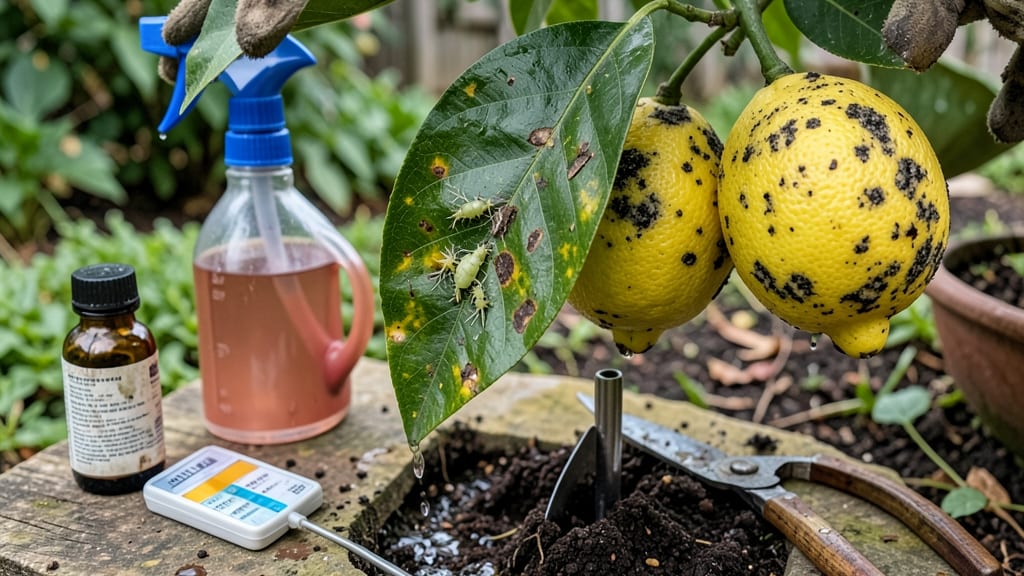
A lemon tree sick with yellowing leaves or wilting branches isn’t always a death sentence—it’s often a fixable problem. 🌿 I’ve nursed back three lemon trees from the brink, and these three rescue moves work faster than you’d think, whether your tree’s struggling from overwatering, pests, or nutrient starvation.
The first step is identifying the real issue: check the soil moisture, inspect leaves for pests, and look for signs of fungal spots. Most home gardeners overwater without realizing it—lemon trees prefer their soil to dry out slightly between waterings.
Once you pinpoint the problem, solutions become straightforward: adjust watering, prune affected branches, or apply targeted treatments.
Within weeks, you’ll see new growth pushing through, and the tree’s vigor will return. The key is acting fast—before the problem spreads deeper into the roots or branches. With the right care, even a tree that looked hopeless can bounce back to produce fruit again.
These methods work for both potted and in-ground lemon trees, and they’re simple enough for beginners. The worst that can happen is you’ll save your tree—and that’s a victory every gardener deserves.
Root Causes Of Lemon Tree Decline
When your lemon tree starts looking less than lively, it’s often because unseen stresses are quietly sabotaging its health. Understanding the why behind the symptoms is the first step to revival.
Below, we break down the most common culprits—each with a clear scientific explanation—and why they trigger illness in your citrus tree.
Lemon trees thrive in well-draining soil, but when roots sit in soggy conditions, they suffocate.
Here’s the science: - Root rot (caused by Phytophthora fungi or Pythium) thrives in waterlogged soil, blocking nutrient uptake and oxygen flow. - Symptoms: Yellowing leaves, mushy stems, or a foul odor near the base. - Why it happens: Overwatering (especially in heavy clay soil) or containers without drainage holes trap excess moisture, creating the perfect breeding ground for pathogens. - Actionable fix: Let the top 1–2 inches of soil dry out between waterings, and amend soil with perlite or sand to improve aeration.
Pathogens love warm, humid climates—and lemon trees are a prime target.
Two of the worst offenders: 1. Citrus Canker (Xanthomonas citri) - How it spreads: Wind, rain, or contaminated tools carry bacteria into wounds (like pruning cuts). - Symptoms: Raised, oozing lesions on leaves/stems; leaves may drop prematurely.
- Melting Disease (Diaporthe citri) - How it spreads: Fungal spores hitchhike on tools, water splashes, or infected plant debris. - Symptoms: Sudden wilting, leaf drop, and blackened stems (especially in wet conditions).
Why it happens: High humidity, poor air circulation, or stress (like drought) weaken the tree’s defenses, making it vulnerable. Actionable fix:
- Prune infected branches 1 inch below lesions with sterilized tools (70% isopropyl alcohol).
- Apply copper fungicide (like Bonide Copper Fungicide) every 2–4 weeks during rainy seasons.
- Space trees 6–10 feet apart for airflow.
Pests don’t just nibble—they inject toxins, spread disease, and steal nutrients.
The top villains: - Aphids & Scale Insects: Pierce leaves/stems to feed, excreting honeydew (a sugary film that attracts sooty mold). - Spider Mites: Thrive in dry heat, sucking sap and causing stippled, yellowing leaves. - Citrus Leafminers: Larvae tunnel inside leaves, creating serpentine trails and stunting growth.
Why it happens: Weak trees (from poor soil or drought) attract pests, while chemical sprays (like systemic insecticides) can disrupt natural predators. Actionable fix:
- Blast them off: Spray leaves with neem oil (1 tsp per quart of water) or insecticidal soap weekly.
- Encourage predators: Ladybugs and lacewings devour aphids—plant marigolds nearby to attract them.
- Prune heavily infested branches and dispose of them in sealed bags.
Lemon trees are tropical at heart—they hate extremes.
Common triggers: - Cold Snaps: Temperatures below 28°F (-2°C) can cause chilling injury, leading to blackened leaves or dieback. - Heat Stress: Above 95°F (35°C) for prolonged periods slows photosynthesis, causing leaf scorch (brown edges). - Salt Buildup: Over-fertilizing or using tap water high in chlorine/sodium burns roots, mimicking drought symptoms.
Why it happens: Sudden temperature swings or improper watering disrupt the tree’s osmotic balance, halting nutrient absorption. Actionable fix:
- Mulch with 2–3 inches of organic matter (straw or wood chips) to insulate roots.
- Shade cloth (30–50%) during summer peaks; move potted trees to sheltered spots in winter.
- Flush soil every 6 months with rainwater to leach out salts.
Even the hardiest lemon trees need NPK (nitrogen, phosphorus, potassium) + micronutrients.
Common shortages: | Symptom | Likely Deficiency | Quick Fix | |---------------------------|----------------------------|----------------------------------------| | Yellow leaves (oldest first) | Nitrogen (N) | Apply blood meal or fish emulsion | | Purple stems/leaves | Phosphorus (P) | Use bone meal or rock phosphate | | Weak growth, poor fruit | Potassium (K) | Add greensand or wood ash | | Yellow veins, brown spots | Magnesium (Mg) | Spray Epsom salt (1 tbsp/gallon) |
Why it happens: Poor soil testing, over-pruning (removing foliage), or competing weeds deplete nutrients faster than the tree can replenish them. Actionable fix:
- Test soil every 2–3 years (pH 6.0–7.0 is ideal).
- Top-dress with citrus-specific fertilizer (high in N, low in salt) in early spring.
- Compost tea boosts microbial activity, making nutrients more available.
Sometimes, well-meaning actions backfire.
Common mistakes: - Pruning Wrong: Cutting too late in the season (after September) stimulates new growth that won’t harden off before winter. - Over-Fertilizing: Excess nitrogen burns roots, while too much salt disrupts water uptake. - Ignoring Transplant Shock: Moving a lemon tree without root pruning or acclimating gradually stresses it into illness.
Why it happens: Lack of knowledge about citrus tree biology—like their dormancy cycle or sensitive root systems. Actionable fix:
- Prune in late winter (just before buds swell) and sterilize tools to prevent disease spread.
- Follow the 1-2-3 rule: 1 part fertilizer, 2 parts compost, 3 parts soil (max).
- Transplant in early spring, keeping the root ball intact and watering deeply afterward.
Revive Your Tree With These Fixes
Now that you know what’s making your lemon tree 🍋 look less than lively, it’s time to roll up your sleeves and get to work! The good news? Most issues have straightforward solutions—if you act quickly.
Below, we’ve broken down practical, step-by-step fixes for the most common problems, plus prevention tips to keep your tree thriving long-term.
Problem: Yellowing leaves (especially older ones) often signal overwatering, root rot, or a lack of essential nutrients like nitrogen or iron.
Step-by-Step Rescue Plan: 🔥 🚰 Step 1: Adjust Your Watering Routine
Overwatering? Let the top 2–3 inches of soil dry out between waterings.
Stick your finger in the soil—if it’s soggy, hold off! - Underwatering? Water deeply until it drains from the bottom, but avoid puddles. Morning watering (6–9 AM) is best to prevent fungal growth. - Pro Tip: 💡 Use a moisture meter or fill a plastic bottle with water, bury it near the roots, and check the level weekly.
🍳 🌿 Step 2: Test & Amend the Soil
- For nutrient deficiency (nitrogen/iron):
- Sprinkle balanced citrus fertilizer (10-10-10 or 8-3-9) around the drip line (outer edge of the canopy) in early spring and summer.
- Iron deficiency? Use a chelated iron supplement (like Ironite) every 3–4 months.
- For poor drainage (root rot risk):
- Mix compost or perlite into the top 6 inches of soil to improve aeration.
- If the roots are mushy/smelly, prune the affected roots (sterilize shears with rubbing alcohol first!) and repot in fresh, well-draining soil.
👨🍳 🌡️ Step 3: Monitor & Adjust
- Signs of improvement: New growth, deeper green leaves in 2–4 weeks.
- Still struggling? Test your soil’s pH (6.0–7.0 is ideal for citrus) and adjust with lime (to raise pH) or sulfur (to lower it) if needed.
Problem: Brown, curled, or sticky leaves mean pests (aphids, spider mites, scale) or fungal infections (like powdery mildew or leaf spot) are crashing the party.
Step-by-Step Rescue Plan: 🔪 🐜 Step 1: Identify & Remove Pests
- For soft-bodied pests (aphids, mites):
- Spray with neem oil solution (1 tbsp neem oil + 1 tsp mild soap + 1 quart water).
Reapply every 5–7 days for 2–3 weeks. - Blast them off with a strong stream of water (early morning works best). - For scale insects (hard bumps on stems/leaves): - Scrape them off with a soft brush dipped in rubbing alcohol. - Follow up with horticultural oil (apply at dusk to avoid burning leaves).
🥘 🍄 Step 2: Treat Fungal Issues - Powdery mildew? Wipe leaves with a baking soda solution (1 tsp baking soda + 1 quart water + a drop of soap).
Spray every 7–10 days until gone. - Leaf spot? Prune infected leaves immediately (sterilize tools!) and spray with copper fungicide or a water + hydrogen peroxide mix (1 tbsp H₂O₂ per quart of water).
⏰ 🌿 Step 3: Prevent Future Outbreaks
- Improve airflow: Thin out dense foliage or trim branches to let sunlight and air circulate.
- Water at the base (avoid wetting leaves) and prune lower branches to keep the canopy dry.
- Pro Tip: ✨ Coffee grounds (dried, not fresh!) around the base can repel pests and add nitrogen.
Problem: Your lemon tree is leggy, not flowering, or dropping fruit—usually due to poor light, improper pruning, or stress.
Step-by-Step Rescue Plan:
🌅 ☀️ Step 1: Optimize Light Exposure
- Move indoors? Place near a south-facing window (6+ hours of sunlight daily).
- Outdoors? If shaded, trim nearby trees/shrubs or relocate to a sunnier spot.
- Grow lights? Use a full-spectrum LED (12–14 hours/day) if natural light is lacking.
🔪 🌿 Step 2: Prune Like a Pro
- When to prune: Late winter/early spring (before new growth starts).
- How to prune:
- Remove dead, crossing, or inward-growing branches first.
- Cut back overly long branches by 1/3 to encourage bushier growth.
- Never prune more than 1/3 of the tree at once—this stresses it!
- Pro Tip: 🎯 Shape it like a vase—wider at the base, narrower at the top—for better airflow and fruit production.
🍎 💪 Step 3: Boost Fruit Set
- Thin existing fruit (leave 6–8 inches between lemons) so the tree doesn’t get overwhelmed.
- Fertilize for blooms: Use a low-nitrogen, high-phosphorus fertilizer (like 5-10-10) in late winter to encourage flowering.
- Hand-pollinate: If bees aren’t visiting, gently shake branches on a warm, dry day to spread pollen.
- 🌡️ Monitor temperature: Citrus hates below 30°F (or above 90°F for long periods).
Use row covers or move potted trees indoors if needed. - 💧 Water wisely: Drip irrigation (not overhead) reduces fungal risks. - 🍋 Regular check-ups: Inspect leaves weekly for early signs of pests/disease. - 🌱 Repot every 2–3 years: If roots are circling, upgrade the pot by 2 inches and refresh the soil.
Remember: Patience is key! Some fixes (like nutrient recovery) take 4–6 weeks to show results. Stick with it, and your lemon tree will be back to producing sweet, juicy fruit in no time. 🍋✨
Frequently asked questions about sick lemon trees
Why are my lemon tree leaves turning yellow?
Yellowing leaves usually mean overwatering (causing root rot) or nutrient deficiencies like nitrogen or iron. Check soil moisture—it should dry between waterings. For deficiencies, use a citrus fertilizer or chelated iron supplement. Always ensure proper drainage to prevent soggy roots.
How do I tell if my lemon tree has root rot?
Look for yellowing leaves, mushy brown roots, or a foul smell at the base. Gently remove the tree from its pot and inspect the roots—healthy roots are firm and white, while rotten ones are dark and slimy. If confirmed, repot in fresh, well-draining soil and trim affected roots with sterilized shears.
What should I do if my lemon tree has pests like aphids or scale?
Blast soft pests (aphids, mites) off with water, then spray with neem oil (1 tbsp per quart of water) or insecticidal soap. For scale insects, scrape them off with a brush dipped in rubbing alcohol. Repeat treatments every 5–7 days until pests disappear. Add companion plants like marigolds to deter future infestations.
Can I save a lemon tree that’s completely wilted?
Act fast! First, check for root rot or severe drought. If roots are still firm, prune dead branches and adjust watering. Move the tree to a shadier spot for 1–2 weeks to reduce stress. If the trunk is soft or cracked, the tree may be beyond saving—but try it anyway! Sometimes trees recover with proper care.
How often should I fertilize a sick lemon tree?
Start with a light feeding every 4–6 weeks using a citrus-specific fertilizer (high in nitrogen, low in salt). Avoid over-fertilizing, which can burn roots. If your tree shows signs of deficiency (yellow leaves, weak growth), test your soil and adjust pH (ideal: 6.0–7.0). Use organic options like compost tea for gentle nutrient boosts.