
Pruning
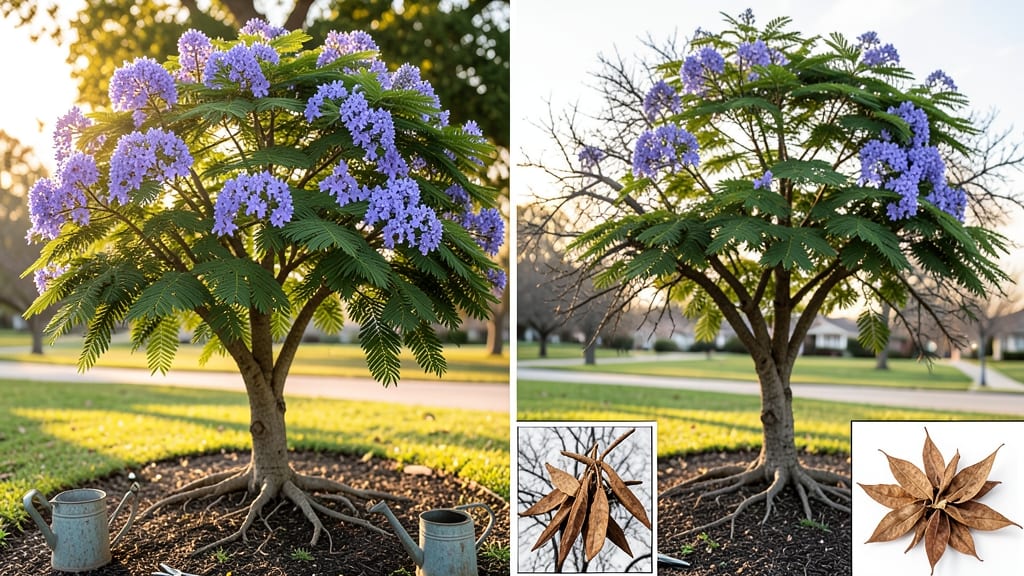
The jacaranda tree pros and cons include breathtaking purple blooms and rapid growth, but they demand intensive care with deep soil, protection from wind, and drought resistance. These tropical beauties thrive in warm climates but face challenges in colder regions.
Jacaranda trees are famous for their vibrant purple flowers that create stunning visual displays, especially during spring blooming seasons. 🌸 However, their fast growth rate—often 3 to 5 feet per year—means they quickly outgrow small spaces if not properly managed.
The trade-off lies in their care requirements: they need well-draining soil, full sun exposure, and protection from harsh winds or frost, which can limit where they can be successfully planted.
What many homeowners discover is that while jacaranda trees offer beautiful shade and curb appeal, their maintenance demands—like regular pruning to control size and shape—can become overwhelming. Their tropical nature also means they struggle in colder climates, where frost can damage or even kill the tree.
For those willing to invest the time, though, the rewards are well worth it.
💡 In This Article
- Jacaranda Tree Growth and Climate Adaptability
- Maintenance and Care Trade-Offs for Jacaranda Trees
Jacaranda tree growth and climate adaptability
Jacaranda trees thrive in tropical and subtropical climates, specifically USDA hardiness zones 9-11, where they can grow 3-5 feet annually under ideal conditions.
Their rapid growth stems from their deep root system and ability to photosynthesize efficiently in full sun—requiring at least 6-8 hours of direct sunlight daily to maintain vibrant blooms.
The tree's native habitat in South America's high-altitude regions (like Argentina and Brazil) has adapted it to thrive in warm, dry conditions, but this also makes it highly sensitive to frost.
Their stunning purple flowers, which bloom prolifically in spring, are a direct result of their tropical nature. These flowers contain high levels of nectar, attracting pollinators like bees and hummingbirds, which further supports their vigorous growth.
However, the trade-off is their intolerance to temperatures below 25°F, where even brief exposure can cause leaf damage or death. In colder climates, jacaranda trees often require protective measures like wrapping the trunk or planting in microclimates where frost pockets are less likely to form.
Soil composition plays a critical role in their growth. Jacaranda trees demand well-draining soil with a pH between 6.0 and 7.5 to prevent root rot, which is common in heavy or compacted soils.
Their roots can extend up to 10 feet deep in search of moisture, making them drought-tolerant once established—but only if planted in areas with adequate drainage.
In regions with heavy rainfall, like Florida or Southern California, poor drainage can quickly turn into a major issue, leading to root suffocation and stunted growth.
Wind exposure is another key factor affecting their adaptability. While jacaranda trees can grow tall (up to 40-50 feet in ideal conditions), their slender trunks and wide canopies make them vulnerable to wind damage.
Strong winds can snap branches or uproot younger trees, which is why they’re often planted near walls or fences for support. In coastal areas, salt spray from ocean winds can also damage the leaves, further limiting their suitability in certain environments.
For those in marginal climates (like zone 8b), growing jacaranda trees requires strategic planning. Planting near heat-retaining surfaces like brick walls or using mulch to insulate roots can help mitigate cold snaps. Some gardeners also opt for container-grown jacarandas, which can be moved indoors during winter months.
The key is understanding your local microclimate—even a small yard with southern exposure and a protected corner can create the perfect conditions for a thriving jacaranda.
What sets jacaranda trees apart is their ability to transform landscapes with minimal effort once established. Their fast growth means they quickly provide shade and visual interest, but this comes with the responsibility of regular maintenance to keep them healthy.
The right location—balancing sun, soil, and shelter—can make all the difference between a stunning centerpiece and a struggling plant.