
Pruning
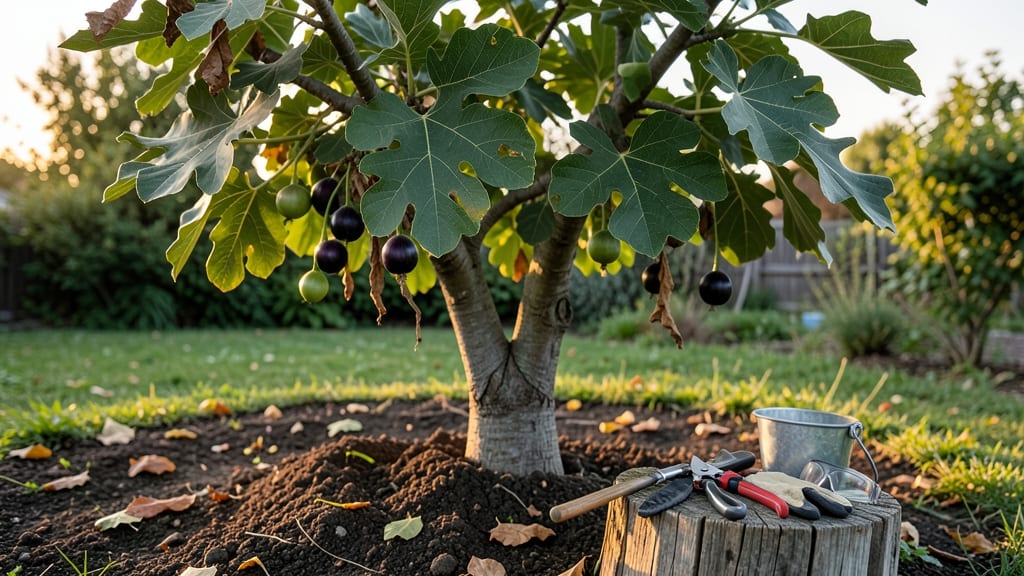
Trimming a fig tree in the fall sets the stage for next year's fruit bounty—this is the secret to lush spring growth. 🌿 I learned the hard way that skipping fall pruning leaves your tree crowded, vulnerable to disease, and struggling to produce sweet figs.
The key is cutting while the tree is dormant but before hard frost hits. You'll need sharp pruners, rubbing alcohol for sterilizing cuts, and a clear day to assess the tree's structure. Focus on removing dead, diseased, or crossing branches first—they're the weak spots that invite pests.
Then shape the tree by thinning out crowded areas to improve airflow and sunlight penetration. What you end up with is a well-balanced tree that wakes up in spring ready to push out strong new growth.
The cuts you make now determine how many figs you'll harvest in summer, so take your time and make clean cuts just above outward-facing buds. Works for both container and in-ground fig trees, though frost-sensitive varieties need extra protection.
Here's how to do it right without over-pruning or inviting winter damage.
📚 In This Guide
- What you need
- Instructions
- Tips and common mistakes
- Wrapping up and next steps
What you need
- ● Bypass pruning shears – Sharp, clean bypass shears (4- to 6-inch blades) for cutting small branches (up to ½-inch thick). Example: Felco F-2 or equivalent.
- ● Loppers – Heavy-duty bypass loppers (8- to 10-inch blades) for medium branches (½- to 1½-inch thick). Example: Corona 1002 or Fiskars.
- ● Pruning saw – A curved-tooth pruning saw for thick branches (1½+ inches). Example: Fiskars X7 or Bahco.
- ● Gloves – Garden gloves (cut-resistant, like Mechanix Wear) to protect hands from thorns and rough bark.
- ● Disinfectant – Rubbing alcohol (70%+) or bleach solution (1:9 bleach-to-water) to sterilize tools between cuts and prevent disease.
- ○ Pruning sealant (optional but helpful) – Tree wound sealant (like Tanglefoot Tree Wound Pruning Sealer) for large cuts to reduce sap loss and pest entry.
- ● Ladder or step stool – A stable, extendable ladder (e.g., aluminum extension ladder) or step stool (36-inch height) for reaching higher branches safely.
- ● Bucket or tarp – A 5-gallon bucket or tarp to collect pruned branches and debris.
- ● Marking twine or tape – Colored twine or masking tape to temporarily mark branches for removal (if planning ahead).
- ● Safety glasses – Protect your eyes from debris, especially when using a pruning saw.
- ● Work boots or closed-toe shoes – Sturdy footwear to prevent injuries from dropped branches or sharp tools.
- ● Hose or spray bottle – A quick rinse with water to clean tools and remove sap after trimming.
- ● Pruning guide or ruler – A foldable measuring tape or pruning gauge to ensure proper cut angles and branch collar retention.
- ● Compost bin or mulch – To dispose of small pruned branches responsibly (avoid burning if possible).
Step-by-step guide to trimming a fig tree in fall
Here’s how I transform my fig tree each autumn—pruning for stronger growth next spring.
✂️ Step 1: Remove Dead, Diseased, or Damaged Branches
Start by scanning the tree for branches that are brown, brittle, or showing signs of disease like black spots or oozing sap. These are your first targets—they’re dead weight that steals energy from healthy growth. Use clean, sharp pruning shears to cut these branches back to the trunk or a healthy lateral branch. I always disinfect my tools with rubbing alcohol between cuts to prevent spreading any potential infections.
Look for branches that cross or rub against each other—they’ll eventually tear open the bark and invite pests. These should go next. You’ll know you’ve done well when the tree’s center looks open and air can circulate freely. This prevents fungal issues and encourages new growth in spring.
✂️ Step 2: Prune for Shape and Airflow
Step back and assess the tree’s overall shape. Figs naturally grow sprawling, so I aim to create a balanced, open canopy. Start by cutting back any branches that are growing inward or downward—they’ll never get enough sunlight to fruit well. Focus on thinning out rather than just cutting back, so light can reach the inner branches.
For larger branches, use the three-cut method: First, make an undercut about a foot from the trunk, then a top cut just outside the undercut, and finally twist the branch to separate it cleanly. This prevents the bark from tearing. Aim to keep about ⅓ of the tree’s foliage—this ensures it has enough energy to recover over winter while still preparing for spring.
✂️ Step 3: Thin Out Overcrowded Growth
Figs produce fruit on new wood, so we want to encourage strong, healthy branches. Look for clusters of small, weak branches growing close together—they compete for sunlight and nutrients. Remove the thinnest ones, leaving the strongest stems. I usually cut back to a healthy bud or lateral branch, making sure the cut is just outside the bud at a 45-degree angle to encourage water runoff.
If you’re dealing with a very dense tree, don’t be afraid to make bold cuts. Figs are resilient and will bounce back with vigorous new growth in spring. Just avoid pruning more than 25% of the tree’s canopy in one season—this keeps stress levels manageable.
✂️ Step 4: Clean Up and Prepare for Winter
Once you’ve finished pruning, gather all the clippings and dispose of them properly. If you notice any signs of disease on the branches, bag them and throw them away—don’t compost them. This prevents pests and diseases from overwintering in your garden.
Give the tree a light application of mulch around the base, keeping it 3-4 inches deep and 6 inches away from the trunk. This helps insulate the roots and retain moisture over winter. Water the tree deeply before the first hard frost to ensure it’s hydrated for dormancy.
⏰ Step 5: Time Your Pruning for Best Results
Fall is the ideal time to prune figs because the tree is dormant, which means it won’t bleed sap excessively like it would in spring. Aim to finish pruning 4-6 weeks before your area’s first expected frost. This gives the tree time to heal over its cuts before winter sets in.
If you’re in a mild climate where figs stay active later into fall, you can wait until late autumn. Just avoid pruning in late winter or early spring—this is when the tree is waking up and will bleed sap, stressing it unnecessarily. Patience here pays off with a stronger, more productive tree next season.
Tips & tricks for perfect fall fig tree trimming
Here's what nobody tells you about fall pruning that makes all the difference for next year's harvest.
Tool Prep: Before you even touch the tree, sharpen your pruning shears and sterilize them with rubbing alcohol. Dull blades tear bark instead of making clean cuts, and dirty tools spread disease. I keep a small bottle of alcohol in my tool belt—it takes seconds to disinfect between cuts. This simple step prevents fungal infections that could ruin your tree's recovery.
Visual Assessment: When evaluating branches in Step 2, hold your hand about 6 inches from the trunk and look for gaps. If you can't see through the center, you're overcrowded. Figs need sunlight to reach the interior branches where fruit develops. I aim for an open vase shape—this creates air circulation that prevents fungal issues. Think of it like giving your tree a spa day for better fruit production next season.
Cutting Technique: For larger branches in Step 2, the three-cut method isn't just about clean cuts—it's about preserving the tree's health. Make your undercut on the underside of the branch about a foot from the trunk. This prevents the bark from tearing when you make the final cut. I've seen too many trees with ragged cuts that invite pests. The clean separation also helps the wound heal faster over winter.
Winter Prep: After pruning, don't forget to water deeply before the first frost. Figs store water in their leaves, but the roots need moisture to prepare for dormancy. I give mine about 10 gallons of water spread over the root zone. This helps the tree recover from pruning stress and ensures strong root growth when spring arrives. The mulch layer you add will help retain this moisture through winter.
Pro Tips for Trim A Fig Tree In The Fall
- Here's what nobody tells you about fall pruning that makes all the difference for next year's harvest.
- Tool Prep: Before you even touch the tree, sharpen your pruning shears and sterilize them with rubbing alcohol.
- Visual Assessment: When evaluating branches in Step 2, hold your hand about 6 inches from the trunk and look for gaps.
Frequently asked questions
Got questions about trimming your fig tree in the fall? You’re not alone! Here are some of the most common concerns—plus clear, actionable answers to keep your tree thriving.
When is the exact best time to trim fig trees in fall?
Trim your fig tree after the first hard frost (when leaves have dropped) but before new growth starts in early spring. Late October to early November is ideal in most climates. If you’re in a mild zone, wait until December to avoid stimulating unwanted spring growth.
Can I trim a fig tree in late fall if I missed the window?
Yes! Late fall or early winter trims are still better than nothing, but avoid heavy cuts after mid-December in colder regions. Focus on removing dead/diseased wood and shaping—save major pruning for late winter/early spring. Just avoid trimming when temps drop below 40°F to prevent shock.
Will trimming in fall reduce next year’s fig harvest?
Not if done correctly! Proper fall pruning boosts fruit production by removing congested branches and improving airflow. However, avoid over-trimming—never remove more than 25-30% of the canopy in one season. Focus on open-center shaping for better light penetration.
How do I know if my fig tree has pests/disease before trimming?
Inspect for chewed leaves (sap-sucking insects), black sooty mold (fungus), or oozing sap (bacterial infections). Trim only affected branches first, then sterilize pruners with 70% rubbing alcohol or bleach solution (1 part bleach to 9 parts water) to prevent spreading. Dispose of diseased wood in sealed bags.
What if my fig tree is in a pot—can I still trim it in fall?
Potted figs follow the same rules, but trim lightly—root-bound trees are more sensitive. After pruning, repot if roots circle the container, and reduce watering until spring. Place pots in a sheltered spot (like a garage or against a south-facing wall) to protect from freezing temps.
Still unsure? Drop your question in the comments—we’re happy to help!
Wrapping up and next steps
Trimming your fig tree in the fall is all about setting it up for a vibrant spring revival—think of it as a fresh start for your tree! 🌱 By removing dead wood, thinning crowded branches, and shaping for airflow, you’re giving your fig the best chance to burst into life with new growth. Don’t let the chill of autumn stop you—your tree will thank you with a bountiful harvest next season!
Now that you’re armed with the know-how, grab those pruners and get to work! Next, mark your calendar for late winter or early spring to give your fig a light maintenance trim—just a little love to keep it thriving all year. Happy pruning! ✂️🌿