
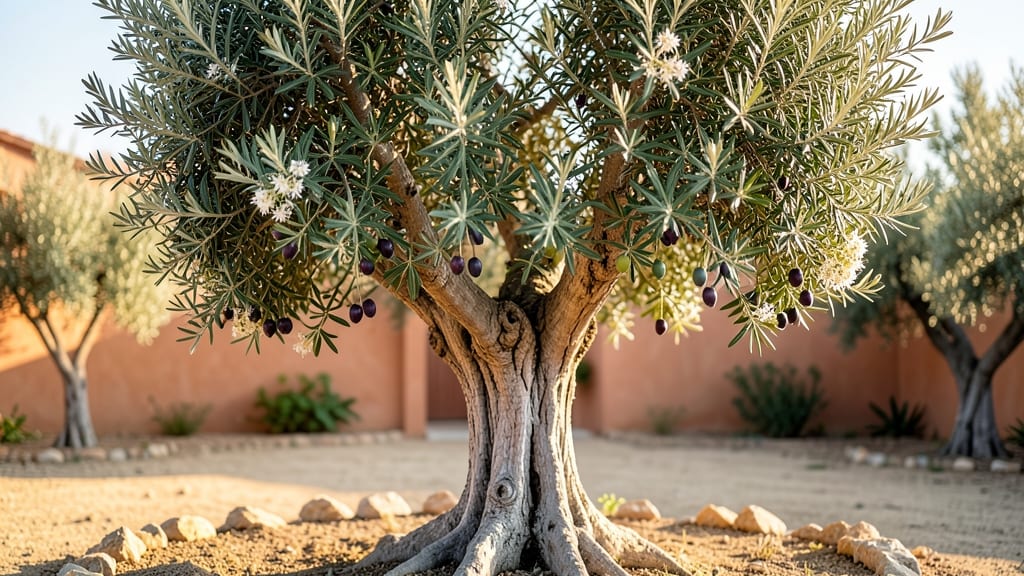
How Tall Do Olive Trees Grow: Mature Heights by Variety and Climate Zones

How To

How Tall Do Olive Trees Grow: Mature Heights by Variety and Climate Zones

Understanding how tall does an olive tree grow means planning for heights that range from a manageable 8 feet to towering 50 feet, depending on the variety and growing conditions.

If you're dreaming of a Mediterranean landscape in your backyard, understanding how tall olive trees grow is the first step to planning your perfect grove—because some varieties reach towering heights while others stay compact and manageable.

Standard olive trees can become small trees or even large shrubs, but their mature size depends heavily on where you live and how you prune them. In warmer climates, they grow faster and taller, while cooler zones may see slower growth.

Below, I break down the height ranges by variety, how climate affects growth, and 5 simple pruning tricks to keep your olive tree at your ideal height—whether you want a container-sized tree or a full-sized backyard staple.

Olive Tree Height Range
10 ftto50 ft
0 ft 3 ft 6 ft 9 ft 12 ft
🌱 Very Very Tall Tree

Olive tree height by variety: from dwarf to giant mature sizes

Choosing the right olive tree variety is like selecting the perfect Mediterranean companion for your garden—because their mature heights can vary dramatically. Some varieties stay small enough for containers, while others grow into towering giants that need orchard space.

Understanding these differences helps you plan spacing, pruning, and even container sizes before planting.

Traditional Mediterranean olive trees like Manzanillo or Mission can reach 30-50 feet at maturity, making them better suited for rural properties or large estates. Meanwhile, modern dwarf varieties like 'Little Ollie' or 'Arbequina' max out at 6-12 feet, perfect for urban patios or small backyards.

Below is a detailed comparison of 10+ popular olive tree varieties, their mature heights, and ideal spacing requirements. This guide will help you decide which variety fits your space, climate, and gardening goals—whether you're growing for oil, table olives, or just landscape beauty.

Variety Mature Height Growth Habit Ideal Spacing (In-Ground) Best For
Manzanillo 30-50 ft Upright, vigorous 20-30 ft apart Orchards, large estates
Mission 25-40 ft Spreading, dense 15-20 ft apart Table olives, rural gardens
Arbequina 6-12 ft Compact, rounded 6-10 ft apart (or container) Oil production, small gardens
Little Ollie 6-8 ft Dwarf, bushy 4-6 ft apart (or 15-gallon container) Containers, patios, urban yards
Frantoio 25-35 ft Upright, fast-growing 18-25 ft apart Olive oil production, rural areas
Leccino 20-30 ft Pyramidal, dense 15-20 ft apart Dual-purpose (oil/table)
Kalamata 20-25 ft Spreading, broad canopy 12-15 ft apart Table olives, Mediterranean landscapes
Ascolano 15-20 ft Semi-dwarf, upright 10-12 ft apart Small orchards, mixed landscapes
Pendolino

How climate zones affect olive tree growth height and pruning needs

Olive trees thrive in USDA zones 7-10, but their mature height and pruning needs vary dramatically depending on where you live. In Mediterranean climates like California's coastal regions, olive trees grow tall—often reaching 30-50 feet—because they experience mild winters and consistent warmth.

Meanwhile, in warmer zones like Florida or Texas, growth can be just as vigorous, but cold snaps in zone 7 stunt height and require protective pruning.

Cold winters force olive trees into dormancy, which slows their growth. For example, a Manzanillo olive tree in USDA zone 8 may only reach 20-25 feet without aggressive pruning, while the same variety in zone 9 or 10 can easily exceed 40 feet.

Understanding these differences helps you plan for pruning strategies that keep your tree manageable while maintaining its health.

Climate Zone Mature Height Pruning Needs Cold Hardiness
Zone 7 (e.g., Atlanta, GA) 15-25 ft Heavy winter pruning; protect from frost 20°F (-6°C) min
Zone 8 (e.g., Orlando, FL) 20-30 ft Moderate pruning; shape in late winter 15°F (-9°C) min
Zone 9 (e.g., Los Angeles, CA) 30-40 ft Light pruning; focus on fruit-bearing branches 25°F (-4°C) min
Zone 10 (e.g., San Diego, CA) 40-50+ ft Minimal pruning; remove deadwood only 30°F (-1°C) min

In California’s coastal regions, olive trees grow tall and wide because they enjoy year-round warmth and minimal frost. A Frantoio olive tree in zone 10 can reach 50 feet without intervention, but its branches spread just as wide, requiring regular structural pruning to prevent overcrowding.

Meanwhile, in Florida’s humid climate, olive trees grow faster but may suffer from fungal diseases if not pruned to improve airflow.

Texas presents unique challenges: Arbequina olives in zone 9 grow more slowly than in California but still reach 25-35 feet. The key difference is summer heat, which can stress trees if not pruned to reduce shade on the roots.

Always prune after harvest in late winter to avoid removing next year’s fruit buds.

For container-grown olive trees in zone 7 or 8, pruning is critical to control height. Use topping techniques to keep trees under 10 feet, but expect slower growth. In warmer zones, you can let them grow taller while focusing on fruit production pruning to shape the canopy.

Remember, olive trees are slow growers—patience is key when managing their height.

If you’re in zone 7, consider dwarf varieties like 'Little Ollie', which max out at 8-10 feet. These are ideal for small gardens but still benefit from annual pruning to maintain shape.

In zone 10, even standard varieties can be pruned to stay under 20 feet if you’re short on space.

No matter your zone, prune in late winter before new growth begins. Use sterilized tools to avoid disease, and never remove more than 25% of the canopy in one year.

With the right approach, you can enjoy a healthy, manageable olive tree—whether it’s a towering Mediterranean giant or a compact container beauty. 🫒✂️🌳

★★★★★4.5(10 reviews)
Categories How To