
How To
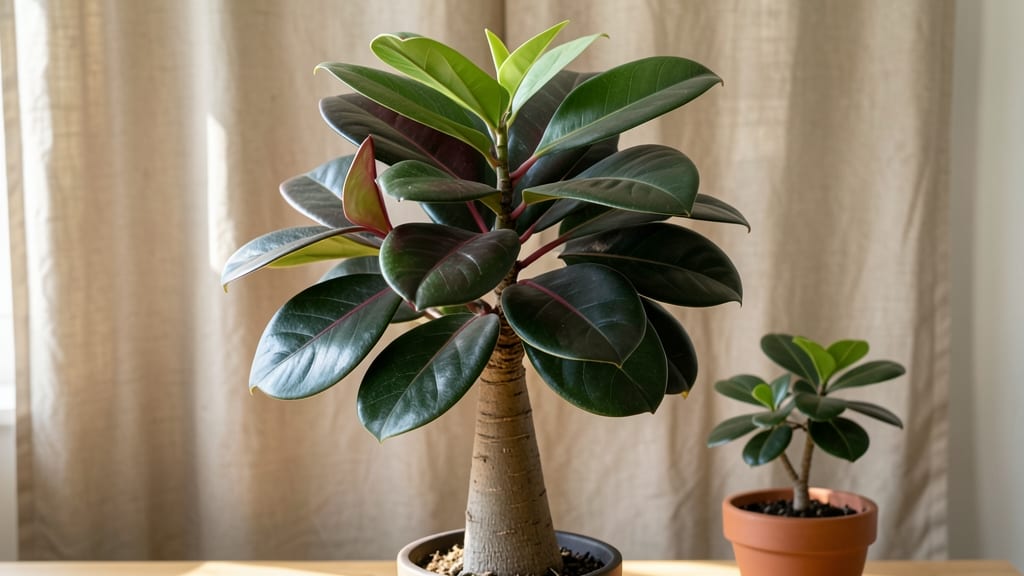
How tall can a rubber tree grow indoors? A Ficus elastica can reach up to 10 feet or more with the right care, but its ultimate height depends on light, pruning, and your patience.
Wondering if your rubber tree will soon tower over your ceiling? Indoor growth height depends on light, care, and variety—but the truth might surprise you. What starts as a 2-foot plant can become a room-dividing giant in a decade if left unchecked.
Bright, indirect light fuels vertical growth, while low light keeps it compact. A well-placed rubber tree near an east or west window can hit 6-8 feet in just three years, while one in a dim corner may stay under 4 feet for years.
Below, I break down how to control its height—whether you want a tall statement plant or a manageable tabletop size—plus the pruning secrets that keep it from outgrowing your space.

Indoor rubber tree height by light conditions: growth charts for low, medium, and bright light
Your rubber tree (Ficus elastica) can grow indoors for decades, but its height depends entirely on light exposure. In bright indirect light, expect rapid vertical growth, while low-light conditions will stunt its development.
Understanding these growth patterns helps you plan for space and care adjustments over time.
Most indoor rubber trees reach 6-10 feet tall within 5-10 years, but extreme light conditions can push growth to 15 feet or more—or keep it under 3 feet if neglected. The key is matching your light conditions to your space and growth goals.
Light exposure isn't just about height—it also affects leaf size, color, and overall health. A tree in low light will develop smaller leaves and slower growth, while bright light encourages bold foliage and faster vertical expansion. Let's break down realistic growth projections for each scenario.
Note: Heights assume standard care (well-draining soil, proper watering, and occasional repotting).
In low-light conditions, your rubber tree will grow slowly but steadily, reaching 3-5 feet in five years. This makes it ideal for small apartments or offices with limited natural light.
However, expect smaller leaves and potential leaf drop if light is too dim. To compensate, use grow lights for 6-8 hours daily or place the tree near a north-facing window.
For medium-light conditions (like an east or west-facing window), growth accelerates to 5-8 feet in five years. This is the sweet spot for most indoor gardeners, balancing height control with healthy foliage.
Here, your tree will develop larger leaves and a denser canopy—perfect for adding vertical interest without overwhelming your space. Rotate the pot quarterly to ensure even growth.
Under bright indirect light, your rubber tree can double in height compared to low-light scenarios, reaching 8-12 feet in five years. This rapid growth is ideal if you're aiming for a tropical statement piece but requires regular pruning to manage size.
Place it near a south-facing window with sheer curtains or under artificial grow lights to avoid leaf scorch.
After 10 years, the differences become dramatic: a low-light tree may max out at 7 feet, while a bright-light specimen could top 18 feet—or more if unpruned. To keep your tree at a desired height, prune the top third of stems in early spring.
This encourages bushier growth and prevents it from becoming a ceiling hazard.
Pro tip: Use a growth chart to track your tree's progress. Measure height and leaf size monthly and adjust care based on trends. For example, if growth stalls in medium light, supplement with a balanced fertilizer (10-10-10) every 4-6 weeks during spring and summer.
Remember, light isn't the only factor—pot size and soil quality also play roles. Always use a pot 2-4 inches larger in diameter than the root ball and ensure it has drainage holes to prevent root rot.
With the right conditions, your rubber tree can thrive for decades, adapting to your space while adding lush greenery to any room. 🌿
How to maximize (or control) your rubber tree’s height: pruning, light, and growth hacks
Your rubber tree (Ficus elastica) can grow taller than your ceiling or stay compact with the right techniques. The key lies in light manipulation, strategic pruning schedules, and smart repotting strategies.
Unlike outdoor specimens that can reach 30 feet, indoor rubber trees typically max out at 10 feet—unless you intentionally encourage vertical growth. Let’s explore how to shape your tree’s future height.
First, understand that light exposure is the #1 factor controlling height. A rubber tree in low light may grow just 3-4 feet tall in 3 years, while one in bright indirect light can hit 6-8 feet in the same time.
The difference? Chlorophyll production and stem elongation accelerate with proper light. Even artificial grow lights can help if your space lacks natural brightness.
- 1. Prune for Height: Cut 1/3 of the top growth in spring to encourage vertical elongation. Use sterilized pruning shears and seal cuts with cinnamon powder to prevent disease.
- 2. Light Hack: Move your tree closer to a south-facing window (3 feet max) for 6+ hours of indirect light. Rotate the pot quarter-turns weekly to prevent lopsided growth toward the light source.
- 3. Repot Strategically: Upgrade to a 2-inch larger pot every 2-3 years to stimulate root expansion. Use fast-draining soil (60% potting mix + 40% perlite) to prevent root-bound stress, which stunts height.
- 4. Fertilize for Vertical Growth: Switch to a high-nitrogen fertilizer (20-10-10) in spring and summer to fuel stem elongation. Apply every 4-6 weeks during active growth phases.
- 5. Control Height: To keep your rubber tree under 5 feet, prune new growth tips regularly (every 3-4 months) and avoid over-fertilizing. Pinch back side shoots to redirect energy upward.
For maximum height, pair these techniques with consistent care. Water deeply when the top 2 inches of soil dry, and avoid letting your tree sit in cold drafts (below 60°F) which slows growth.
A rubber tree in ideal conditions can add 1-2 feet per year—so with patience, you’ll have a statement-piece plant in no time.
If you’re aiming for a compact bushier look, focus on pruning lower branches and limiting light exposure. Rotate the pot quarter-turns monthly to encourage even growth, and avoid over-potting. The goal? A fuller, wider tree that stays under 4 feet tall—perfect for small spaces or tabletops.
Remember, rubber trees are forgiving. Even if you prune too aggressively, new growth will sprout from leaf nodes. Use this to your advantage: Shape your tree intentionally by pruning at 45-degree angles to create stronger branch structures.
With these growth hacks, you’ll have a rubber tree that fits your space—and your style. ✂️🌿