
How To
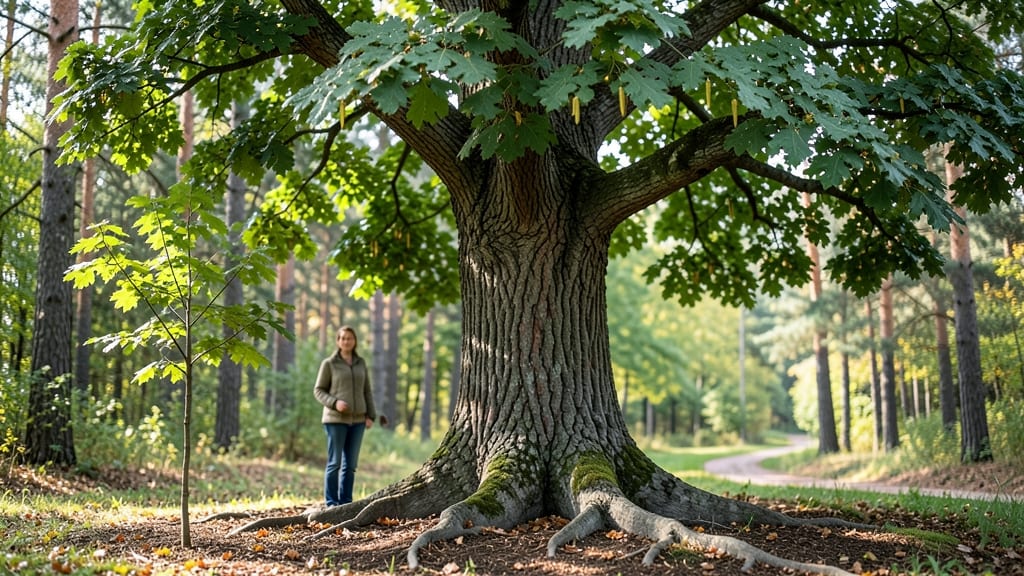
Oak trees can grow to over 100 feet tall, turning your backyard into a living skyline with proper care and the right species.
If you’ve ever wondered whether your backyard could someday host a towering oak tree that rivals the skyline, you’re not alone—oak trees are legendary for their impressive height and longevity. But just how tall can they grow, and which species reach the sky fastest?
Some varieties, like the white oak, can stretch toward 150 feet under ideal conditions, while others, such as the pin oak, grow faster but still reach heights of 60-80 feet.
The difference comes down to species, climate, and soil quality, all of which we’ll break down to help you choose the perfect oak for your space.
Below, you’ll discover the fastest-growing species, how to maximize height with simple care tips, and why some oaks outpace others—so you can plant with confidence and watch your 🌳 grow for decades to come.

Maximum height of oak tree species: from ground to canopy
Oak trees are nature's skyscrapers, with some species reaching heights that dwarf even the tallest buildings. The maximum height of an oak tree depends entirely on its species, growing conditions, and genetics.
From the white oak to the bur oak, these giants can grow between 60 to 100 feet tall, with a few record-breaking specimens surpassing 130 feet in ideal environments. Understanding these limits helps you choose the right oak for your landscape and manage expectations for growth.
Not all oak species grow equally tall. Some, like the live oak, are known for their massive canopies and slow-but-steady upward growth, while others, such as the pin oak, grow faster but still reach impressive heights.
The red oak and bur oak also have distinct growth patterns, with the bur oak often developing a shorter, more stout trunk but still reaching towering heights. Let’s explore the height limits of the most iconic oak species and what makes them grow so tall.
🌳 Key Insight: The tallest oak trees thrive in optimal conditions—rich, well-draining soil, full sun exposure, and minimal competition from other plants. Without these, even the fastest-growing species may never reach their full potential.
The white oak is one of the tallest oak species, with some specimens in the Appalachian Mountains reaching over 130 feet. These trees are not only tall but also incredibly long-lived, with some individuals exceeding 500 years old.
Their slow growth rate—typically 0.5 to 1.5 feet per year—means they take decades to reach their full height, but the payoff is a majestic, sprawling canopy that provides shade for generations.
In contrast, the red oak grows faster, often adding 1 to 2 feet per year in ideal conditions. While their average height is slightly shorter than white oaks (50 to 80 feet), they can still reach 100 feet or more in perfect environments.
Red oaks are also prized for their vibrant fall foliage, which adds seasonal interest to landscapes. If you’re looking for a balance between height and speed, the red oak is an excellent choice.
For those with limited space but still want a towering oak, the willow oak is a fantastic option. While it only reaches 40 to 60 feet on average, it grows faster than most oaks—sometimes 1 to 2 feet per year.
Fastest-growing oak species: how quickly they reach their sky-high potential
If you're dreaming of a backyard oak that grows fast enough to provide shade within a decade, you're in luck—some oak species shoot up like rockets compared to their slow-and-steady cousins.
The pin oak and willow oak are the speed demons of the oak world, while others like live oak take their sweet time reaching their massive potential. Let's break down which oaks grow fastest and how their growth compares.
Growth rates vary dramatically between species. While most oaks gain just 1-2 feet per year in height, the fastest growers can top 3 feet annually under ideal conditions.
This means a willow oak sapling could reach 30 feet in a decade, while a white oak might only hit 20 feet in the same timeframe. The difference comes down to genetics and environmental factors we'll explore next.
The willow oak is the undisputed champion of fast oak growth, often reaching 3 feet per year in ideal conditions. This means a 10-foot sapling could hit 30 feet in just 10 years, providing that coveted shade much sooner than slower growers.
The pin oak isn't far behind, with growth rates of 1.5-2.5 feet annually. Both species thrive in full sun and well-draining soil, which accelerates their vertical ascent.
For those with patience, the live oak and white oak may not impress with speed, but they'll reward you with century-old canopies that dwarf their faster-growing relatives.
A live oak might only gain 0.5-1 foot per year, but given its 60-100 foot mature height, it's still a magnificent investment for long-term shade. The trade-off? You'll be waiting decades for that full skyline effect.
If you're planting for immediate shade, prioritize willow oak or pin oak saplings. For low-maintenance longevity, the white oak or live oak will deliver unmatched stature—just be prepared to wait.
Remember, even the fastest oaks need proper spacing (at least 30-50 feet apart) to avoid root competition and allow their canopies to spread.
Pro tip: Plant your oak in early spring when roots can establish before summer heat. Mulch heavily around the base to retain moisture, and avoid over-fertilizing—oaks prefer natural soil fertility over synthetic boosts.
With the right species and care, you could have a 60-foot oak in your lifetime, whether you choose speed or endurance.