
Blooming
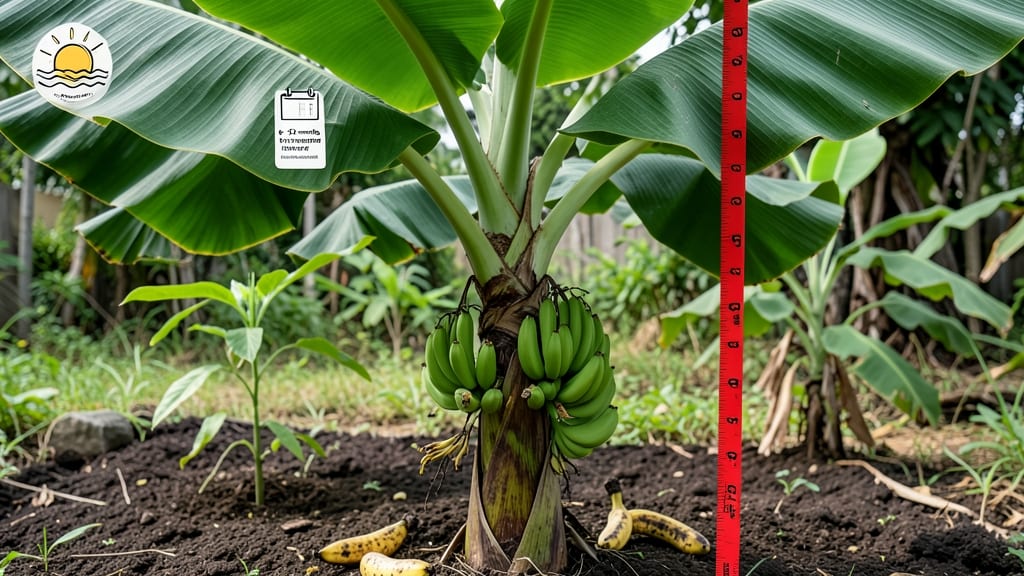
It takes a banana tree 9 to 18 months to produce fruit after planting, with smaller varieties like Lady Finger bearing fruit in as little as 9–12 months, while larger types such as Cavendish typically take 12–18 months. Optimal growing conditions—full sunlight, consistent moisture, and soil with a pH of 5.5–7.0—help speed up fruiting, while cooler temperatures or poor soil can significantly delay the process.
Understanding this timeline helps set realistic expectations, especially since banana trees don't produce fruit continuously—they bloom just once before dying. 🌱 The first sign of fruiting is often a dramatic elongation of the pseudostem, followed by the emergence of a flower spike that eventually develops into a bunch. I've found that dwarf varieties like Red Dacca sometimes produce fruit even faster than Lady Finger if given ideal conditions, though their bunches tend to be smaller.
What many gardeners overlook is that the first flowering doesn't guarantee fruit—some varieties may abort the bunch if stressed. Proper care during the vegetative stage (first 6 months) is critical, as this is when the plant builds the energy reserves needed for flowering.
For tropical climates, this means maintaining soil temperatures above 65°F year-round, while cooler regions may need to plant in containers for winter protection.
💡 In This Article
- Banana Tree Growth Stages: From Planting to First Harvest
- Factors That Speed Up or Delay Banana Tree Fruiting
Banana tree growth stages: from planting to first harvest
The banana tree's journey to fruiting begins with the vegetative stage, where the plant focuses entirely on leaf and root development.
During these first 3 to 6 months, you'll notice rapid growth—new leaves unfurl every 2-3 weeks, and the pseudostem (the tree's false trunk) thickens as it stores energy.
Dwarf varieties like Lady Finger complete this phase in about 4-5 months, while larger types such as Cavendish take closer to 6 months. This stage is critical because the plant's ability to flower later depends entirely on how much starch it accumulates in its pseudostem.
Once the vegetative stage ends, the tree enters flowering, marked by a dramatic elongation of the pseudostem and the emergence of a flower spike from the center. This transition typically occurs 3-5 months after planting for dwarf varieties and 6-8 months for larger ones.
The flower spike, which looks like a long, purple, finger-like structure, unfurls into a complex inflorescence that will eventually become the fruit bunch. What's fascinating is that the first flowers to open are actually male—they wither away, allowing the female flowers (where the bananas form) to develop.
This process takes about 4-6 weeks before you see the first tiny banana hands forming.
The final stage is fruiting, where the bunch grows rapidly, adding about 1-2 pounds per week as the bananas develop. For Lady Finger varieties, this stage lasts 3-4 months from flowering to harvest, while Cavendish bunches take 4-5 months.
Here's where environmental conditions play a crucial role: temperatures below 60°F can stunt growth, while consistent warmth and humidity (like in tropical regions) accelerate the process.
The bananas start green and firm but gradually soften and turn yellow as they ripen, a process that takes 2-4 weeks depending on storage conditions.
What many gardeners don't realize is that banana trees are monocarpic, meaning they produce fruit just once before dying. This is why timing is everything—the tree must allocate all its energy to flowering and fruiting, leaving no reserves for recovery.
After harvest, the pseudostem will yellow and collapse, but not before sending out suckers (new shoots) from the base. These suckers are your next generation of banana trees, and if you've cared for the parent plant well, they'll inherit its vigor and potentially fruit even faster.
For those growing bananas in cooler climates, understanding these stages helps with planning. Since the tree can't survive freezing temperatures, you'll want to plant suckers in late spring when soil temperatures exceed 65°F.
In tropical regions, you can plant year-round, but staggering plantings every 2-3 months ensures a continuous supply of fruit. The key is matching your planting schedule to your local climate's growing season—this way, you'll have a better chance of catching that 9-18 month window to harvest.
One visual cue that often surprises new growers is how the leaf shape changes as the tree approaches flowering. The youngest leaves will start curling downward, and the pseudostem may develop a slight bulge at the top—this is your plant signaling it's ready to flower.
Paying attention to these subtle changes can help you predict fruiting time more accurately. 🌱 For example, if you planted a Lady Finger sucker in March and notice these signs by July, you can expect bananas by November or December—just in time for holiday treats!