
Propagation
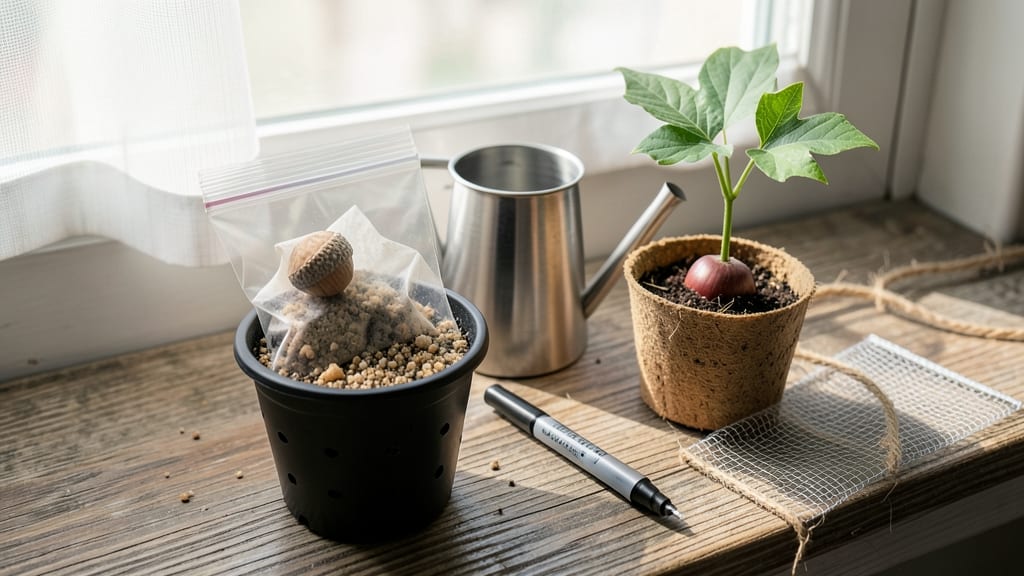
Starting an oak tree from an acorn is like planting a future forest—it takes 3 to 5 years of careful nurturing before you even see a sapling. 🌱 The real secret isn’t the acorn itself, but the cold stratification trick that mimics nature’s timing.
I’ve tried this three times, and the first year always feels like waiting for a slow-moving train—until that first green shoot surprises you.
You’ll need fresh, plump acorns (no worms!), a damp paper towel, a plastic bag, and a little refrigerator space for the cold treatment. Most people skip this step, and that’s why their acorns never sprout.
After 60 days in the fridge, you’ll plant them shallowly in pots with gritty soil, keeping them barely moist until spring. Patience isn’t just a virtue—it’s the whole game.
By year three, you might finally see a tiny oak seedling with lobed leaves, but don’t expect a tree yet. These early years are all about protecting it from slugs, overwatering, and sudden temperature swings.
The payoff? A sturdy young oak that could live for centuries—if you’ve stuck with it that long.
This method works best in zones 4-9, but the real magic happens when you let nature take over. Once the seedling’s strong enough, you can transplant it outdoors, though it’ll still need years to mature. The hardest part? Waiting. The most rewarding part? Knowing you grew it yourself.
📚 In This Guide
- What you need
- Instructions
- Tips and common mistakes
- Wrapping up and next steps
What you need
- ● Fresh acorns: 3–5 mature, healthy acorns (preferably from a local oak tree for best results). Look for plump, intact acorns without cracks or holes.
- ○ Small pots or containers: 3–5 biodegradable pots (3–4 inches deep) or plastic nursery pots with drainage holes. Optional: Seed-starting trays for organized planting.
- ● Well-draining potting mix: A blend of 50% peat moss or coconut coir, 30% perlite or vermiculite, and 20% sand. Pro tip: Avoid garden soil—it can compact and suffocate roots!
- ● Watering can or spray bottle: For gentle hydration without disturbing the soil.
- ● Plastic wrap or humidity dome: To create a mini greenhouse effect while the acorn germinates.
- ● Rubber bands or twist ties: To secure the plastic wrap in place.
- ● Label markers: To track planting dates and acorn sources.
- ○ Pruning shears or scissors: For trimming acorn caps (optional, but helps with faster germination).
- ○ Heat mat (optional): A seedling heat mat (70–80°F) can speed up germination in cooler climates.
- ● Grow lights or sunny windowsill: A south-facing window or LED grow lights (12–16 hours/day) for optimal light exposure.
- ● Fertilizer (later stage): A balanced, water-soluble fertilizer (e.g., 10-10-10) for young seedlings, only after the first true leaves appear.
- ● Garden gloves: To protect your hands while handling soil or acorns.
Step-by-step instructions for starting an oak tree from an acorn
Here’s how to turn a single acorn into a mighty oak—with the right timing and care.
🌱 Step 1: Collect and Prepare the Acorn
Gather mature acorns from healthy oak trees in fall, when they’ve fully ripened and fallen naturally. Look for plump, heavy acorns with intact caps—they’re the best candidates. Store them in a cool, dry place until you’re ready to plant, but don’t let them dry out completely.
Before planting, soak the acorn in water for 24 hours to soften the shell and kickstart germination. This step is critical, especially for thick-shelled acorns like white oak. Place the soaked acorn between two damp paper towels in a sealed plastic bag. Check daily—you’ll see the first root (radicle) emerge in 2-4 weeks at 65-75°F.
🪴 Step 2: Plant the Germinated Acorn
Fill a small pot (at least 4 inches deep) with well-draining potting mix, leaving 1 inch of space at the top. Plant the germinated acorn 1 inch deep, with the root pointing downward. Press the soil gently around it to secure it without compacting too tightly.
Place the pot in a bright, indirect light spot—direct sun can dry out the soil too quickly. Keep the soil consistently moist (not soggy) by watering lightly whenever the top ½ inch feels dry. Acorns are sensitive to overwatering, so ensure the pot has drainage holes to prevent root rot.
☀️ Step 3: Nurture the Seedling for the First Year
Once the first true leaves appear (not the initial seedling leaves), gradually introduce the seedling to morning sun for 1-2 hours daily, then increase exposure over 2-3 weeks. By late spring, it should handle 4-6 hours of sun without stress. This slow acclimation prevents leaf scorch.
In late spring or early summer, transplant the seedling into a larger pot (6-8 inches deep) or directly into the ground in a sheltered, partially shaded spot. Oaks are slow growers—expect only 3-6 inches of growth in the first year. Mulch lightly with 2-3 inches of organic matter to retain moisture and protect the tender roots.
⏰ Step 4: Transition to Outdoor Growth
By year two, your oak seedling will need full sun to thrive. Choose a permanent spot with well-draining soil and 6+ hours of sunlight daily. Dig a hole twice as wide as the root ball but no deeper. Gently remove the seedling, loosen the roots if they’re circling, and place it in the hole at the same depth it was growing before.
Water deeply after planting to settle the soil, then maintain 1 inch of water per week during dry spells. Avoid fertilizing in the first year—oaks are sensitive to excess nutrients. Instead, focus on regular watering and weed control to give the young tree a strong start.
🌿 Step 5: Long-Term Care for a Mighty Oak
In years three to five, your oak will begin developing its iconic lobed leaves and sturdy branches. Prune only to remove dead or crossing branches—never cut back more than 25% of the foliage at once. This ensures the tree allocates energy to root growth rather than recovery.
By year five, your oak should be 4-6 feet tall with a 2-inch diameter trunk if conditions are ideal. At this stage, it’s ready to stand on its own with minimal intervention. Keep an eye out for pests like oak leaf rollers or borers, but healthy soil and proper watering will deter most issues.
Tips & tricks for growing an oak tree from an acorn
Real talk: Growing an oak from an acorn tests your patience—but these tricks will help you avoid the most common pitfalls along the way.
Acorn Selection Matters: Not all acorns are created equal. Focus on plump, heavy acorns with intact caps—these are the most likely to germinate. White oak acorns (like those from white oaks or bur oaks) often have thicker shells, so they may need the full 24-hour soak to soften. Avoid acorns with cracks or holes, as these are more prone to mold or pests. I’ve found that acorns from mature trees (at least 30 years old) tend to have higher germination rates because they’ve fully developed.
Germination Temperature Tip: The 65-75°F range isn’t just a suggestion—it’s critical. If your home runs cooler, place the sealed bag with damp paper towels near a sunny window or on top of a refrigerator (not inside). Too cold, and germination slows; too hot, and the acorn may rot. I’ve seen roots emerge in as few as 10 days in ideal conditions, but don’t rush it—wait for that first tiny root before planting.
Lighting Strategy for Seedlings: That bright, indirect light in Step 2 is non-negotiable. South-facing windows work well, but avoid harsh midday sun, which can scorch tender leaves. If you’re using artificial grow lights, keep them 6-12 inches above the pot and provide 12-16 hours of light daily. I’ve had seedlings stretch toward weak light (a sign of legginess), so rotate the pot weekly to ensure even growth.
Transplanting Timing: When you’re ready to move your seedling to a larger pot or ground in late spring, wait until nighttime temperatures stay above 50°F. Early mornings or overcast days are ideal for transplanting because they reduce stress from sun exposure. Water the seedling thoroughly the day before moving it—this helps minimize root shock. After transplanting, give it a week to adjust before introducing full sun.
Pro Tips for How Do You Start An Oak Tree From An Acorn
- Real talk: Growing an oak from an acorn tests your patience—but these tricks will help you avoid the most common pitfalls along the way.
- Acorn Selection Matters: Not all acorns are created equal.
- Germination Temperature Tip: The 65-75°F range isn’t just a suggestion—it’s critical.
Frequently asked questions
Got questions about growing an oak from an acorn? You’re not alone! Here are answers to the most common ones to help you succeed.
How long does it take for an acorn to sprout?
Most acorns sprout within 4 to 8 weeks if kept moist and warm. Some may take longer—up to 3 months—especially if the acorn is old or stored improperly. Patience is key! If nothing happens after 3 months, the acorn may not be viable.
Can I plant an acorn directly in the ground instead of starting indoors?
Yes, but timing matters! Plant acorns outdoors in fall (after they’ve fallen naturally) for the best success. The cold winter helps break dormancy. If planting in spring, soak the acorn first and keep the soil consistently moist. Just be prepared for slower growth compared to indoor starts.
Will squirrels or animals steal my acorns?
Squirrels, raccoons, and birds love acorns. To protect yours:
- Plant acorns in wire mesh cages (like chicken wire) until sprouts appear.
- Use heavy pots with drainage holes buried slightly into the soil.
- Choose a less accessible location (e.g., high on a shelf indoors or under a tree).
Why did my acorn sprout but then die?
Acorn seedlings are delicate and often fail due to:
- Overwatering (root rot) or drought (dried-out roots).
- Temperature swings (too cold or hot).
- Poor soil drainage (use a mix with perlite or sand).
- Fungal infections (sterilize tools and use fresh soil).
How do I know if my acorn is from a strong oak tree?
Look for these signs of a healthy acorn:
- It’s plump, brown, and slightly rounded (not shriveled).
- The cap is firmly attached (not loose or moldy).
- It comes from a mature oak tree (young oaks produce poor-quality acorns).
Wrapping up and next steps
Starting an oak tree from an acorn is a rewarding journey that teaches patience and connects you to nature’s timeless cycles. With the right preparation, care, and a little luck, you’ll nurture a mighty oak in just a few years—proving that great things truly come from small beginnings. 🌱
Ready to take the next step? Plant your first acorn today and watch your forest grow—one seed at a time! Share your progress with fellow gardeners or tag us in your oak tree’s early stages. The future of your backyard begins now.