
Size
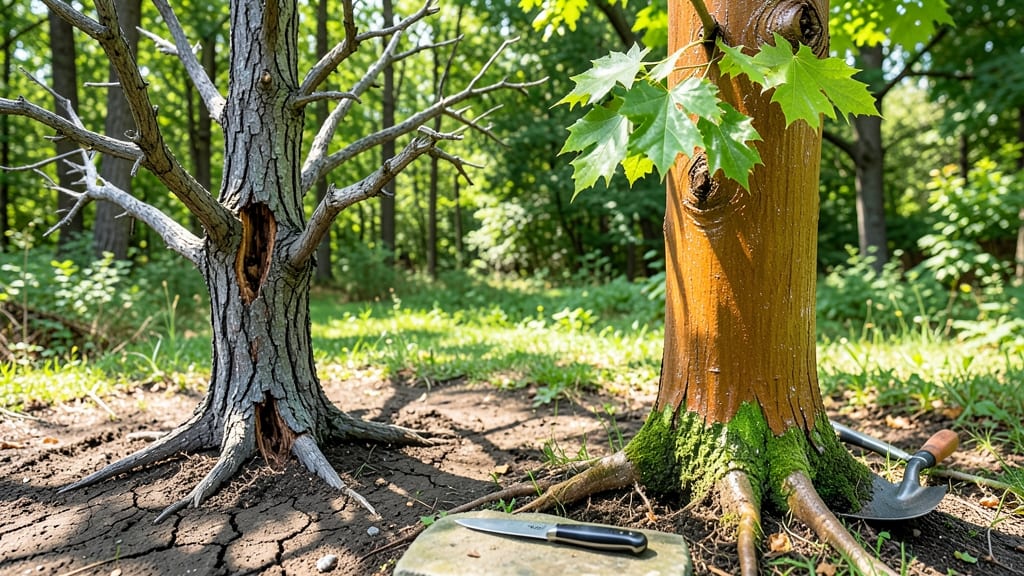
How can you tell when a tree is dead? The clues are often hiding in plain sight—if you know where to look. 🌳 I’ve spent years watching trees decline, and the signs of death aren’t always obvious until it’s too late. A dead tree might still stand tall, but its bark, branches, and roots tell a different story if you examine them closely.
The first place to check is the bark—healthy trees have smooth or textured bark, but dead ones often reveal cracks, peeling, or a hollow trunk when you tap it. Next, test the branches: snap a small limb—if it snaps dry and brittle (not green inside), that’s a red flag.
Even evergreens will drop needles if they’re truly dead, not just dormant.
You’ll also want to check the roots—dig a small hole near the base and see if the wood underneath is firm or crumbly. A firm root means the tree might still have a chance, but crumbling wood confirms death.
False positives happen, though—some trees just look dead in winter, so wait until spring before making a final call.
If you’re still unsure, call an arborist. They’ll assess the tree’s stability and help decide whether removal is necessary. The sooner you act, the safer your property—and your peace of mind—will be.
Root Causes Of Tree Decline
Trees don’t die overnight—they’re victims of slow, often silent battles waged beneath the soil and within their bark. Understanding why trees succumb helps you spot early warning signs before a once-vibrant canopy becomes a hazard.
Here’s a breakdown of the primary culprits behind tree death, explained in scientific detail with actionable insights.
Diseases and fungi are among the most common killers of trees, often exploiting weak points like wounds, roots, or stressed bark. These pathogens disrupt the tree’s vascular system—its plumbing—cutting off water and nutrient flow.
- **Heart Rot Fungi (e.g., Fomes fomentarius) 🍄 - How it works: These fungi invade through cracks in the bark or damaged roots, colonizing the heartwood (the tree’s core).
Over time, they create hollow cavities, weakening structural integrity. - Visual clue: Look for conks (shelf-like fungal growths) on the trunk or base. If the tree leans or splits easily, rot may already be severe. - Actionable tip: Remove infected trees immediately—fungi spread via spores, endangering nearby plants.
- Root Rot (Phytophthora species) 🌊 - How it works: Thrives in waterlogged soil, blocking oxygen uptake in roots.
The tree starves as roots decompose. - Visual clue: Mushrooms sprouting at the base or a foul, damp smell near the trunk. - Actionable tip: Improve drainage with gravel or French drains if your yard floods after rain.
- Bacterial Leaf Scorch (Xylella fastidiosa) 🌿
- Visual clue: Brown, crispy leaf edges (like paper) starting at the tips.
- Actionable tip: Prune infected branches in sterilized tools to slow spread.
Insects and borers tunnel through bark and sapwood, disrupting the tree’s ability to transport nutrients. Some, like the emerald ash borer, can kill a tree in 1–2 years.
- Bark Beetles (e.g., Dendroctonus spp.) 🪲 - How it works: Females bore into bark, laying eggs in the phloem (nutrient-rich layer).
Larvae hatch and girdle the tree (cutting off sap flow). - Visual clue: Sawdust-like frass at the base or D-shaped exit holes in bark. - Actionable tip: Remove infested trees—beetles thrive in stressed wood (e.g., drought-damaged pines).
- Gypsy Moths (Lymantria dispar) 🐛
- Visual clue: Skeletonized leaves (bare veins) or white egg masses on branches.
- Actionable tip: Prune and destroy infested branches in fall/winter (when moths are dormant).
Trees are resilient, but extreme conditions push them past their limits. Chronic stress makes them vulnerable to diseases and pests.
- Drought And Poor Soil 💧 - How it works: Trees need 1–1.5 inches of water weekly.
Without it, roots shrink, and leaves wilting signals distress. - Visual clue: Brittle, curled leaves or premature leaf drop (even in summer). - Actionable tip: Mulch 3 inches deep (keep 6" from trunk) and water deeply 2x/week in dry spells.
- Compaction And Root Damage 🚜
- Visual clue: Stunted growth or roots protruding from the surface.
- Actionable tip: Aerate soil with a garden fork or plant deep-rooted trees (e.g., oaks) in high-traffic areas.
Even minor injuries can be fatal if they compromise a tree’s defenses.
- Girdling Roots Or Vines 🌿🔗
- Visual clue: Ridges or grooves around the trunk from encircling roots.
- Actionable tip: Prune girdling roots with a clean saw—never remove more than 25% of the root plate.
Even "near-misses" can weaken the tree. - Visual clue: Charred bark, vertical splits, or sudden leaf drop. - Actionable tip: Call an arborist—some trees recover, but many need removal.
- Improper Pruning ✂️
- Visual clue: Large, jagged wounds or excessive water sprouts.
- Actionable tip: Follow the 3-cut method and sterilize tools to prevent disease.
Pro Tip: 🌡️ Test for moisture—drill a small hole into the wood. If it’s dry and crumbly, the tree is dead. If it’s damp and green**, it may still be salvageable.
Revive or Remove: Step-by-Step Solutions
Once you’ve identified the signs of a dying tree, the next step is clear action—whether that means giving it a fighting chance or safely removing it. Below, we’ll break down practical solutions for each cause of tree decline, along with prevention tips to keep your greenery thriving.
Think of this as your tree’s emergency first aid kit!
Cause: Compacted soil, root rot, or girdling roots strangle the tree’s lifeline.
🔧 Step 1: Aerate the Soil (For Compacted Roots)
- How? Rent a core aerator (or use a manual auger) to punch holes 6–12 inches deep around the tree’s drip line (the edge of its canopy).
- Why? Breaks up compacted soil, allowing roots to breathe and absorb water.
- Pro Tip: 💡 Mix in compost or organic matter (like peat moss) into the holes to improve drainage.
🚰 Step 2: Drainage Rescue (For Waterlogged Roots)
- How? If the area floods after rain, create a swale (a shallow trench) 3–4 feet from the trunk to redirect water away.
- Alternative: Install French drains or plant drought-tolerant species (like oaks or pines) if your soil stays soggy.
✂️ Step 3: Prune Girdling Roots (Gently!)
- How? Use sterilized pruners to carefully cut away roots circling the trunk (only if they’re less than 1/3 the trunk’s diameter).
- Warning: ⚠️ Never remove more than 25% of roots at once—this can kill the tree faster than the problem itself!
Prevention:
- Mulch properly: Keep mulch 3–4 inches deep and 6 inches away from the trunk to prevent rot and pests.
- Avoid heavy foot traffic near young trees—compacted soil is their worst enemy.
Cause: Poor soil, over-fertilization, or pest damage drains essential nutrients.
🌿 Step 1: Soil Test First!
- How? Send a soil sample to your local extension office (costs ~$20–$50). They’ll tell you exactly what’s missing—nitrogen, phosphorus, potassium, or micronutrients.
- DIY Fix: If testing isn’t an option, top-dress with compost (2–3 inches) in early spring.
💧 Step 2: Deep Watering + Slow-Release Fertilizer
- How? Water deeply 1–2 times per week (1 inch per week) using a soaker hose or drip irrigation.
- Fertilizer Hack: Use a balanced, slow-release fertilizer (like 10-10-10) in early spring—avoid synthetic fertilizers, which can burn roots.
🐛 Step 3: Pest & Disease Control
- For borers/beetles: Apply neem oil or beneficial nematodes to the soil.
- For fungal issues: Prune infected branches 6+ inches back from the damage and sterilize tools with rubbing alcohol.
- Prevention: 🌡️ Inspect trees biannually (spring/fall) for early signs of infestation.
Cause: Sudden exposure to sun, drought, or construction damage weakens the bark.
🎨 Step 1: Protect with Shade Cloth
- How? Wrap the south/southwest side of the trunk with lightweight shade cloth (30–50% shade) during extreme heat.
- Alternative: Plant fast-growing shade trees (like willows or silver maples) nearby for gradual acclimation.
💦 Step 2: Hydration Boost
- How? Mulch heavily (4–6 inches) and water deeply 2–3 times per week during droughts.
- Pro Tip: ✨ Use a moisture meter to check soil depth—if it’s dry past 4 inches, water more!
🏗️ Step 3: Post-Construction Recovery
- How? If roots were damaged during digging:
- Water deeply for 30–60 minutes daily for 2–3 weeks.
- Aerate the soil around the damaged zone.
- Avoid heavy equipment near the tree for at least 6 months.
Prevention:
- Plan ahead! Call 811 (USA) before digging to locate underground utilities.
- Schedule construction in fall/winter when trees are dormant.
Cause: The tree is beyond saving (hollow, leaning, or diseased beyond repair).
🔪 Step 1: Assess the Risk
- Red Flags for Removal:
- Dead branches making up >30% of the canopy.
- Cracks or splits in the trunk wider than 1 inch.
- Fungal growth at the base (like conks or shelves).
- Leaning >15% (even if it’s not dead yet).
🌳 Step 2: Hire a Pro (Do NOT DIY!)
- Why? Falling trees can crush homes, cars, or power lines. Certified arborists use:
- Ropes & harnesses for controlled drops.
- Stump grinders to remove debris safely.
- Cost: Expect $500–$2,000 depending on size/location.
🌱 Step 3: Replace Smartly
- Choose a species native to your climate (e.g., red maple, white oak, or crape myrtle).
- Plant 2–3 times farther from structures than the tree’s mature height.
- Water deeply for the first year to establish roots.
Prevention:
- Inspect trees annually—catch issues before they become hazards.
- Prune young trees to encourage strong structure (remove water sprouts and crossing branches).
Final Thought: 🎯 Most trees can be saved with early intervention—but when nature calls it quits, removal is the kindest option. Now that you’re armed with fixes, your yard’s green future is in good hands!
Frequently asked questions
What’s the quickest way to test if a tree is dead?
Use the scratch test: Scrape a small area of bark—if green layers appear underneath, the tree’s alive. For a deeper check, break a small branch: if it snaps dry and brittle (not green inside), it’s dead. For evergreens, pull a few needles—if they stay attached, the tree’s still alive.
Can a tree look dead in winter but still be alive?
Yes! Many trees appear dormant in winter, especially deciduous ones. Check for buds on branches—if they’re swollen and firm, the tree’s alive. Also, tap the trunk: a hollow sound means death, while a solid thud suggests life. Wait until spring before making a final call.
Why does my tree have dead branches but still looks healthy?
This often happens with partial dieback, where only certain branches die due to disease, pests, or poor circulation. Check for signs like sawdust-like frass (borer activity) or fungal growths. Prune dead branches 6+ inches back from healthy wood to prevent spread.
How do I know if a dead tree is safe to keep?
Assess the risk: If the tree has hollow sections, large cracks, or leans >15%, it’s a hazard. Dead trees with fewer than 30% dead branches might stay upright, but monitor them closely—sudden storms can turn them dangerous.
What should I do if I find a dead tree near my house?
Call a certified arborist immediately—dead trees near structures are serious hazards. Never attempt removal yourself! Professionals use harnesses and ropes to fell trees safely. Costs vary ($500–$2,000), but it’s worth the investment for safety.