
Trees
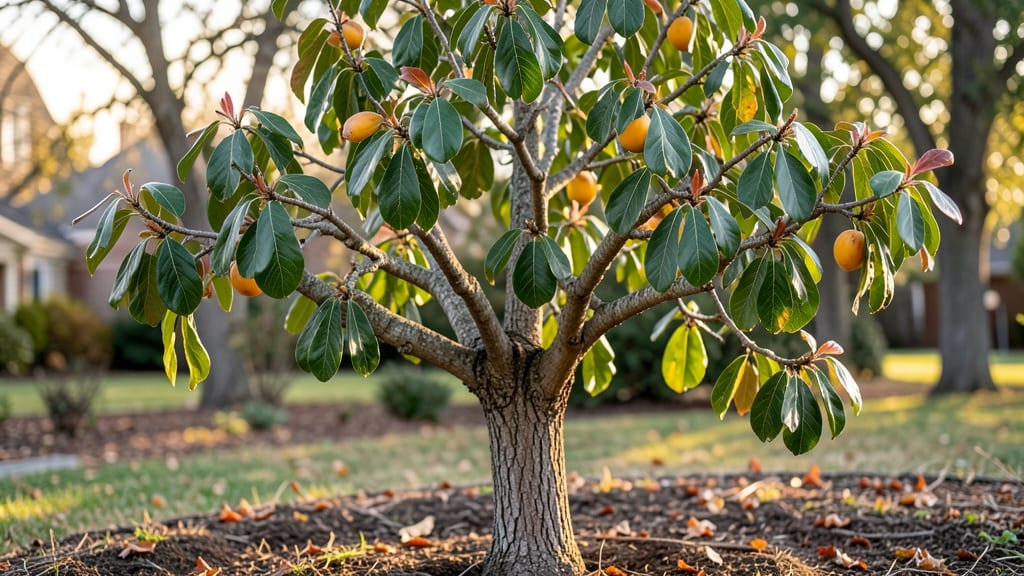
Those common persimmon tree leaves might be more valuable than you think—they’re a free, weed-suppressing mulch that breaks down beautifully. 🌿 But before you rake up that golden carpet, check for problems: yellowing edges, black spots, or tiny webs could signal drought, pests, or fungal issues like anthracnose.
I’ve seen persimmon leaves go from healthy to stressed in weeks if ignored, so here’s how to diagnose and fix it.
Start by examining the undersides of leaves—scale insects hide there like tiny shields, while mites leave silvery webbing. If you spot brown patches with yellow halos, anthracnose is likely. Prune infected branches in dry weather, then apply neem oil or copper fungicide.
For drought stress, water deeply once a week (persimmons hate soggy roots but need consistency), and add compost to improve soil. A little prevention keeps your tree thriving—and your mulch pile intact.
📚 In This Guide
- What you need
- Instructions
- Tips and common mistakes
- Wrapping up and next steps
What you need
- ● Fresh or dried common persimmon leaves – Collect at least 5–10 lbs (depending on garden size). Aim for healthy, pest-free leaves (avoid yellowed or diseased ones).
- ● Garden gloves – A pair of nitrile or rubber gloves to protect your hands from tannins (which can cause mild irritation).
- ● Pruners or shears – Bypass pruners (for clean cuts) or hedging shears if harvesting from larger trees.
- ● Garden rake or pitchfork – For spreading leaves evenly over soil. A stiff-bristle rake works best for mulching.
- ● Watering can or hose – To lightly dampen leaves before application (helps them break down faster).
- ○ Garden twine or landscape fabric (optional but helpful) – If layering leaves over bare soil, use biodegradable fabric (like jute) to retain moisture.
- ● Compost or aged manure – Mix in 1–2 cups per sq. ft. to boost soil fertility while mulching.
- ● Wood chips or straw – Layer 2–3 inches of leaves over 1 inch of wood chips for extra weed suppression.
- ● Leaf shredder (if processing large quantities) – Speeds up decomposition (e.g., electric or manual shredder).
- ● Mulch spreader – For even distribution over large garden beds.
How to use common persimmon tree leaves as natural mulch
Here's the straightforward method I've used to smother weeds and enrich soil—no fancy tools required.
🌿 Step 1: Collect and Prepare the Leaves
Gather fallen persimmon leaves from your yard or a local park (ensure they're pesticide-free). I prefer freshly fallen leaves—they break down faster and release nutrients sooner. Spread them out on a tarp or clean surface to dry for 2-3 days in full sun or 5-7 days in partial shade. This step prevents mold and speeds up decomposition.
Once dry, crumble the leaves by hand or with a rake until they resemble coarse confetti. The smaller the pieces, the faster they'll decompose and form mulch. I like to keep them ½ to 1 inch in size—small enough to break down but large enough to suppress weeds effectively.
🪴 Step 2: Apply to Garden Beds
Choose garden beds where you want to suppress weeds and improve soil health. Remove any existing weeds or debris first—persimmon leaves won't smother established weeds if they're already growing. Spread a 2-3 inch layer of the prepared leaves evenly over the soil surface.
For best results, apply the mulch after watering the bed. This helps the leaves settle into place and makes it easier to see where you've covered. I always work on a dry day so the leaves don't clump together or stick to my gloves.
💧 Step 3: Maintain and Monitor
Water the mulched area lightly after application to help the leaves settle and begin breaking down. Over the next few weeks, you'll notice the leaves darkening as they decompose. This process can take 4-6 weeks depending on your climate—hotter, wetter conditions speed it up.
Check the mulch layer every 2-3 weeks to ensure it remains at least 1 inch thick. If it breaks down too quickly, add a top-up layer. The mulch should look slightly damp but not soggy—this indicates proper moisture balance. If weeds start poking through, add another ½ inch layer to smother them.
✂️ Step 4: Refresh and Reuse
After 6-12 months, the persimmon leaves will have decomposed into rich, crumbly mulch. At this point, you can either leave it in place to further enrich the soil or rake it into the top 1-2 inches of soil as compost. I usually refresh the mulch layer in early spring and again in fall for continuous weed suppression.
Save any remaining decomposed mulch for future use—it makes excellent compost or can be mixed directly into garden beds. The key is to keep applying fresh layers as needed to maintain that 2-3 inch barrier against weeds. Over time, your soil will become richer, and your garden beds will require less maintenance.
Tips & tricks for perfect persimmon leaf mulch
Here's what nobody tells you about making the most of your persimmon leaves—these tricks will save you time and frustration while maximizing weed suppression.
Leaf Selection Matters: Focus on collecting leaves that have fallen naturally rather than those still attached to the tree. Freshly fallen leaves contain more nutrients and break down faster than older, brittle ones. If you must use leaves from a tree, choose ones that appear healthy and free from pests or disease. I've found that leaves collected after a light rain are especially effective—they're naturally moist and decompose more quickly.
Drying Strategy: The 2-3 days of full sun drying is ideal, but if you're in a humid climate, opt for the 5-7 days in partial shade to prevent mold. I've learned this the hard way after dealing with moldy mulch in my first attempt. Spread leaves in a single layer on a tarp or clean surface, and give them a gentle stir every 24 hours to ensure even drying. This prevents clumping and speeds up the process.
Layer Thickness Technique: When applying your 2-3 inch layer, think of it like building a fort—you want it thick enough to block sunlight but not so thick that it smothers your plants. The key is to maintain that 1-inch minimum thickness during maintenance checks. I've noticed that in my vegetable beds, a 2-inch layer completely blocks weeds while still allowing moisture to penetrate. For flower beds where you want more airflow, you can reduce to 1.5 inches.
Seasonal Timing: Apply your mulch in early spring or fall when temperatures are moderate and rainfall is consistent. This gives the leaves time to settle and start decomposing before extreme heat or cold sets in. In my experience, spring applications help suppress early weeds while fall applications protect soil over winter. Avoid applying in summer heatwaves—the leaves can dry out too quickly and lose their effectiveness.
Pro Tips for Common Persimmon Tree Leaves
- Here's what nobody tells you about making the most of your persimmon leaves—these tricks will save you time and frustration while maximizing weed suppression.
- Leaf Selection Matters: Focus on collecting leaves that have fallen naturally rather than those still attached to the tree.
- Drying Strategy: The 2-3 days of full sun drying is ideal, but if you're in a humid climate, opt for the 5-7 days in partial shade to prevent mold.
Frequently asked questions
Got questions about using common persimmon tree leaves as mulch? You’re not alone! Here are some of the most common queries—and answers—to help you get the most out of this natural weed-suppressing mulch.
Can I use fresh persimmon leaves as mulch, or do they need to dry first?
Fresh persimmon leaves can work, but dried leaves are far better! Wet or fresh leaves may mat down, trapping moisture and encouraging fungal growth. Spread them out in a dry, shaded area for 1–2 weeks before mulching. Pro tip: If you’re in a hurry, a dehydrator or oven (low heat) speeds up drying!
When is the best time of year to collect persimmon leaves for mulching?
Fall is the golden window—after leaves drop (late October–November) but before winter freezes set in. This gives you dried leaves for spring mulching. If you miss fall, early spring (before new growth) is your second-best bet. Warning: Avoid leaves treated with pesticides or from urban areas with pollution.
Will persimmon leaves attract pests like slugs or rodents?
Not usually! Persimmon leaves are low-moisture and less appealing to pests than decaying organic matter. However, if leaves are overly damp or piled thickly, slugs might take interest. Break up thick layers and pair with dry straw or wood chips to deter them.
How thick should persimmon leaf mulch be to suppress weeds effectively?
Aim for 2–4 inches of dried leaves for best weed suppression. Thinner layers (under 2 inches) let sunlight through, encouraging weed seeds to germinate. Thicker layers (over 4 inches) may suffocate soil microbes—balance is key! Bonus: Top with a thin layer of compost in spring to feed your plants.
What if I don’t have persimmon trees—are there good alternatives?
Other disease-resistant, weed-suppressing leaves include:
- Oak or maple leaves (dry well to avoid mold)
- Pine needles (acidic, great for azaleas)
- Grass clippings (fresh, but mix with straw to prevent matting)
- Straw or hay (cheap and effective, but avoid seed-contaminated hay)
Wrapping up and next steps
Discovering the versatility of common persimmon tree leaves as a natural mulch is a game-changer for gardeners! 🌿 These leaves not only suppress weeds effectively but also enrich your soil with nutrients over time.
Whether you're a seasoned gardener or just starting out, this eco-friendly solution is easy to implement and benefits both your plants and the planet.
Ready to give it a try? Start small—collect leaves from your yard or a nearby park, and experiment with them in a corner of your garden. Watch as your plants thrive with less effort and more natural care!