
Pruning
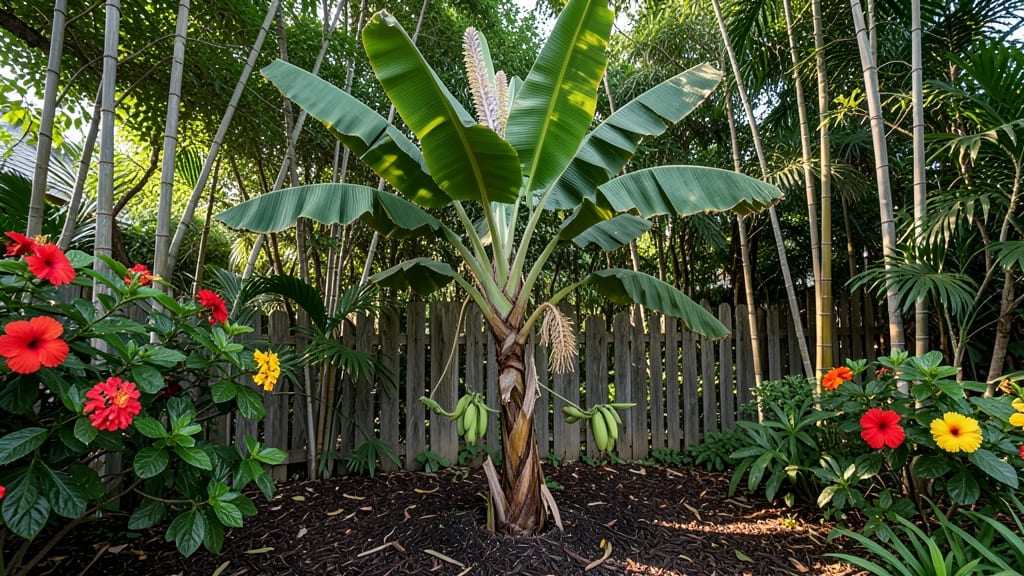
A banana tree privacy screen transforms your yard into a tropical oasis while blocking nosy neighbors—no fence required. 🌿 I planted mine along the west side of my property, and within two years, the broad leaves created a 12-foot-tall living wall that feels like a vacation spot.
The key isn't just choosing the right variety but spacing them properly so they grow together like a single, lush curtain.
Banana trees thrive in zones 9-11 but can survive winters in cooler climates if you protect them with mulch or move potted varieties indoors. For a fastest screen, plant Dwarf Cavendish (6-8 feet tall) every 6-8 feet apart—they grow 3-4 feet per year and fill in quickly.
If you have space, Ice Cream banana trees add striking white-and-green striped foliage for extra visual interest.
By pruning strategically—removing old leaves and shaping the canopy—you keep the screen dense while preventing disease. The result? A year-round privacy barrier that stays green even in winter (unlike many evergreens) and blooms with edible fruit as a bonus.
Your neighbors will never guess it’s just as low-maintenance as a hedge.
Pair them with bamboo or ornamental grasses for texture, or let them stand alone as the star. The only rule? Give them full sun and rich soil—they’ll do the rest, growing taller than your expectations and taller than your fence.
📚 In This Guide
- What you need
- Instructions
- Tips and common mistakes
- Wrapping up and next steps
What you need
- ● Banana tree plants: 3–5 mature plants (depending on desired height; Musa spp. like 'Dwarf Cavendish' or 'Ice Cream' work well for privacy screens).
- ○ High-quality potting mix or well-draining soil: 50 lbs (for planting) or 10–20 lbs per plant (for containers). Optional: Mix in compost for nutrient boost.
- ● Organic mulch: 2–3 inches of wood chips or straw to retain moisture and suppress weeds.
- ● Fertilizer: Balanced fertilizer (10-10-10): 1 lb per plant (applied at planting and monthly during growing season).
- ○ Banana-specific fertilizer (high in potassium): 1 lb (optional but recommended for faster growth).
- ● Pruning tools: Bypass pruners (for small branches).
- ● Loppers (for thicker stems).
- ● Saw (for large trunks or dead wood).
- ● Gloves and long sleeves: Banana trees have sharp edges—protect yourself!
- ● Measuring tape: To space plants 6–10 feet apart (depending on variety).
- ● Shovel or trowel: For digging holes (1.5x wider than the root ball).
- ● Watering can or hose with spray nozzle: Banana trees love moisture but hate soggy roots.
- ○ Stakes and twine (optional): For young trees in windy areas.
- ● Safety gear: Eye protection (when pruning) and a first-aid kit (just in case!).
- ● Pruning schedule awareness: Know your climate—tropical zones prune year-round; cooler areas wait until spring.
- ● ✨ Test your soil: Banana trees thrive in slightly acidic soil (pH 5.5–7.0). Use a soil test kit if unsure.
- ● 🌡️ Warmth is key: Plant in a location with full sun (6+ hours daily) and protection from frost.
- ● 🔥 Container gardening? Use at least a 15-gallon pot with drainage holes for potted banana trees.
How to create a year-round banana tree privacy screen
Here's how I transform a few strategically pruned banana trees into a dense, tropical privacy barrier that thrives in any season.
🌱 Step 1: Select and Plant the Right Varieties
Choose cold-hardy banana varieties like 'Dwarf Cavendish' or 'Ice Cream' that tolerate temperatures down to 25°F—they'll regrow from the base each spring. Plant 4-6 trees spaced 8-10 feet apart in a row, with the first row 15 feet from your property line. This spacing gives mature plants room to develop their signature broad leaves while still filling gaps quickly.
Dig holes twice as wide as the root ball but only as deep as the container. The crown (where roots meet stem) should sit 1 inch above ground level—this prevents rot in heavy rains. I always add a 3-inch layer of compost mixed into the bottom of the hole to boost drainage and nutrient availability right where new roots will grow.
💧 Step 2: Establish a Watering Routine for Rapid Growth
Banana trees need deep watering 2-3 times per week during their first growing season to establish strong root systems. Water slowly at the base (not overhead) for 15-20 minutes per tree until water runs out the drainage holes. You'll know you're doing it right when the top 6 inches of soil feel damp but not soggy—bananas hate wet feet.
After the first month, reduce to once weekly but increase to 2-3 times weekly during summer heat or drought. Mulch with 3-4 inches of wood chips around each tree (keeping mulch 6 inches away from the trunk) to retain moisture and regulate soil temperature. This mulch layer also suppresses weeds that compete for water and nutrients.
☀️ Step 3: Prune Strategically for Density and Privacy
Wait until spring when new growth emerges before pruning. Remove any dead or damaged leaves first—they'll only harbor pests. Then, cut back old, yellowed leaves to the ground level (they won't regrow, but they're not contributing to your screen). This opens the canopy to sunlight, encouraging faster regrowth from the center of the plant.
For privacy, focus on selective leaf pruning: trim the outermost leaves of each plant to half their length during summer. This stimulates bushier growth from the center while maintaining the tree's natural shape. I like to do this every 6-8 weeks—you'll see new leaves emerge within 2-3 weeks, filling in gaps instantly.
✂️ Step 4: Winterize for Year-Round Protection
When temperatures drop below 40°F, protect your banana trees by wrapping the trunks with burlap or frost cloth and covering the entire plant with a thick layer of straw or leaves (at least 12 inches deep). This insulation prevents freeze damage to the pseudostem and allows the tree to regrow from the base in spring.
Remove the mulch in early spring once nighttime temperatures stay above 50°F. You'll notice new shoots emerging from the base within 2-3 weeks—this is your signal to gradually remove the protective wrapping over 7-10 days to avoid shocking the plant. The new growth will quickly fill in any gaps left by winter dieback.
🌿 Step 5: Maintain the Screen Through the Seasons
Fertilize twice yearly—once in early spring with a balanced 10-10-10 fertilizer and again in mid-summer with a potassium-rich 5-10-10 to strengthen stems. Apply fertilizer 6 inches away from the trunk and water it in immediately to prevent root burn. You'll see a noticeable boost in leaf size and vigor within 4-6 weeks of application.
Watch for aphids or spider mites on the undersides of leaves—these pests thrive in dry conditions. Treat infestations with neem oil (mixed at 1 tablespoon per gallon of water) and spray both sides of leaves in the early morning when humidity is high. Regular misting during dry spells also deters pests while keeping leaves lush and green.
Tips & tricks for creating a year-round banana tree privacy screen
Real talk: The secret to a thriving tropical privacy screen isn't just planting banana trees—it's understanding their growth patterns and seasonal needs. Here's what nobody tells you about keeping your screen lush all year.
Planting Depth Matters: When planting your cold-hardy varieties like 'Dwarf Cavendish' or 'Ice Cream', pay close attention to the crown placement. That 1-inch above ground level isn't just a suggestion—it's critical for preventing rot during heavy rains. I learned this the hard way after losing two trees to crown rot in my first attempt. The compost layer at the bottom of the hole also makes all the difference for drainage, especially in clay soils where water pools easily.
Watering Wisdom: Those 15-20 minutes per tree during the first growing season might seem like a lot, but it's essential for establishing strong root systems. Use a timer so you don't accidentally cut watering short—banana trees need deep, thorough watering to develop robust roots. The damp-but-not-soggy test is your best friend here. In my zone 7 garden, I've found that adding a moisture meter near the root zone helps me track soil moisture more accurately than just feeling the top 6 inches.
Pruning Precision: The 6-8 week pruning schedule for selective leaf trimming might seem frequent, but it's what creates that dense, bushy growth you want for privacy. Focus on the outermost leaves—cutting them back to half their length stimulates new growth from the center. I've noticed that if I wait longer than 8 weeks between prunings, the trees grow taller instead of bushier, which defeats the privacy purpose. And always use clean, sharp pruners to make clean cuts that heal faster.
Winter Protection Strategy: That 12-inch deep layer of straw or leaves isn't just for show—it's what makes the difference between a dead tree and one that regrows beautifully each spring. I've found that adding a layer of bubble wrap around the pseudostem before wrapping with burlap gives extra protection against freeze damage. The key is removing the mulch in early spring when nighttime temps stay above 50°F, not when you feel like it—this prevents shocking the plant too early in the season.
Pro Tips for Banana Tree Privacy
- Real talk: The secret to a thriving tropical privacy screen isn't just planting banana trees—it's understanding their growth patterns and seasonal needs.
- Planting Depth Matters: When planting your cold-hardy varieties like 'Dwarf Cavendish' or 'Ice Cream', pay close attention to the crown placement.
- Watering Wisdom: Those 15-20 minutes per tree during the first growing season might seem like a lot, but it's essential for establishing strong root systems.
Frequently asked questions
Got questions about using a banana tree for privacy? You’re not alone! Here are some of the most common concerns—and their solutions—to help you create a lush, year-round screen with confidence.
How fast does a banana tree grow for privacy screening?
A mature banana tree can grow up to 20 feet tall and spread 10–15 feet wide in ideal conditions (warm climates, well-drained soil, and regular watering). Younger trees grow 3–5 feet per year, so expect noticeable privacy in 3–5 years with proper care.
Can I plant banana trees in a row for a solid privacy hedge?
While banana trees aren’t traditional hedges, you can plant them in a staggered line (8–10 feet apart) for a dramatic, tropical privacy screen. Prune regularly to encourage bushier growth, and fill gaps with fast-growing companions like bamboo or ornamental grasses. Just note: They’re not as dense as evergreens!
Will banana trees survive winter in cold climates?
Banana trees are tropical and thrive in USDA zones 10–12. In colder areas (zones 8–9), grow them in containers and move them indoors or to a garage during frost. Alternatively, opt for cold-hardy alternatives like Musa basjoo (hardy to zone 7) or Strelitzia nicolai (bird-of-paradise plant).
How do I prune a banana tree for better privacy?
Prune after harvest (when fruit is gone) to shape the tree and encourage new growth. Remove dead or damaged leaves, cut back overgrown fronds to 1/3 of their height, and trim suckers (pups) to control spread. Avoid heavy pruning in winter—wait until spring!
Are banana trees prone to pests or diseases that affect privacy?
Yes! Watch for banana weevils, aphids, or fungal diseases (like sigatoka leaf spot). Prevent issues with:
- Regular inspections (check undersides of leaves )
- Neem oil sprays for pests
- Improved drainage to avoid root rot
Wrapping up and next steps
Transforming your yard with a banana tree privacy screen is a rewarding project that delivers beauty, functionality, and year-round greenery—all while keeping your space lush and secluded. By mastering strategic pruning, you’ll ensure your trees thrive, grow faster, and provide that perfect wow factor for years to come. 🌿
Ready to take the next step? Start by assessing your space, gathering your tools, and scheduling your first pruning session. With patience and care, your banana tree privacy screen will become the envy of the neighborhood—and your own personal oasis! 🌟