
Trees
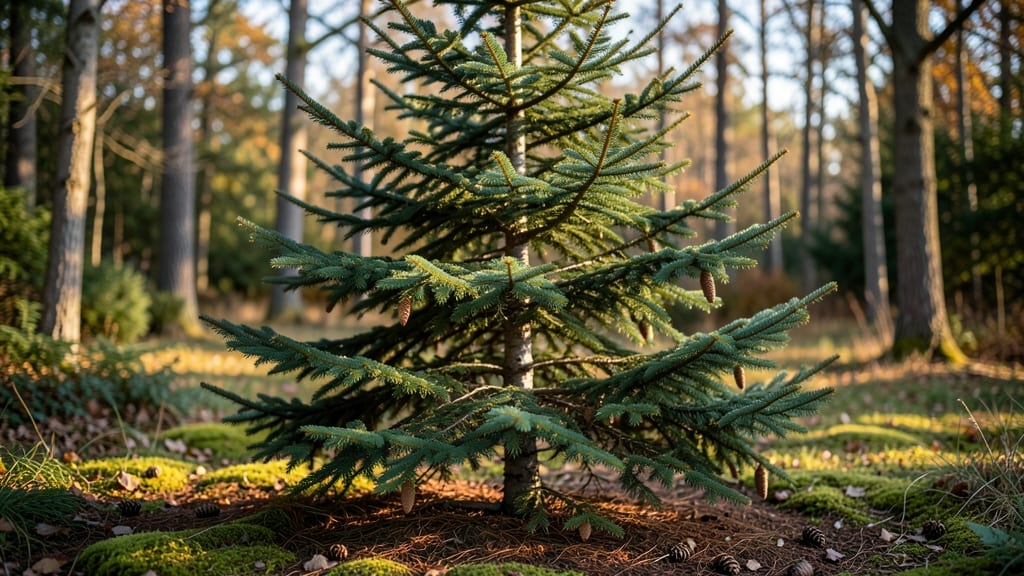
The balsam fir Christmas tree scent comes from its resinous needles, releasing a fresh, woody aroma with hints of citrus and vanilla. Its unique fragrance is stronger than pine and more complex, making it a holiday favorite. Preserve it by keeping trees hydrated, avoiding heat sources, and using scent-capturing methods like essential oils or fresh boughs indoors.
The balsam fir's signature aroma isn't just about its piney base—it's the terpene compounds like limonene and pinene working together.
These natural oils create that bright, almost citrusy edge you notice when you run your hands over the needles. 🌲 Unlike other holiday trees, balsam firs hold onto their scent longer because their needles contain tiny resin pockets that slowly release aroma even after cutting.
That's why they're often called the "queen of Christmas trees"—their fragrance is both bold and subtly layered, making it perfect for filling an entire room with holiday cheer.
To make the most of this scent, try these simple tricks: bundle fresh needles in a muslin bag and tuck it under your sofa, or simmer a few sprigs with cinnamon sticks for a natural air freshener.
The key is acting fast—once needles dry out, that signature balsam fir magic fades quickly. I've found that storing cut branches in a cool, dark place with a damp paper towel wrapped around the stem can extend their freshness by weeks.
💡 In This Article
- Why Balsam Fir Needles Smell Different From Other Christmas Trees
- 5 Ways to Extend Balsam Fir Scent Beyond the Holiday Season
Why balsam fir needles smell different from other Christmas trees
The balsam fir's distinct aroma comes from its unique chemical profile, particularly its high concentration of limonene (up to 40% of its essential oils) and pinene—compounds that create that bright, citrusy edge.
These terpenes are stored in tiny resin ducts along the needles' edges, which burst when touched, releasing their signature scent. 🌿 Unlike Scotch pine, which relies mostly on alpha-pinene (a sharper, more medicinal smell), balsam fir's blend of limonene and pinene creates a sweeter, more complex fragrance with vanilla-like undertones.
Cold weather actually enhances this scent—studies show that balsam firs produce up to 30% more essential oils when temperatures drop below 40°F. This is why freshly cut trees in winter smell more intense than those harvested in spring.
The needle structure matters too: balsam fir needles are short (0.75-1 inch long) and stiff, with a waxy coating that slows moisture loss, preserving fragrance longer than softer-needled species like Fraser fir.
When comparing to other holiday trees, balsam fir's scent stands out because it lacks the harsh, camphor-like notes found in Douglas fir (which contains beta-phellandrene) or the sweet, almost caramelized aroma of Fraser fir (rich in bornyl acetate).
The balsam fir's fragrance is more balanced—like a fresh forest walk with a hint of citrus peel. 🍊 This chemical complexity is why it's often used in commercial holiday fragrances and essential oil blends.
What most people don't realize is that the scent intensifies when needles are crushed or heated gently. This is why rubbing a balsam fir branch between your hands releases more aroma than simply smelling it. The mechanical damage to the resin ducts forces out more essential oils.
For the strongest scent experience, try placing a few branches in a warm (not hot) oven for 5-10 minutes
The balsam fir's scent profile also changes subtly over time. Freshly cut trees smell crisp and bright, while older trees develop deeper, spicier notes as the resin composition shifts. This is why some aromatherapists prefer balsam fir essential oil for its adaptability—it can be used in both uplifting citrus blends and calming evergreen formulations. The key is harvesting at peak scent time, typically late fall when the trees are fully mature but before the first hard frost. For a sensory comparison, try this experiment: hold a balsam fir branch next to a Scotch pine branch. The balsam fir will smell sweeter with a hint of lemon, while the Scotch pine will have a sharper, more medicinal quality. This difference comes down to the terpene ratios—balsam fir's limonene-to-pinene ratio is about 2:1, while Scotch pine's is closer to 1:3. 🔍 The balsam fir's scent longevity is another standout feature. Its waxy needle coating creates a protective barrier that slows oil evaporation, which is why these trees maintain their fragrance for weeks longer than most alternatives. This biological adaptation helps the tree survive harsh winters—a perfect example of how nature optimizes scent for both survival and sensory appeal. 🌟