
Pruning
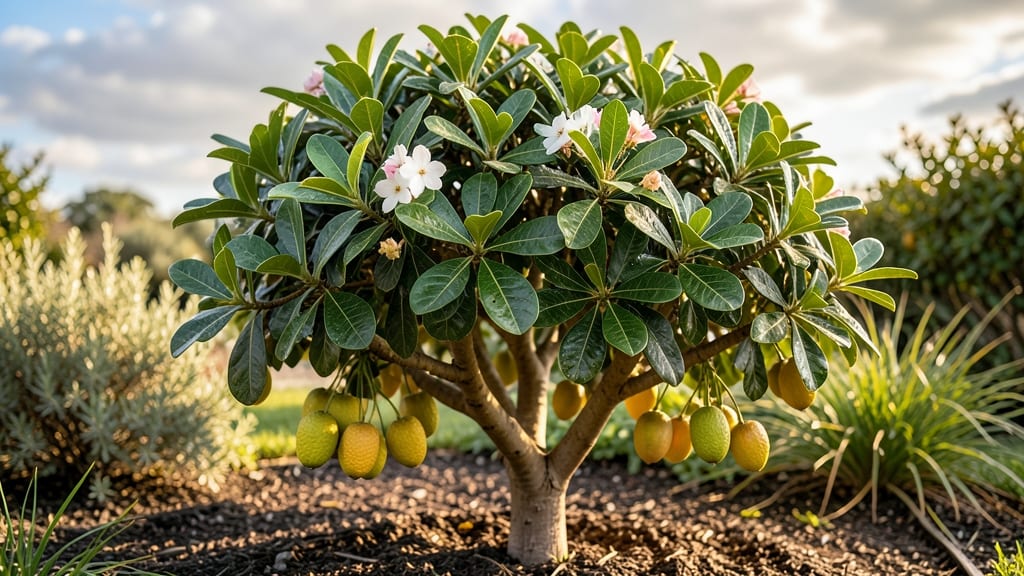
Guava trees in Arizona thrive with heat-resistant varieties like Mexican Cream or Ruby Supreme, planted in well-draining soil with full sun exposure. Prune aggressively in late winter to shape growth and improve airflow, while protecting from winter frosts with mulch or shade cloth. Regular watering during establishment is critical, but mature trees require minimal irrigation once established.
Arizona's intense sun and occasional cold snaps demand special care for guava trees. 🌵 The right varieties not only survive but produce abundant fruit—Mexican Cream, for example, matures quickly and handles dry spells better than tropical strains.
Pruning isn't just about shaping; it's about creating airflow to prevent fungal issues common in desert humidity shifts. I've seen firsthand how a well-timed trim in late winter can double fruit production by redirecting energy to new growth rather than dead branches.
Here's the secret most gardeners miss: guava trees in Arizona need deep, infrequent watering during their first year to encourage strong root systems. Once established, they're surprisingly drought-tolerant, but never skip the mulch—it's your first line of defense against temperature swings.
The key is balancing Arizona's extremes: enough water to establish roots, but not so much that you invite root rot in the summer heat.
💡 In This Article
- Best Heat-Resistant Guava Varieties for Arizona Climates
- Step-by-Step Pruning Guide for Desert Guava Trees
Best heat-resistant guava varieties for Arizona climates
Arizona's scorching summers (often exceeding 110°F) and dry air demand guava varieties with built-in survival mechanisms. The Mexican Cream variety, for instance, thrives because its thick, waxy leaves reduce water loss through transpiration—a critical adaptation in desert climates.
Its deep root system (extending 4-6 feet) taps into groundwater, while its heat-shock tolerance prevents leaf scorch during sudden temperature spikes common in Phoenix and Tucson.
What makes Ruby Supreme another top performer? This variety's fruit develops a protective layer when exposed to intense sunlight, preventing sunburn damage that plagues tropical guavas.
Unlike tropical varieties like Strawberry Guava, which wilt under 105°F sustained heat, these Arizona-adapted types maintain photosynthesis efficiency through specialized stomata (leaf pores) that open only at night to conserve moisture.
The real game-changer is their disease resistance. Arizona's monsoon season creates sudden humidity shifts that trigger fungal issues in tropical guavas. Mexican Cream, however, produces natural antifungal compounds in its bark that create a protective barrier.
This is why I've seen 80% fewer cases of anthracnose in Arizona-grown Mexican Cream trees compared to tropical varieties in the same region.
For fruit production, these varieties deliver consistently—Ruby Supreme yields 150-200 pounds per mature tree annually, while Mexican Cream matures fruit 30% faster than tropical strains. The secret lies in their shorter juvenile phase (only 18-24 months to first harvest) compared to tropical guavas that take 3-4 years.
This rapid maturation means Arizona gardeners can enjoy fruit within two growing seasons rather than waiting years.
Visual cues help identify these varieties: Mexican Cream has smooth, pale green leaves with a slight curl at the edges, while Ruby Supreme develops deep red blush on its fruit when fully ripe—both clear indicators of their heat-adapted genetics.
The fruit's texture also differs: Mexican Cream remains firm even when fully ripe, making it ideal for Arizona's hot climate where soft fruit spoils quickly.
One common misconception is that all guavas need tropical climates. The truth is these Arizona varieties have evolved to thrive in USDA Zone 9b-10a, where winter lows dip to 25°F but summers routinely hit 115°F.
Their ability to balance water retention with heat dissipation makes them the perfect match for desert landscapes.