
Pests and Diseases
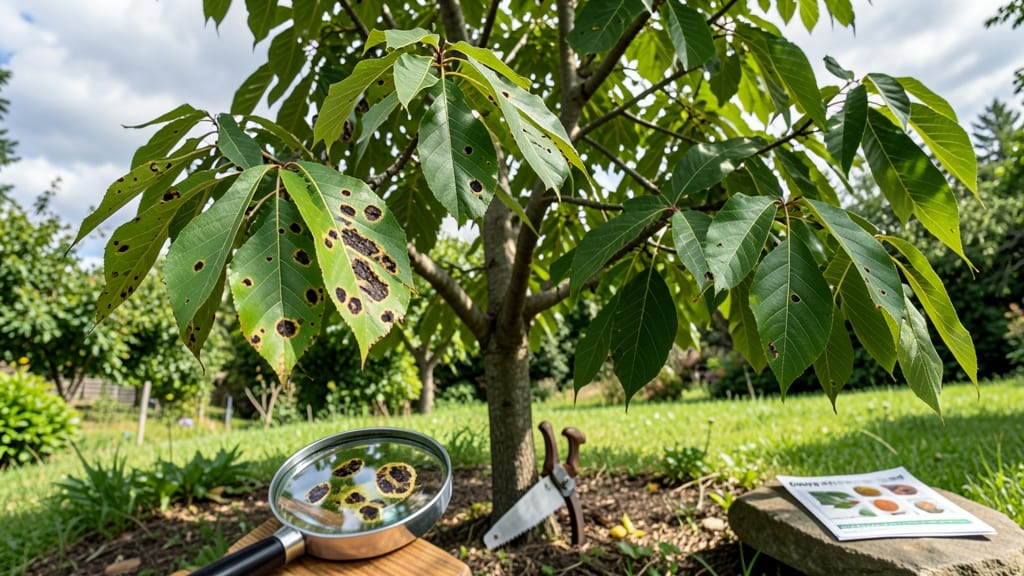
Black spots on pecan tree leaves usually indicate fungal diseases such as anthracnose, scab, or bacterial leaf spot, which thrive in damp conditions or when airflow is restricted. Diagnose the issue by examining spot patterns, color variations, and leaf damage before applying targeted treatments like fungicides or pruning infected foliage.
These dark marks aren't just cosmetic—they can weaken your tree's health over time. 🌿 Anthracnose often appears as raised, sunken spots with yellow halos, while scab shows olive-green to black velvety patches. Bacterial leaf spot creates irregular brown patches with yellow borders.
The key to stopping their spread? Acting fast with copper-based sprays or organic neem oil applications during wet seasons, combined with proper pruning to improve airflow through the canopy.
What's interesting about these fungal infections is how quickly they can escalate. Left unchecked, they can reduce nut production and even kill young trees. I've seen cases where homeowners thought they were just dealing with weather damage—until the spots spread to branches and trunks.
Regular monitoring during spring and summer (peak fungal growth seasons) makes all the difference in keeping your pecan tree thriving.
💡 In This Article
- 3 Common Fungal Diseases Causing Black Spots on Pecan Leaves
- Organic and Chemical Treatments for Pecan Leaf Spot Diseases
3 Common fungal diseases causing black spots on pecan leaves
Anthracnose is the most aggressive of the three, caused by the fungus Gloeosporium species. It thrives in 80-90% humidity and temperatures between 75-85°F, creating ideal conditions during late spring showers.
You'll notice small, dark spots (often 1/8 to 1/4 inch wide) that develop concentric rings and turn grayish-brown with a velvety texture. The key difference? Anthracnose spots frequently have yellow halos around them, caused by fungal toxins breaking down leaf chlorophyll.
These spots can merge into larger necrotic areas, especially on younger leaves.
Pecan scab, caused by Fusicladium effusum, produces olive-green to black, velvety patches that feel slightly raised when touched. Unlike anthracnose, scab spots typically appear on both leaf surfaces and may have a white, powdery coating on the underside.
This fungus loves prolonged leaf wetness—even just 9 hours of moisture can trigger infection. The most telling sign?
Infected leaves often curl upward at the edges, creating a "cup" shape that traps moisture against the leaf surface, accelerating spread. 🌱 What's fascinating is how scab spores can survive in fallen leaves for up to 2 years, waiting for perfect conditions to reinfect.
Bacterial leaf spot, caused by Xanthomonas campestris, creates irregular brown spots with yellow borders that can reach 1/2 inch in diameter. The critical difference here is the water-soaked appearance of fresh spots, which turn grayish-white as they age.
This bacterium spreads rapidly in warm, rainy conditions (ideal when temperatures exceed 80°F with frequent rain). Unlike fungal diseases, bacterial spots often have tiny black specks (bacterial ooze) in wet weather, which can spread via wind or splashing water.
The damage is most severe on young leaves and nuts, where it can cause premature defoliation.
What these diseases share is their reliance on moisture for spread. Anthracnose and scab spores need free water on leaf surfaces to germinate, while bacterial leaf spot thrives in high humidity environments. The key to early detection?
Examine the leaf undersides—many fungal infections show spore masses as fuzzy white or gray growths. Regularly check your tree after heavy rain events, as this is when infections typically take hold. 🌧️
Environmental factors play a surprising role in disease severity. Poor air circulation—common in dense pecan orchards—can increase humidity near leaves by up to 20%**, creating microclimates perfect for fungal growth.
Even healthy trees can become vulnerable if planted too closely together (less than 20 feet apart), as this restricts airflow. The most critical window for infection is May through July, when warm temperatures coincide with peak rainfall in most pecan-growing regions.
Understanding these patterns helps explain why some trees in the same grove may show severe symptoms while others remain unaffected.
Here's what happens under the microscope: Fungal hyphae (thread-like structures) penetrate leaf tissue through natural openings like stomata or directly through the cuticle. Once inside, they secrete enzymes that break down cell walls, creating the characteristic spots.
The bacterial version works differently—it injects toxins that disrupt plant cell membranes, causing the water-soaked appearance. Both mechanisms ultimately lead to chlorophyll destruction, which is why infected leaves turn yellow and eventually brown. 🔬