
Pruning
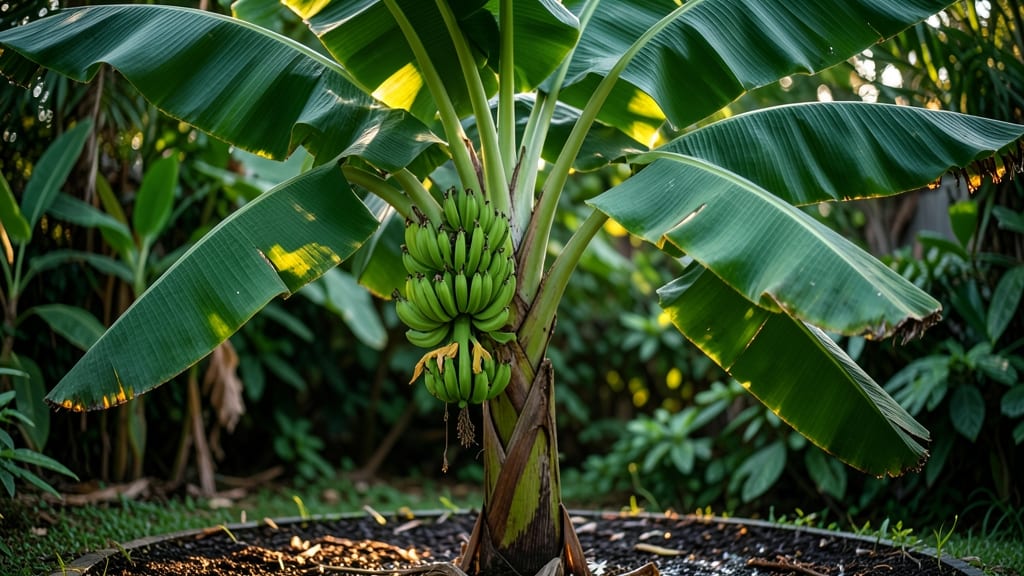
Supporting a banana tree’s weight is the key to avoiding snapped branches and lost harvests—especially when a single bunch can top 50 pounds.
Imagine your 🍌 tree thriving in full sun, only to watch its branches groan under the weight of ripening fruit. Without proper support, those heavy clusters can crack limbs or even topple the trunk, leaving you with empty hands and a stressed plant.
The good news? Understanding your variety’s weight limits—and how to reinforce weak spots—can mean the difference between a bumper crop and a broken branch.
Not all banana trees handle weight the same way. Dwarf varieties like Lady Finger may struggle with just 10 pounds per bunch, while robust Cavendish types can support 30+ pounds—but only if their trunks and branches are strong enough.
We’ll break down how to assess your tree’s structural limits, spot early warning signs of overload, and use simple pruning or support systems to keep your harvest safe.
Ready to turn your banana tree into a stable, high-yielding powerhouse? You’ll learn how to calculate safe weight loads, reinforce weak branches, and even prune for better weight distribution—so you can enjoy those sweet, heavy bunches without the stress.
Banana tree weight limits by variety: how much can branches safely hold?
When you’re growing banana trees, the weight of those luscious banana bunches can be a game-changer for your tree’s health. A single bunch can weigh between 20 to over 100 pounds, depending on the variety, and your tree’s branches must handle this load without snapping.
Understanding these weight limits by variety helps you avoid structural damage and ensures a bountiful harvest for years to come.
Not all banana trees are created equal—some varieties have thicker, stronger branches that can support heavier loads, while others are more delicate. For example, the Cavendish variety, which dominates commercial markets, has sturdy branches that can typically handle 30-50 pounds per bunch.
However, smaller varieties like Lady Finger bananas produce lighter bunches but still require careful monitoring to prevent branch stress.
Beyond just the bunch weight, factors like branch thickness, growth stage, and even the angle of the branch play critical roles in determining how much weight your banana tree can safely support.
Younger trees, for instance, have less structural integrity than mature ones, making them more susceptible to branch breakage under heavy loads.
Here’s a quick comparison of how different banana varieties handle weight, including their typical bunch weights and branch strength considerations:
| Variety | Avg. Bunch Weight (lbs) | Branch Thickness (in) | Max Safe Load (lbs) | Notes |
|---|---|---|---|---|
| Cavendish | 30-50 | 1.5-2.5 | 40-60 | Sturdy, commercial favorite; prune regularly to avoid overloading. |
| Red Dacca | 50-100 | 2.5-3.5 | 70-90 | Heavy bunches; requires strong support stakes for mature trees. |
| Lady Finger | 5-15 | 0.75-1.5 | 15-25 | Smaller bunches but delicate branches; ideal for containers. |
| Grand Nain | 40-70 | 2-3 | 50-80 | Popular dessert banana; prune suckers to reduce weight stress. |
| Bluggoe | 20-40 | 1.5-2 | 30-50 | Hardy and cold-tolerant; branches bend easily under heavy loads. |
The branch angle also matters—branches that grow at a 45-degree angle or steeper distribute weight more efficiently than those that droop. Over time, the weight of a banana bunch can cause branches to sag or even break, especially if they’re not properly supported.
This is why many growers use stakes or trellises to help bear the load and keep branches upright.
For young banana trees, it’s especially important to monitor weight distribution. Their branches are still developing and may not be able to handle even a moderate-sized bunch. In these cases, consider harvesting smaller bunches or providing additional support to prevent structural damage.
Over time, as the tree matures and its branches thicken, it will naturally become stronger and better equipped to handle heavier loads.
Another key factor is weight distribution across the tree. If all the weight is concentrated on one side, it can cause the tree to lean or even topple. To avoid this, rotate your tree occasionally or prune suckers to encourage balanced growth.
This not only helps with weight management but also promotes a healthier, more productive tree overall.
If you notice sagging branches or cracks in the trunk, it’s a sign that your banana tree is struggling to support the weight. At this point, you may need to harvest the bunch immediately or provide additional support to prevent further damage.
Ignoring these signs can lead to permanent structural issues, reducing your tree’s ability to produce fruit in the future.
In summary, understanding the weight limits by variety and taking proactive steps to support your banana tree will ensure it thrives for years to come.
Whether you’re growing a heavy-producing Red Dacca or a delicate Lady Finger, proper weight management is key to a successful harvest and a healthy tree.
Signs of overloaded banana tree branches and how to fix them
When your banana tree starts bearing fruit, those heavy bunches can stress branches beyond their limits. I’ve seen 50-pound banana clusters snap branches like twigs—it’s a heartbreaking sight! Recognizing the warning signs early can save your harvest and your tree’s health.
Overloaded branches often show visible sagging or unusual drooping, especially when fruit is still green. The trunk may lean dramatically, or you might spot cracks forming along the branch joints. These are clear signals your tree is struggling to support the weight.
🚨
⚠️ Critical Weight Thresholds
Banana bunches exceeding 30-40 pounds require immediate support. Cavendish varieties (most common) have thinner branches and can fail at 20-30 pounds per bunch if unsupported. Red Dacca or Gros Michel types may handle slightly more but still need monitoring.
Action: Install stakes or trellises before fruit sets to redistribute weight. Never let a single bunch hang unsupported—this is the #1 cause of branch collapse.
Yellowing leaves near overloaded branches are another red flag. The tree diverts nutrients away from foliage to support the fruit, causing leaf chlorosis or even premature leaf drop. If you notice uneven leaf color paired with heavy fruit, your tree is prioritizing bananas over its own health.
To fix overloaded branches, start with pruning techniques. Remove any damaged or weak branches first, then redistribute the remaining fruit load. For example, if one branch holds two heavy bunches, prune one to reduce strain. Always use sterilized pruners to prevent disease.
Support systems are your best defense. Install bamboo stakes or metal trellises alongside the trunk, tying branches gently with soft plant ties or old t-shirts. For mature trees, consider a wide-mesh netting system to cradle bunches and spread the weight evenly across multiple branches.
Regularly check your tree’s growth angle—branches should grow at a 45-degree angle or less.
If they’re stretching too far out, they’ll struggle with weight. Harvest strategically: Pick bananas in stages rather than all at once, especially for large varieties like Ice Cream or Bluggoe, which produce heavier bunches.