
Diseases
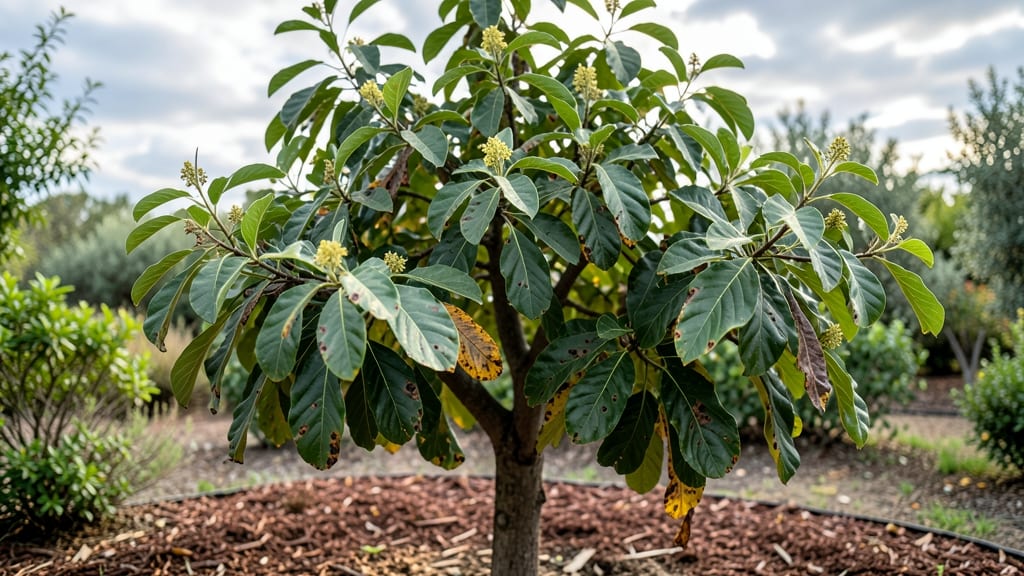
Your avocado tree’s leaves showing brown spots 🥑 is a clear sign of trouble—often a fungal infection like anthracnose or bacterial spot that spreads fast if ignored.
Brown spots creeping across your avocado tree’s leaves? This common fungal issue can weaken your plant if left untreated—but with the right diagnosis and care, you can save your tree and restore its lush, healthy foliage.
Most gardeners assume overwatering is the culprit, but fungal diseases thrive in damp conditions, making proper identification the first step. I’ll walk you through how to spot the difference between nutrient deficiencies, pest damage, and actual infections.
Once you know the cause, fixing it is straightforward: pruning, fungicides, and adjusting care routines can turn those brown spots into a thing of the past. Let’s get your avocado tree back to its vibrant best.
Identifying avocado tree leaf spot diseases: fungal causes and visual clues
When you notice brown spots on avocado leaves, your first thought might be environmental damage—but many cases stem from fungal infections like Phytophthora root rot, anthracnose, or Cercospora leaf spot.
These diseases thrive in warm, humid conditions, which avocado trees love, making them especially vulnerable. The key to saving your tree lies in accurate diagnosis before symptoms spread to stems or fruit.
Start by examining the leaf spots' edges. Fungal spots often have irregular, feathery borders with yellow halos around them, while environmental damage (like sunburn) usually appears as crisp, dry patches.
If you see black or brown lesions on stems or fruit, Phytophthora could be the culprit—this aggressive fungus attacks roots first, then moves upward.
Another red flag is premature leaf drop. Healthy avocado leaves fall naturally in autumn, but if you spot yellowing leaves with spots during other seasons, fungal disease is likely. Check the undersides of leaves too—some fungi, like Colletotrichum, produce pink or orange spores in clusters, confirming infection.
| Disease | Key Symptoms | Distinguishing Features | Affected Areas |
|---|---|---|---|
| Phytophthora Root Rot | Brown, sunken lesions on stems; wilting | Blackened roots; spots spread upward | Roots, trunk, leaves |
| Anthracnose (Colletotrichum) | Dark brown spots with yellow halos; leaf drop | Pink/orange spores on leaf undersides | Leaves, fruit, young shoots |
| Cercospora Leaf Spot | Small brown spots with gray centers; leaf scorch | Spots merge into large patches; no halos | Leaves (upper surface) |
| Environmental Damage | Dry, crisp edges; no spores or halos | Caused by sunburn, wind, or chemical burn | Leaf edges or tips |
If your avocado tree shows stem lesions or root discoloration, Phytophthora is likely the issue. This fungus thrives in waterlogged soil, so check drainage immediately. For leaf spots with halos, anthracnose is the probable cause—it spreads rapidly in humid weather, often after rain or overhead watering.
Don’t confuse fungal spots with nutrient deficiencies. For example, iron deficiency causes yellowing between leaf veins, while magnesium deficiency creates yellow patches with green veins.
Unlike fungal spots, these issues don’t have dark borders or spore clusters. Test your soil if you’re unsure—avocados need acidic soil (pH 6.0–7.0).
One of the most misdiagnosed issues is avocado leaf scorch, often blamed on drought but actually caused by fungal infections like Cercospora. Scorched leaves turn brown and brittle along edges, but unlike drought stress, they won’t recover with water alone.
If spots appear suddenly and spread quickly, fungal treatment is critical.
To confirm your diagnosis, collect a sample of infected leaves and stems. Place them in a paper bag for 24 hours—if you see spore dust inside, it’s fungal. For a lab test, contact your local cooperative extension office; they can identify the exact pathogen and recommend targeted treatments.
Act fast if you suspect Phytophthora, as it can kill avocado trees in weeks. Start by pruning infected branches 6 inches below the lesion and sterilize tools with a 10% bleach solution.
For anthracnose, remove all dropped leaves from the ground—they harbor spores and reinfect the tree.
Prevent future outbreaks by improving airflow around your tree. Thin dense foliage and avoid overhead watering—use drip irrigation instead. Mulch with wood chips to keep soil moist but not soggy, and space trees 15–20 feet
Step-by-Step treatment plan: organic and chemical solutions for leaf spots
Once you’ve confirmed fungal leaf spots on your avocado tree, act quickly to prevent spread. Start by removing infected leaves—this stops spores from multiplying and reduces stress on the tree.
Use sterilized pruners and disposable gloves to avoid cross-contamination. Drop infected leaves into a sealed bag and compost them separately (never reuse compost with fungal debris).
For organic control, neem oil (1 tsp per gallon of water) is my go-to—it disrupts fungal cell membranes without harming beneficial insects. Apply in the early morning on a dry, wind-free day to maximize coverage.
Reapply every 7-10 days until new growth appears. Pair this with a baking soda spray (1 tbsp baking soda, 1 tsp dish soap, 1 gallon water) for extra protection.
🚨 INSERT STEP-LIST ELEMENT BELOW 🚨
Cut off all spotted leaves with sterilized pruners, focusing on lower branches first. Dispose of debris in a sealed trash bag (never compost).
Choose copper fungicide (e.g., copper hydroxide) for severe cases or neem oil (1% solution) for organic care. Spray undersides of leaves thoroughly—fungi thrive there.
Amend soil with compost to improve drainage and reduce humidity near the base. Water at the soil level (not overhead) and avoid wet foliage—fungi love moisture.
Thin out dense branches to let air circulate. If growing in a container, move to a sunnier spot (avocados need 6+ hours of sun) and avoid overcrowding.
Apply a preventive fungicide (like potassium bicarbonate) every 4-6 weeks during humid seasons. Mulch with gravel (not organic mulch) to keep the base dry.
If organic methods fail after 3-4 weeks, consider chemical fungicides like chlorothalonil or propiconazole, but follow label instructions precisely. These are stronger but may require multiple applications and should be a last resort for severe infections. Always rotate treatments to avoid resistance.
Monitor your tree’s progress by checking new growth for spots. Healthy leaves should emerge within 2-4 weeks if the fungus is contained. Keep an eye out for secondary pests (like spider mites) that exploit stressed trees—treat them with insecticidal soap if needed.
For container-grown avocados, move them to a shadier spot temporarily during treatment to reduce stress. Once the fungus clears, return them to full sun to encourage robust recovery. With consistent care, your tree can bounce back—just stay vigilant! 🌿